

What is Olympus Coder?
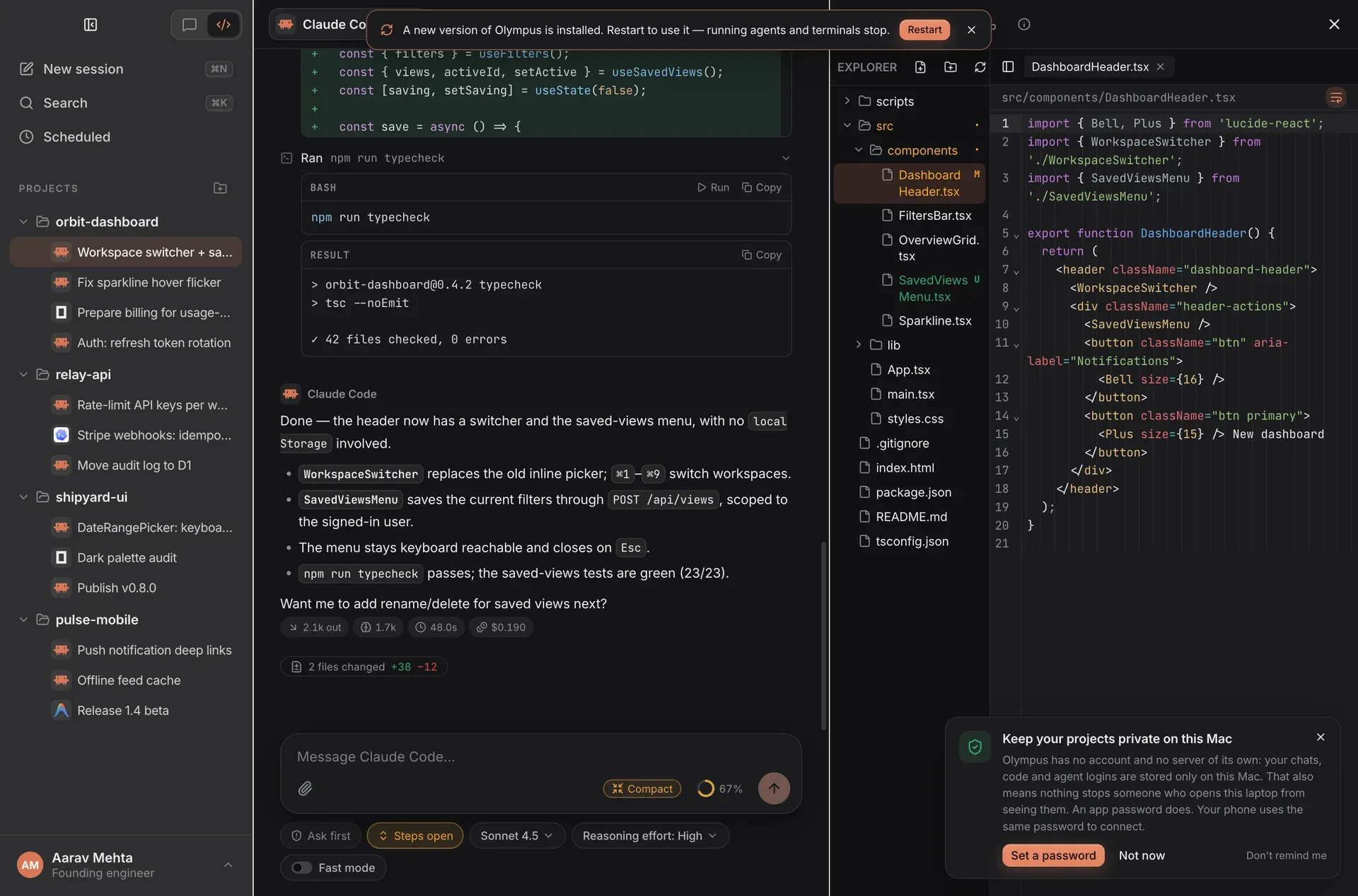
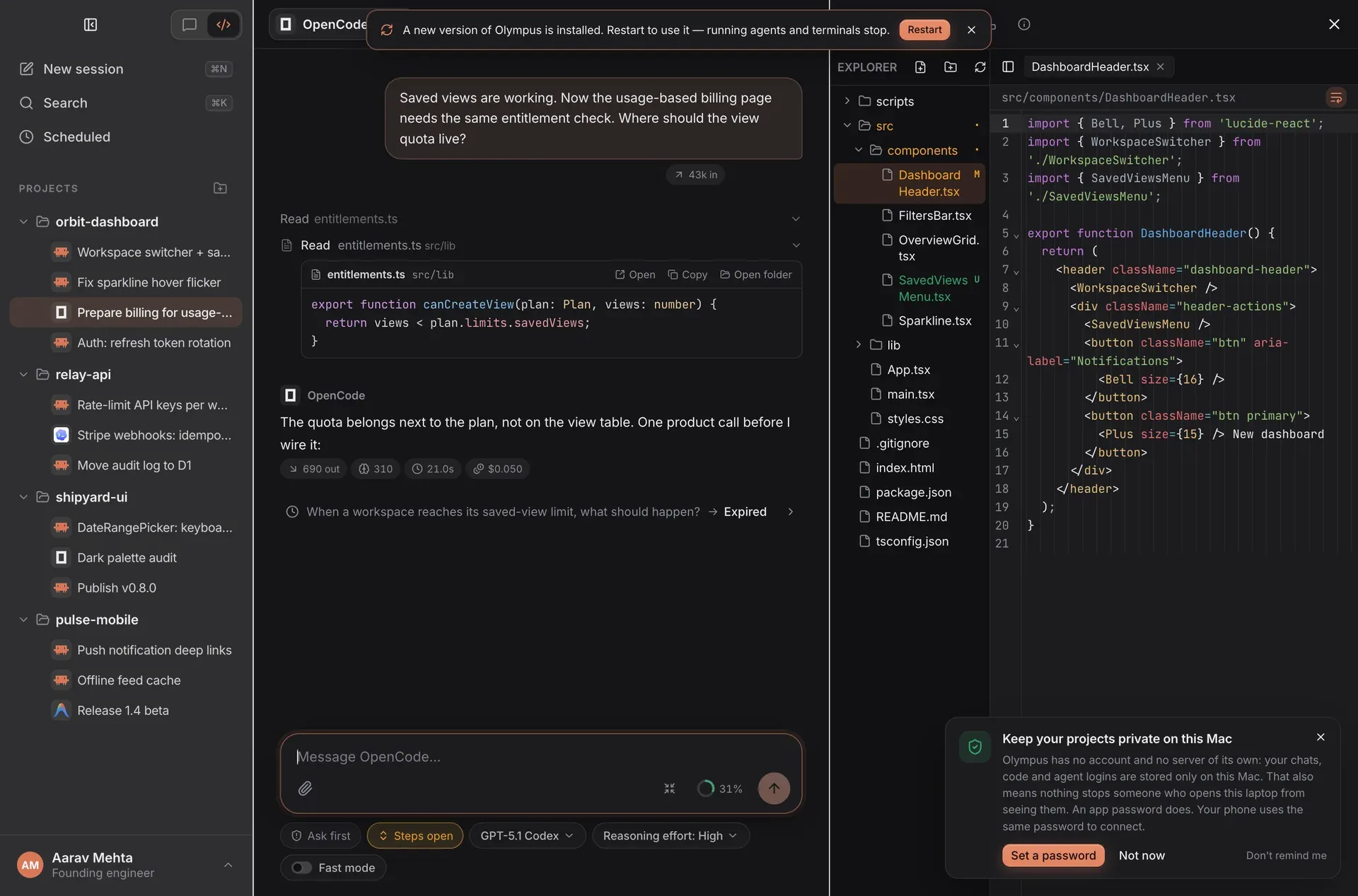
Olympus Coder is an open-source desktop workspace for coding agents that speak the Agent Client Protocol (ACP), an editor-agnostic protocol for connecting a user interface to a coding agent over JSON-RPC. The application packages 20 built-in agent integrations, among them Claude Code, Google Antigravity, OpenAI Codex, Gemini CLI, Qwen Code, OpenCode, GitHub Copilot, Cline, Cursor, Goose, OpenHands and local Ollama models, with access to additional agents through what the project calls the ACP Registry. The project is published by the GitHub account martianacademy, under the company tag @marsnext, and is licensed under the Apache License 2.0.
The repository was created on November 16, 2026, and the project has shipped seven tagged releases since then, most recently v0.3.3 on November 22, 2026. That release describes bundle-size reductions for the phone client, trimmed remote chat payloads, a detachable workbench tab bar, and a shared media viewer for images and annotations. Given how recently the repository was opened, its release history and user base are both still small.
Distribution currently covers macOS on Apple Silicon, installed through a Homebrew tap (brew install --cask martianacademy/tap/olympus-coder) or a direct DMG from GitHub Releases, and a separate headless Node.js server package for Linux and macOS hosts that runs without Electron or X11. The project README lists Windows and Linux desktop installers as coming soon; the repository already contains build scripts for both (dist:win, dist:linux) but no installer asset for either has been published in a release yet.
The application is built with Electron, a React 19 renderer, the CodeMirror 6 editor, and xterm.js with a WebGL rendering addon for its terminals. Agent connections use the @agentclientprotocol SDK packages for Claude Code and Codex, and shared memory and session data are stored on disk under ~/.olympus (configurable through the OLYMPUS_HOME environment variable), rather than in a hosted account. An optional phone and browser connection can route through a Cloudflare Worker and Durable Object relay that only forwards encrypted traffic; running that relay yourself is documented as a self-hosting option.
Olympus Coder does not provide its own language models. Coding work is performed by whichever ACP agent, CLI tool, or local Ollama model the user selects and authenticates separately, each under that provider's own terms and quotas. The project's privacy policy states that the application itself collects no telemetry, analytics, or usage data.
Key capabilities
- Multi-agent ACP hub with mid-thread switching A single chat thread can move between agents, for example starting in Antigravity, continuing in Claude Code, and asking Codex for a read-only second opinion. The project states that prior goals, turns and touched files carry over when an agent is switched, instead of starting a new conversation per tool.
- Shared
~/.olympusproject memory Agents read and write a common set of files, includingMEMORY.md,INSTRUCTIONS.md,BUGS.mdandAGENTS.md, plus skills and cross-agent session transcripts, in place of the separate per-vendor folders (~/.claude,~/.codex,~/.gemini) each CLI normally keeps on its own. - 20 built-in agent integrations, more through a registry Supported agents include Claude Code, Google Antigravity, OpenAI Codex, Gemini CLI, Qwen Code, iFlow CLI, OpenCode, GitHub Copilot, Kiro CLI, Kilo, Cline, Cursor, Codebuddy, Qoder CLI, Mistral Vibe, ZCode, Goose, OpenHands, a project-maintained Olympus CLI, and local Ollama models, each installed and authenticated from Settings > Agents. The project describes 46 or more additional agents reachable through an ACP Registry.
- Built-in
olympusMCP orchestrator server A lead agent can call an internal MCP server to spawn parallel sub-sessions (spawn_subsession), message or reconfigure a running sub-session (message_subsession,configure_subsession), open additional persistent terminals, and manage recurring schedules. - Unified Tasks panel Lists Olympus sub-sessions, native CLI sub-agents, and child OS processes together, with live CPU and RAM meters and pause, resume and stop controls for each entry.
- CodeMirror 6 code workbench A multi-tab editor with syntax themes, Markdown and KaTeX preview, and awareness of unsaved buffers against the ACP client file system; workbench tool tabs can be reordered by drag and popped out into separate detached windows.
- Shadow-Git checkpoints The application records a working-tree snapshot before each prompt, producing a per-turn diff and a one-click undo or redo path that does not touch the project's own
.githistory, alongside integrated Git staging, hunk review, branch handling and isolated worktree-scoped chats. - WebGL terminals and web preview Multiple
node-pty-backed terminal tabs render through the@xterm/addon-webglrenderer, with in-terminal search, an automatically detected test runner shortcut, a port killer forEADDRINUSEconflicts, terminal commands that persist across restarts, and an embedded preview of a local development server. - Voice dictation A microphone button can use the operating system's built-in dictation, a local
whisper.cppmodel detected automatically, or an OpenRouter or custom OpenAI-compatible transcription endpoint; audio only leaves the device when one of the external options is selected. - Native ACP elicitation cards When an agent asks a structured follow-up question, the chat renders it as a form with multiple-choice or custom answers and inline OAuth, instead of a plain text prompt.
- Media viewer and annotation Images, video frames, PDFs and other chat attachments open in a shared viewer with zoom and pan; the built-in annotator can draw arrows, circles and numbered pins that are baked into the image at full resolution with a coordinate legend the agent can read back.
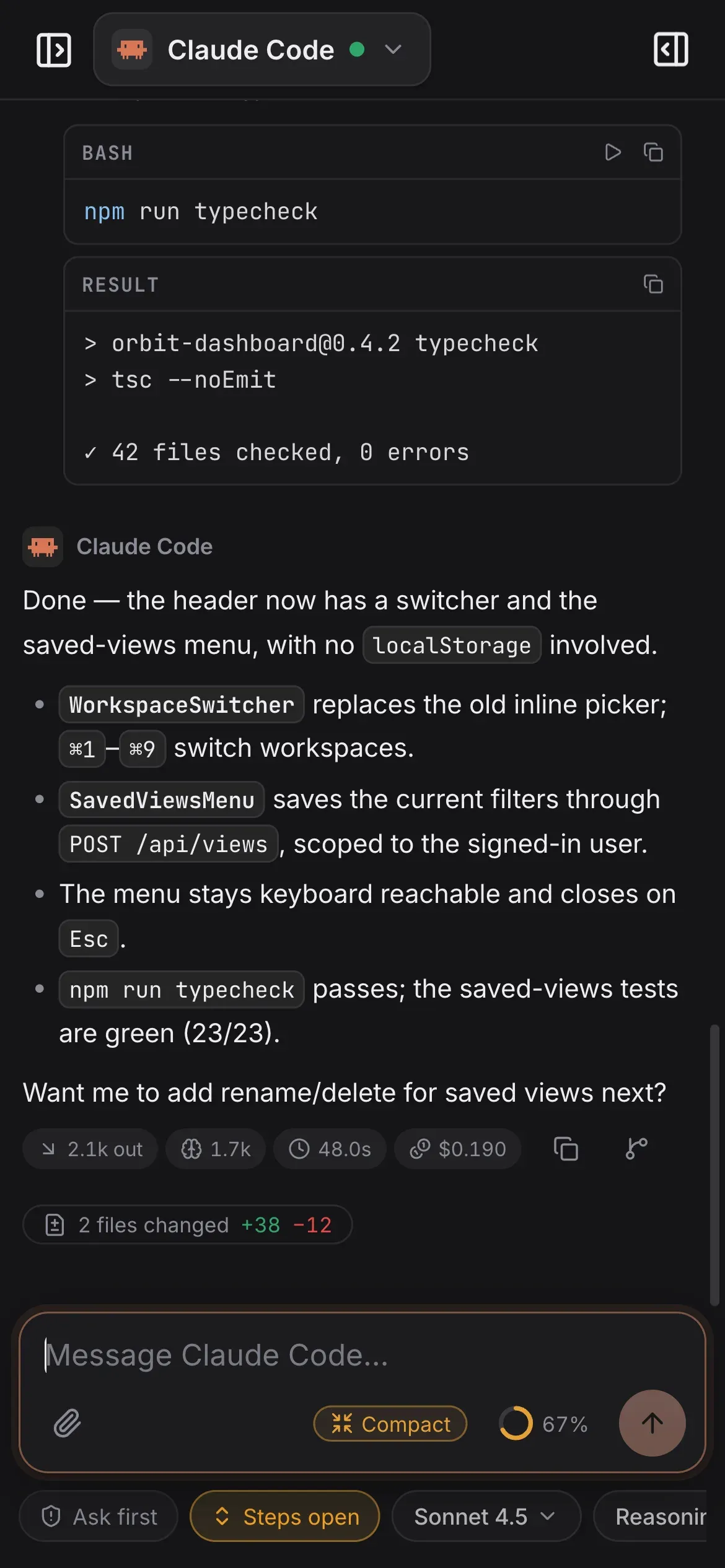
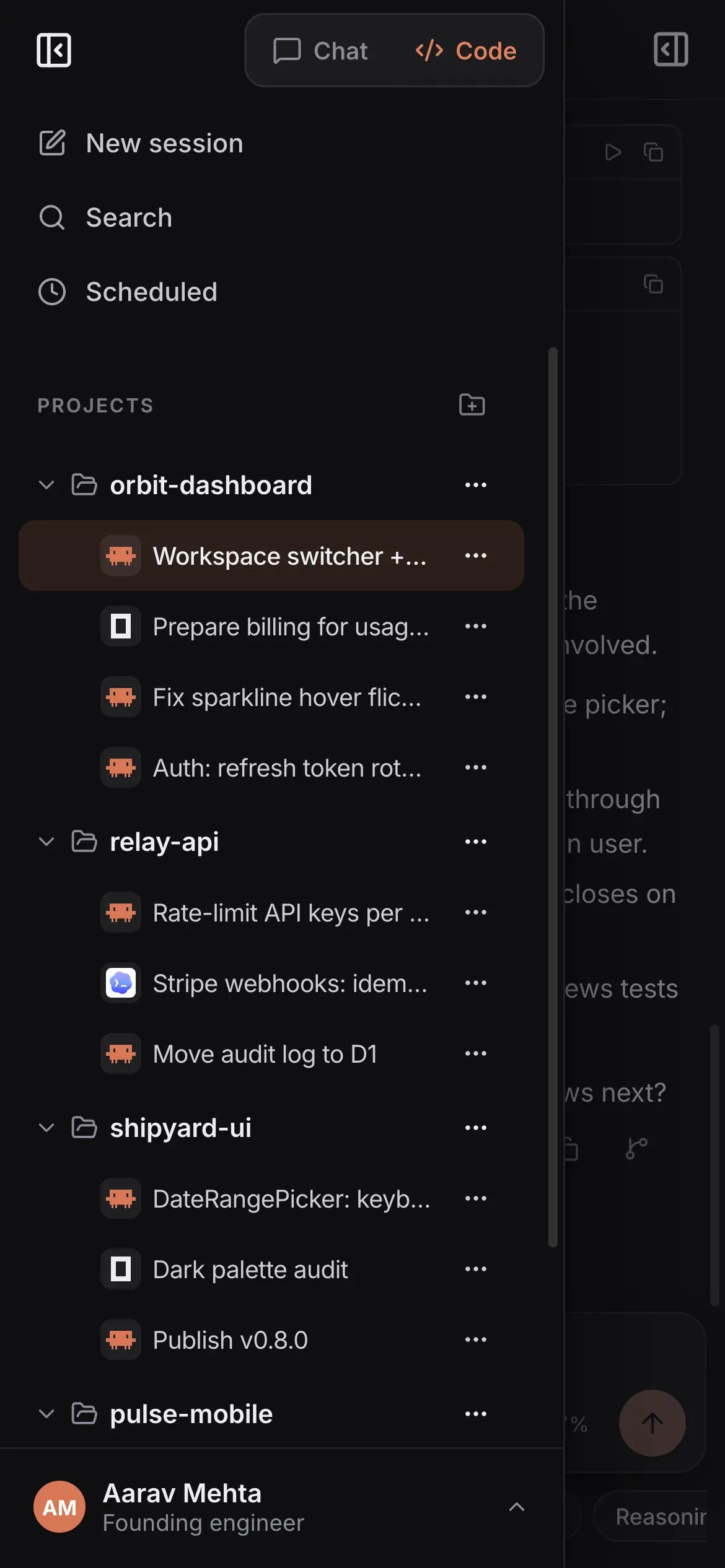
- Phone and browser access over a local network or an encrypted relay The same responsive interface is reachable from a phone or browser either on the same Wi-Fi network over a local port, or through an AES-256-GCM end-to-end encrypted Cloudflare relay, where the decryption key is kept in the URL fragment rather than sent to the relay. The privacy policy states the relay only forwards ciphertext and routing metadata and cannot decrypt chats, files or terminal sessions.
- App password and Touch ID lock An optional password, hashed locally with
scrypt, protects local and remote sessions; macOS builds add native Touch ID unlock on top of it. - Headless Linux or macOS VPS server A separate pure Node.js server package, installed with a published shell script, runs the same agent and memory backend without Electron or a graphical environment, intended for a remote host that is then reached by phone or browser; a documented systemd unit keeps it running across reboots.
- Local Ollama support Ollama models can run as the acting agent directly, or be used by the Goose or OpenHands integrations, for coding work that stays entirely on the local machine without any external API call.
- Self-hostable relay The Cloudflare Worker and Durable Object relay code ships in the repository; a user can deploy their own copy with
wrangler deployand point the desktop or server settings at it instead of the project-run default relay. - Custom API gateways and session import Compatible agents can be pointed at Anthropic or OpenAI-compatible API endpoints, with keys encrypted through the OS keychain, and existing CLI sessions can be imported through the ACP
session/listandsession/loadmethods. - Update checks Unless turned off in settings, the application polls the public GitHub Releases API for the repository to check for newer versions; the privacy policy describes this as an unauthenticated request with no account identifier attached.
Where Olympus Coder fits
Switching coding agents inside one thread
A conversation that begins with one ACP agent can continue with another from the same chat, for example moving from Antigravity to Claude Code or asking Codex for a second opinion on a change already in progress. The project states that goals, prior turns and the list of touched files are carried into the new agent rather than lost between vendor-specific tools. This mirrors the shared-memory, multi-agent pattern also used by alternatives such as Dray and Happy.
Running several agent sessions in parallel
The built-in olympus MCP server lets a lead agent spawn additional sub-sessions, send them messages, or change their configured model, while the Tasks panel tracks each sub-session and native CLI sub-agent together with its CPU and memory use and exposes pause, resume and stop controls.
Reviewing and undoing agent edits
Shadow-Git checkpoints record a snapshot before each prompt and present the resulting change as a per-turn diff with a single control to undo or redo it, independently of the project's own Git history, which stays available separately through the integrated Git staging and branch view.
Working from a phone or a second computer
The interface can be reached from a phone or browser on the same local network, or through the project's end-to-end encrypted Cloudflare relay when the two devices are not on the same network. The relay is described as seeing only encrypted frames and routing metadata, with the decryption key held in the connection URL rather than sent to the relay server.
Running a headless server on a VPS
The headless server package installs with a published shell script and runs the same agent catalog and shared memory store without Electron, intended for a remote Linux or macOS host that is then controlled from a phone or browser; a documented systemd service keeps it running after a reboot.
Working entirely with local models
Local Ollama models can act as the coding agent directly, or back the Goose and OpenHands integrations, for sessions that do not send project files or prompts to an external API.
Install
curl -fsSL https://raw.githubusercontent.com/martianacademy/olympus-coder/main/scripts/install-server.sh | shReviews of Olympus Coder
Be the first to share your experience with Olympus Coder.
Write a review
Loading review form…
Found Olympus Coder useful? Upvote it todayYour vote helps other IT teams find it in the daily ranking.


