

What is ElevenLabs?
ElevenLabs is a voice AI company and platform. Its products cover text to speech, speech to text, voice cloning and design, dubbing, sound effects, music generation and a platform for building voice agents. The product is a closed-source hosted service: models run in ElevenLabs infrastructure and are reached through a web app, a REST and WebSocket API, and SDKs. The company page describes its mission as making communication and creation easier with voice AI; it does not publish a headcount or headquarters, so this profile does not state either.
The documentation at elevenlabs.io/docs groups the offering into ElevenCreative, a no-code web app for voiceovers, dubs, music and studio projects; ElevenAgents, a platform for voice agents with a visual builder and full programmatic control; ElevenAPI, the developer interface with official Python and TypeScript SDKs; and Reception.ai, an AI phone receptionist for small businesses. Usage in all of them draws on one pool of credits, and prepaid Pay As You Go balances are available.
For developers, the API reference documents the HTTP and WebSocket interfaces, and the documentation overview lists the official libraries: a Python package installed with pip install elevenlabs and a TypeScript package, @elevenlabs/elevenlabs-js, both published as open-source MIT licensed libraries, plus a command line tool, @elevenlabs/cli, and an MCP server for MCP clients. Agent client SDKs exist for React, Swift, Kotlin, React Native and Unity. The service itself, including every model, stays closed source.
The models are the proprietary part. Current text to speech models include Eleven v4 and v4 Turbo (90 or more languages), Eleven v3 (70 or more), Multilingual v2 (29) and Flash v2.5 (32). Scribe v2, Scribe v2 Realtime and Scribe v2 Medical handle transcription in 90 or more languages, and Music v2.5 generates music. The models reference lists identifiers, character limits and median latencies, and it also names deprecated models with replacements.
Because the service is hosted, the open-source SDKs are clients, not a way to run the models yourself. Self-hosting of the models is not offered on the standard plans. Enterprise customers can ask about private deployments on AWS or GCP and about data residency in the EU, India or Singapore. The facts here come from the official site, documentation and repositories, checked on November 7, 2026.
ElevenLabs screenshots
Explore the interface. Open a screenshot to view it at full size.
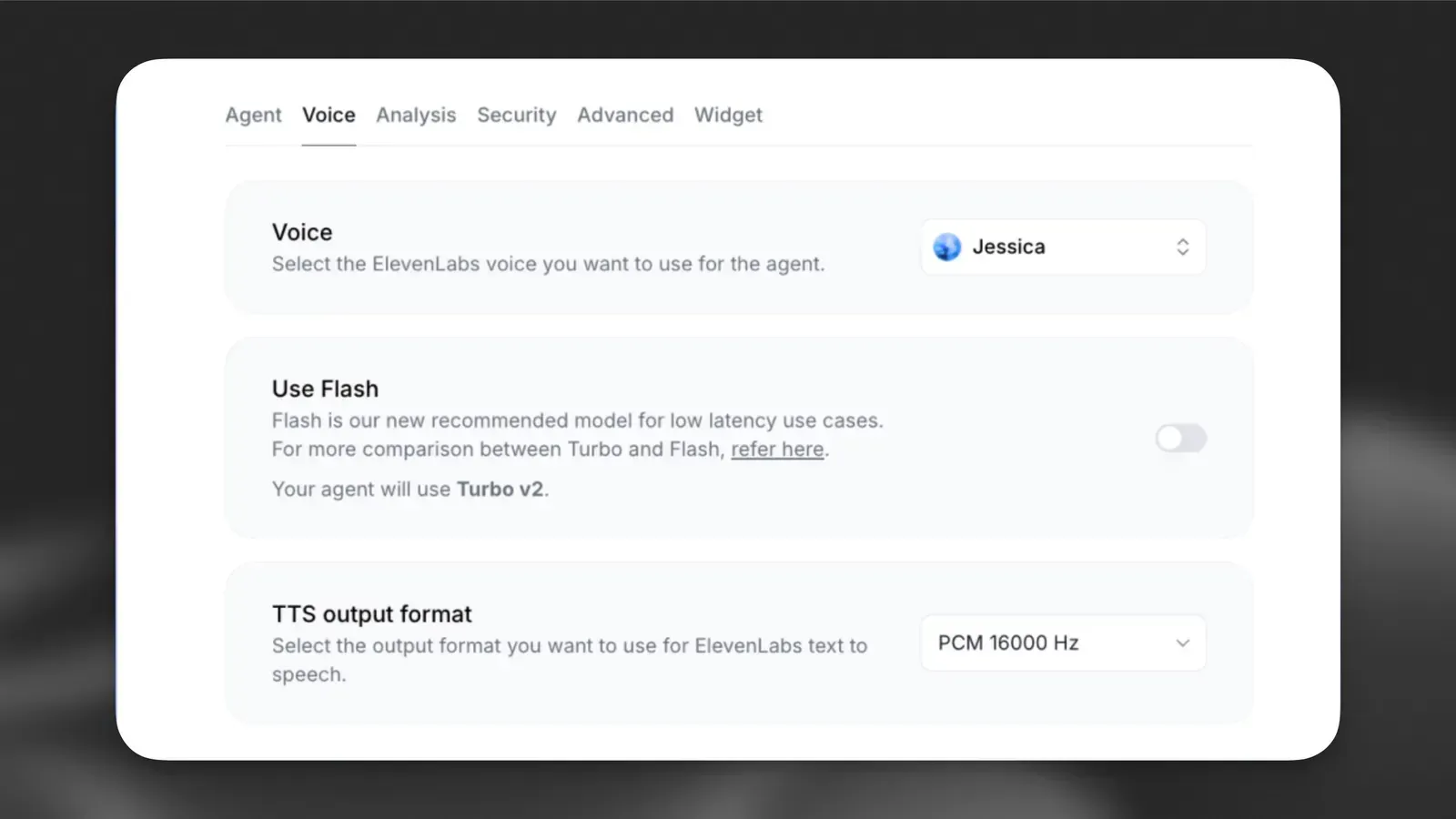
Official documentation image of the agent Voice settings: voice, model choice and output format.
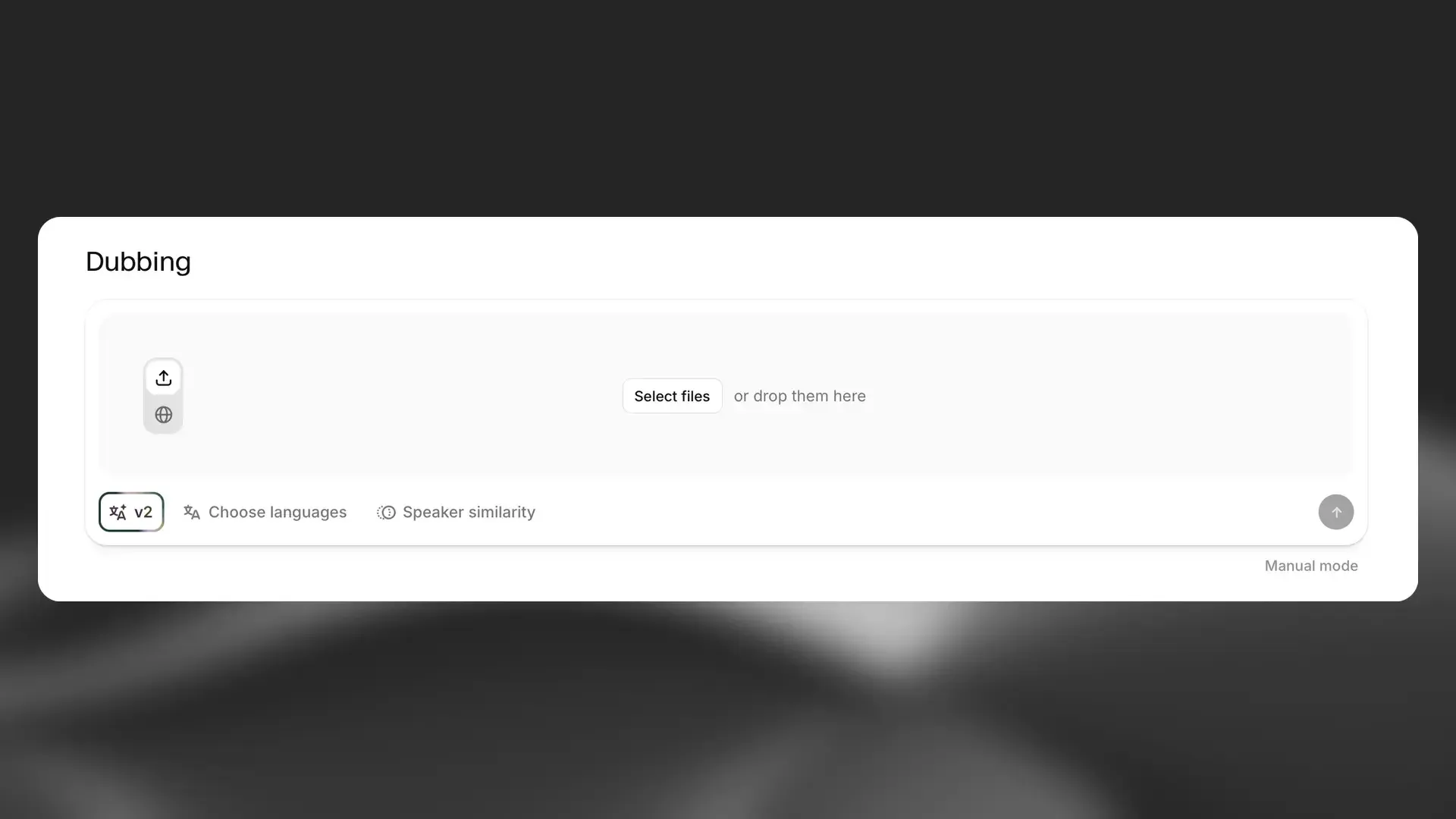
Official documentation image of the new dubbing project screen.
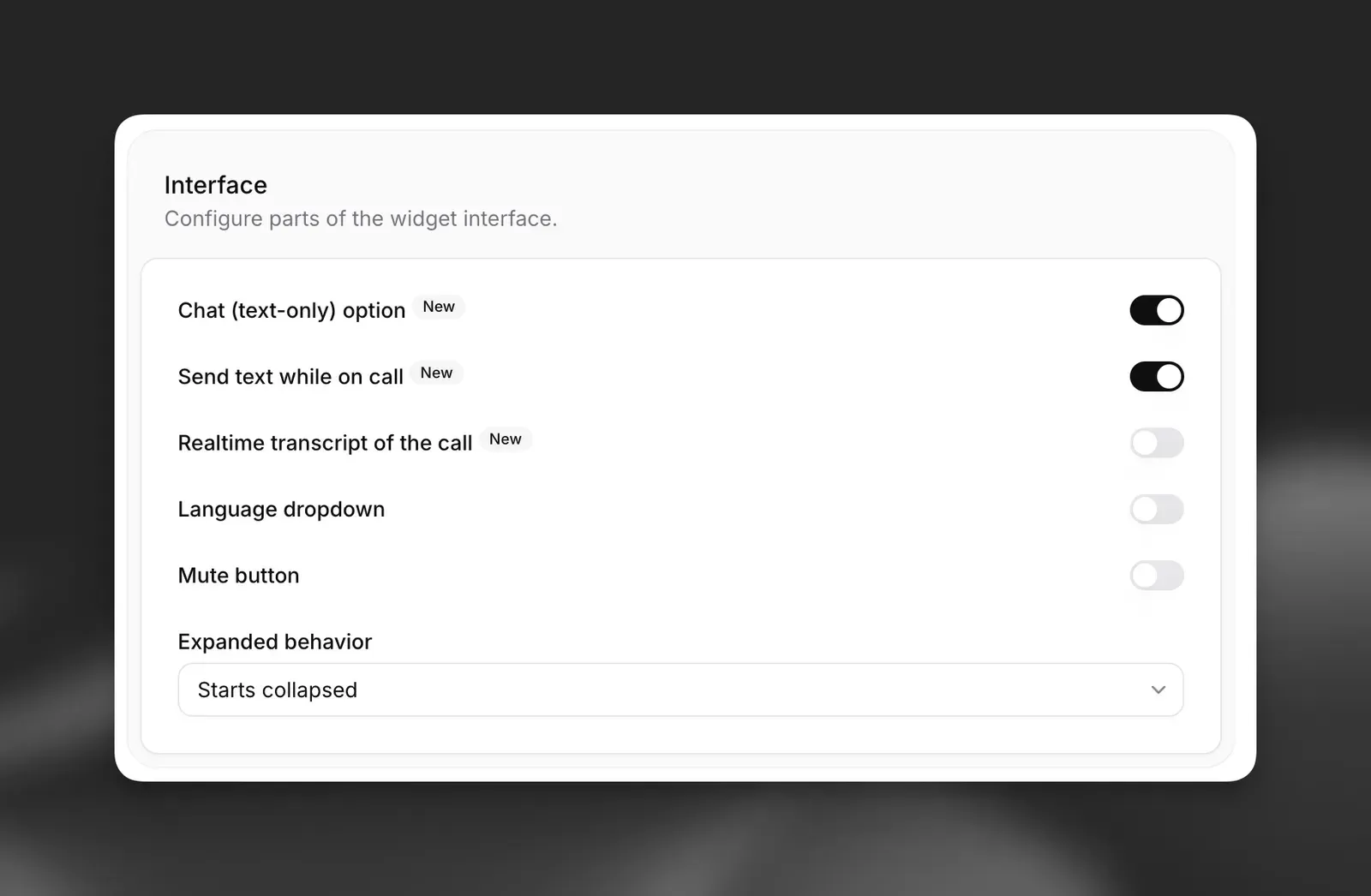
Official documentation image of widget interface options for an embedded agent.
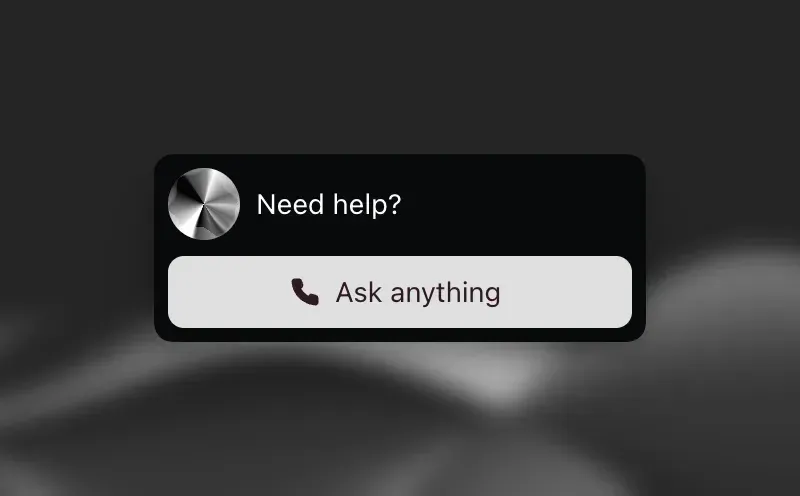
Official quickstart image of the compact agent widget.
Source: official ElevenLabs project page.
Key capabilities
- Text to speech API and web app Generates speech from text with voices from a library of community and ElevenLabs voices or from voices you create. The Python SDK call is
text_to_speech.convertwith a voice id, a model id and an output format such asmp3_44100_128. Streaming and WebSocket variants return audio while it is being generated. Per-request character limits depend on the model: 5,000 for v3, 10,000 for v4 and Multilingual v2, 40,000 for Flash v2.5. - Model families for different jobs Eleven v4 targets expressive output with multi-speaker dialogue; v4 Turbo and v3 Conversational are real-time variants with documented median latencies of about 100 ms and 165 ms; Multilingual v2 is described as the most stable for long-form narration; Flash v2.5 is the lower-cost, low-latency model at half the API price per character. Latency figures exclude your application and network time.
- Languages and audio tags Language coverage differs by model: 29 for Multilingual v2, 32 for Flash v2.5, 70 or more for v3 and 90 or more for v4. The v3 and v4 families accept audio tags to steer delivery. Test the languages and accents you actually need, since a headline count does not guarantee equal quality in every language.
- Voice cloning and voice design Instant Voice Cloning builds a voice from short samples and is available from the Starter plan. Professional Voice Cloning, from the Creator plan, trains on longer recordings and is limited per plan. Voice Design creates a voice from a text prompt. Cloning requires that you hold the rights to the voice and follows the usage policy in the terms.
- Speech to text with Scribe Scribe v2 is batch transcription with word-level timestamps, speaker diarization for up to 32 speakers, keyterm prompting of up to 1,000 terms and entity detection. Scribe v2 Realtime streams transcripts at a documented median of about 150 ms to a committed transcript. Scribe v2 Medical is tuned for clinical audio, is described as HIPAA eligible and is not intended for diagnosis or clinical guidance.
- Dubbing Dubbing translates audio and video into other languages while keeping the speaker voices. The web app starts a project from an uploaded file, the target languages and a speaker-similarity setting, and the Dubbing API offers the same flow for automation. Dubbing is one of the most credit-intensive features, so estimate minutes before a batch. Data residency notes limit dubbing to the EU environment.
- Voice changer, isolator and sound effects The voice changer converts a recording to another voice, the voice isolator removes background noise from speech, and the sound effects model generates effects from text prompts, with looping support in the current model. These are metered per minute or per generation and share the same credit pool as speech.
- Music generation Eleven Music produces songs from prompts, composition plans and audio references, and Music v2.5 adds inpainting. Commercial use of music requires a paid plan according to the pricing page. Music finetunes are priced separately on the API pricing page.
- ElevenAgents for voice agents Agents combine speech recognition, a language model, text to speech and a turn-taking model, or run on the Realtime models. You pick a supported LLM or connect a custom one, attach a knowledge base with retrieval, add tools that call your APIs, and design multi-step flows in a visual workflow builder. Automated tests and conversation analysis help check behavior before and after launch.
- Telephony and widget deployment Agents can take calls through a native Twilio integration or a SIP trunk, and can run batch outbound calling. A web widget embeds voice and text chat in a site, and the company publishes React, Swift, Kotlin, React Native, Flutter and Unity client SDKs. Outbound calling carries legal duties, and the docs include a TCPA guidance page.
- Official SDKs and CLI The Python package installs with
pip install elevenlabsand the JavaScript package is@elevenlabs/elevenlabs-js. Both are MIT licensed and generated from the API definition, so new endpoints appear in releases soon after launch. A CLI,@elevenlabs/cli, manages agents from the terminal. Pin SDK versions, since generated clients can change type names between releases. - MCP server and agent skills The MIT licensed elevenlabs-mcp server lets MCP clients such as coding assistants and desktop chat apps generate speech, transcribe audio and manage agents. The company also publishes a skills collection for coding agents. Review which tools you expose, because an MCP client acts with your API key and consumes credits.
- Plans and credits Plans are Free, Starter, Creator, Pro, Scale, Business and Enterprise. The Free plan includes 10,000 credits a month, Starter lists $6 a month with 30,000 credits and a commercial license, Creator $22 with 121,000, Pro $99 with 600,000, Scale $299 with 1.8 million and Business $990 with 6 million. Unused credits roll over for up to two months, capped at twice the monthly quota. See the pricing page for current promotions.
- Usage-based API pricing The API pricing page lists per-unit rates: text to speech at $0.04 or $0.08 per 1,000 characters depending on model, Scribe v2 at $0.22 per hour of audio, Scribe v2 Realtime at $0.39 per hour, and Realtime agent audio at $0.08 per minute plus model tokens. Concurrency limits rise with the plan.
- Workspaces, SSO and audit logs Workspaces provide shared billing, team access and API keys. Enterprise adds SSO through SAML 2.0 or OIDC and audit logs. Scale and Business plans include several seats. Keep separate API keys per service so a leaked key can be revoked without affecting other systems.
- Zero Retention Mode and HIPAA Enterprise customers can enable Zero Retention Mode, which restricts logging of inputs and outputs of eligible API requests, enabled per request with
enable_logging=false. ElevenAgents is described as HIPAA eligible with a signed Business Associate Agreement and Zero Retention Mode engaged. The web interface is not covered by Zero Retention Mode. - Data residency and private deployment The default location is the United States. Enterprise customers can choose isolated EU, India or Singapore environments with separate workspaces, accounts and API keys, selected in the SDKs through an environment setting. Image and video features are not available in those environments. Private deployments run agents, text to speech and Scribe in your own AWS or GCP account.
Where ElevenLabs fits
Narration and voiceover for video and courses
Pick a long-form model such as Multilingual v2 or v4, paste or script the text, and compare two or three voices on the same paragraph. Check number, acronym and product-name pronunciation, which are the usual failure points, and keep a pronunciation list. Confirm that your plan includes the commercial license before publishing the audio, and keep the generation settings so a later edit sounds like the original take.
Automated speech generation from code
Install the Python or JavaScript SDK, store the API key in an environment variable, and call the text to speech endpoint with an explicit model id and output format. Use streaming when audio must start before the full text is generated. Log credits used per request, handle rate-limit and concurrency errors with retries, and pin the SDK version in your lockfile. Cache audio you generate repeatedly, since each regeneration of changed text is charged again.
Meeting, call and media transcription
Send recordings to Scribe v2 for batch work or use Scribe v2 Realtime for live captions. Turn on diarization when you need speaker labels, add keyterms for product and people names, and check timestamps against a sample you know. Decide beforehand where transcripts are stored and whether the data-handling terms of your plan fit the content.
Customer-facing voice agents
Create an agent in ElevenAgents, choose an LLM, write the instructions, upload a knowledge base and define tools for lookups or bookings. Connect a phone number through Twilio or SIP, or embed the widget. Run the built-in tests with difficult callers, interruptions and wrong numbers, and add a human handoff for requests the agent should not handle.
Localizing content into other languages
Use Dubbing for video and audio with several speakers, or a text to speech pipeline when you already have translated scripts. Review the translation with a native speaker, check lip and timing drift on video, and confirm the speaker rights for cloned voices. Budget credits by the minute of source media, not by file count, and run one short clip first to confirm voices, timing and the watermark setting.
Regulated and enterprise deployments
For healthcare, banking or EU data requirements, ask for an Enterprise agreement that covers the data processing agreement, Zero Retention Mode, a BAA where relevant and the data residency region. Confirm which features are unavailable in isolated environments, and check whether your LLM or webhook choices send data outside the selected region.
Install
pip install elevenlabsReviews of ElevenLabs
Be the first to share your experience with ElevenLabs.
Write a review
Loading review form…
Alternatives to ElevenLabs
 VoiceStudioVoiceStudio (formerly OmniVoice-Studio) is an AGPL-3.0 app that runs speech models locally for voice cloning, voice design, video dubbing, dictation, transcription and audiobooks on Windows, macOS, Linux, Docker, Android and iOS.
 LocalAILocalAI is an MIT-licensed inference server that runs language, speech, image, video and vision models on CPUs or GPUs and serves them through OpenAI, Anthropic, Ollama and ElevenLabs-compatible APIs, with backends pulled on demand.
 OpenWhisprMIT-licensed dictation app for macOS, Windows and Linux that types speech at the cursor, records meetings with speaker labels and keeps searchable notes. Runs Whisper, Parakeet and other models locally, or uses OpenWhispr Cloud or your own API keys.