
What is Dolibarr ERP & CRM?
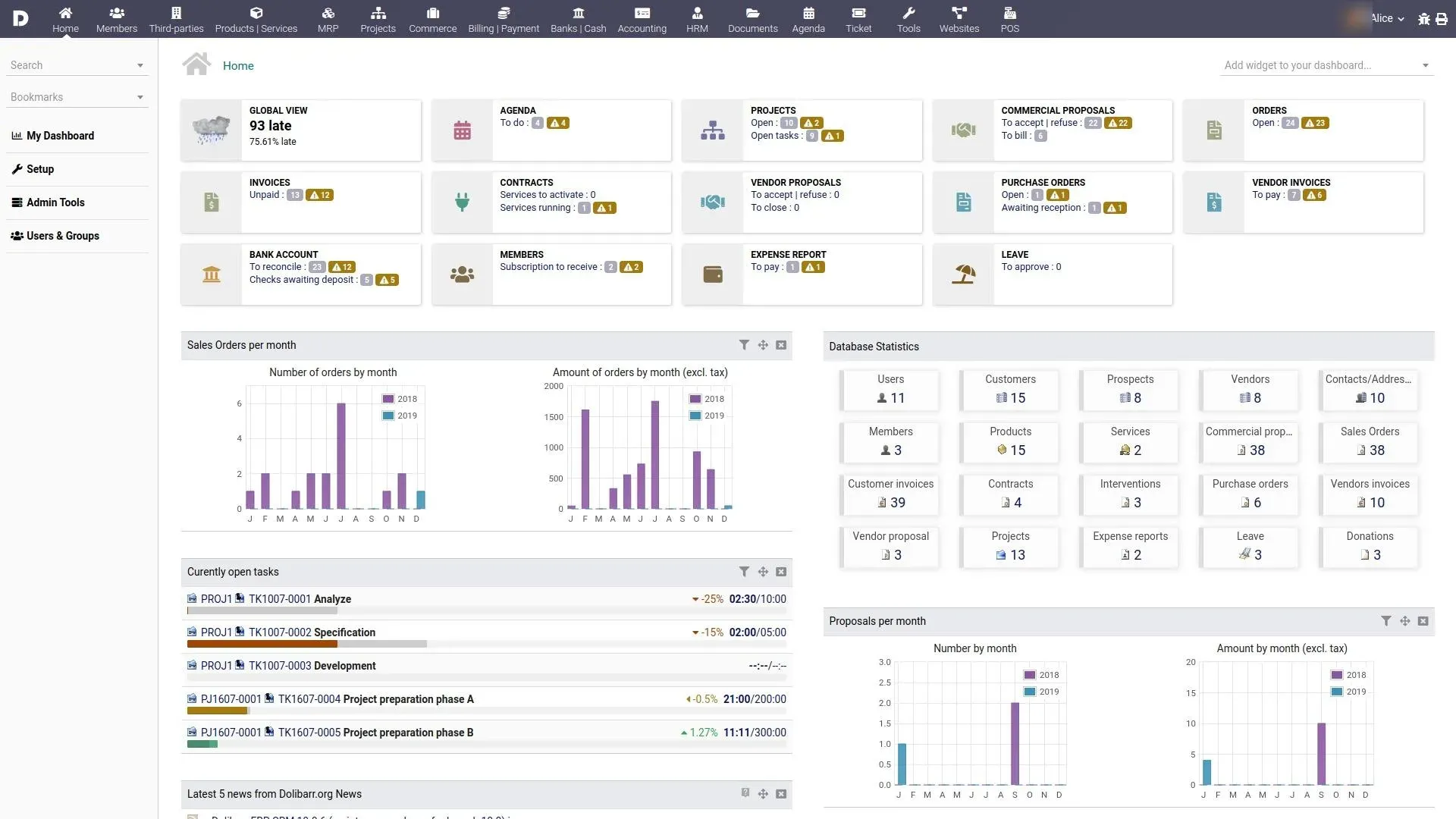
Dolibarr ERP & CRM is an open-source web application for running the administrative side of a small or medium business, a freelance activity or an association: third parties and contacts, quotes, orders, invoices, stock, accounting, projects, human resources and more. It is written in PHP without a heavy framework and is built from optional modules: the README counts around 100 modules shipped by default, which an administrator enables one by one, plus more than 1000 add-ons on DoliStore, the official marketplace. According to the project wiki's origin and history page, the first commit was made on April 29, 2002 and version 1.0 was released in September 2003.
The project is promoted by the Dolibarr association, which dolibarr.org says was created in 2009 and which hosts and maintains that portal. The wiki page on the Dolibarr foundation states that it is registered as a French foundation with a postal address in Olivet, France, and the project organization page lists its roles: owning the trademark, administering most Dolibarr domain names, and hosting the international portal, the online demo, the wiki and DoliStore. Development is coordinated by a core team on GitHub, with national portals for Spain, Germany and Italy and a network of integrators listed on partners.dolibarr.org.
Dolibarr is released under the GNU General Public License version 3 or any later version (GPL-3.0-or-later); the README notes that some bundled dependencies carry other licenses, listed in the COPYRIGHT file. Stable releases are published on GitHub and on SourceForge in several forms: a generic .zip or .tgz archive for any web server with PHP, DoliWamp (an all-in-one Windows installer), DoliDeb packages for Debian and Ubuntu, DoliRpm packages for Fedora, Red Hat and openSUSE, and the official dolibarr/dolibarr Docker image. For hosted use, the project points to a wiki list of cloud solutions run by third-party providers, several of them Dolibarr Preferred Partners; these are paid commercial services and are not operated by the Dolibarr project itself.
The current stable release is 24.0.3, marked Latest on GitHub and published on November 11, 2026. It is a maintenance release of the 24.0 branch with fixes across agenda, manufacturing orders, TakePOS, accounting exports, expense reports and the REST API, for example keeping the order of invoice lines sent with POST /invoices and fixing recurring agenda events that shifted by one hour after a daylight saving time change. Version 24.0.0 (August 20, 2026) added an experimental MCP server and AI assistant, a stabilized stock transfer module, WebPortal support for interventions and tickets, accrual or cash accounting selection, accounting transaction templates and PDF generation in the Salaries module. It also disabled the login APIs by default in favor of bearer tokens and removed the deprecated Paybox and Deplacement modules. On November 15, 2026, dolibarr.org announced the feature freeze of the Dolibarr 25 beta, which is not a stable release.
According to the README, the project does not yet provide task dependencies in projects, a payroll module or a native embedded webmail, and multi-company support requires an external module. Documentation for administrators, users, developers and translators lives on the Dolibarr wiki, and support questions go to the official forums. Other ERP suites listed on iThub include ERPNext and Ever Gauzy.
Key capabilities
- Third parties and contacts One third-party record can be a prospect, a customer, a supplier or several of these at once, with linked contacts and addresses, tags, bank details, notes, linked files and an event history. Customer and vendor codes, professional IDs and VAT numbers are stored per country, and 24.0 added bank country, state, currency and status to third-party bank accounts.
- Commercial proposals, orders and contracts Sales modules cover commercial proposals with online signing, customer orders, contracts and subscriptions, interventions and shipments. Documents move along the chain from proposal to order to invoice, and each object can generate PDF or ODT documents from templates.
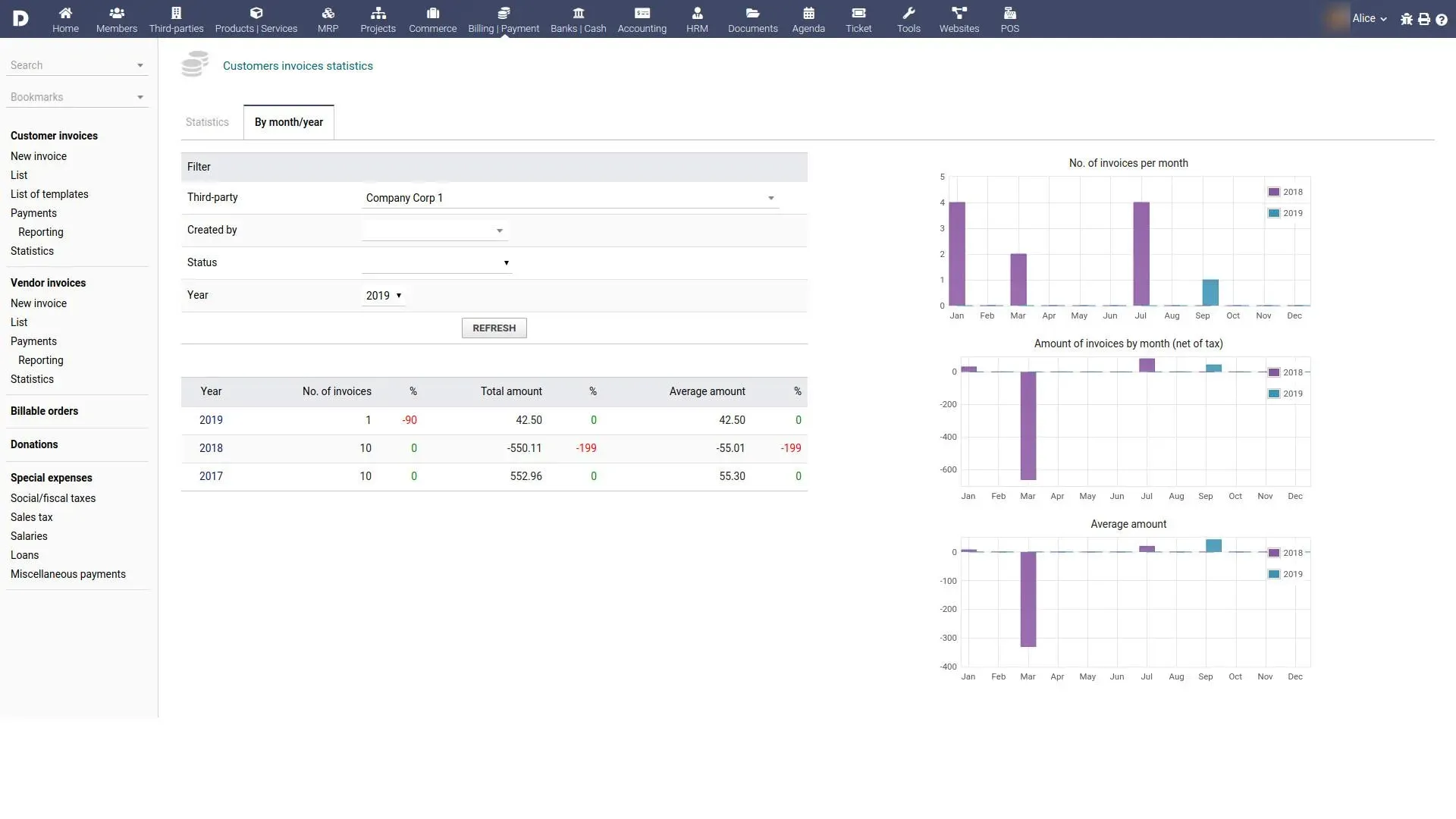
- Invoicing and payments Customer invoices, credit notes, deposits and templates for recurring invoices are handled in the billing module, with payment recording and bank reconciliation. Since 24.0 an invoice generated from a template can be sent automatically by email.
- Purchasing Supplier price requests, purchase orders, receptions and supplier invoices or credit notes mirror the sales side. INCOTERMS can be set on documents, and 24.0 allows a discount on all lines of supplier documents.
- Accounting The accounting module provides double-entry bookkeeping with journals, ledgers, a balance, VAT reports and exports to external accounting formats such as FEC and Quadra. Version 24.0 added selection between accrual and cash accounting, a multi-report system and transaction templates. Bank accounts, SEPA direct debit and credit transfers, loans, donations and social or fiscal charges are separate modules.
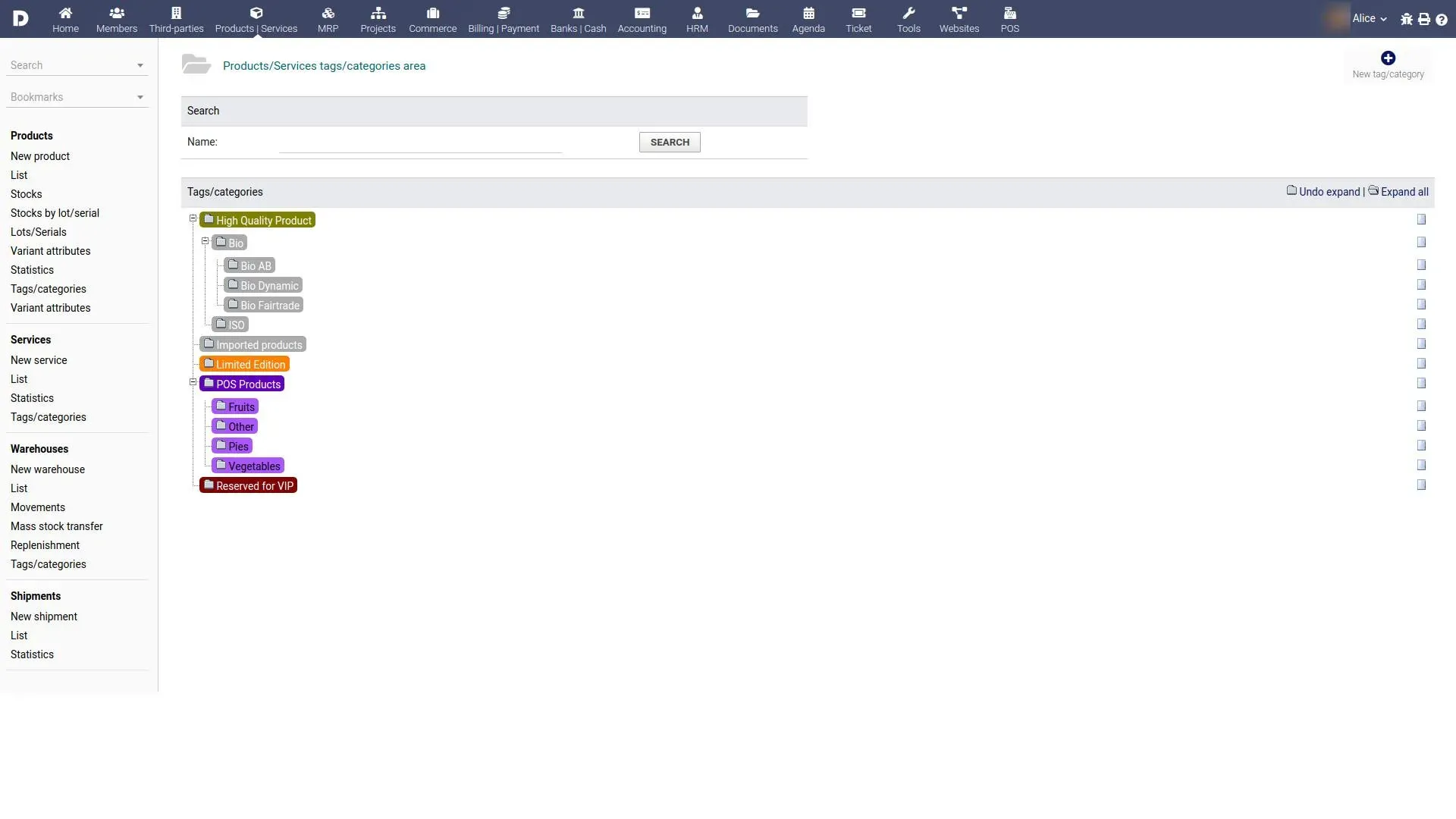
- Products, stock and warehouses Products and services share one catalogue with variants, barcodes and lots or serial numbers. Stock is tracked per warehouse with movements, inventories and replenishment, and 24.0 stabilized the new stock transfer module.
- Manufacturing (MRP) The MRP area contains Bills of Materials, Manufacturing Orders and workstations. Maintenance release 24.0.3 blocks consuming or producing on a manufacturing order that is still a draft, already produced or canceled.
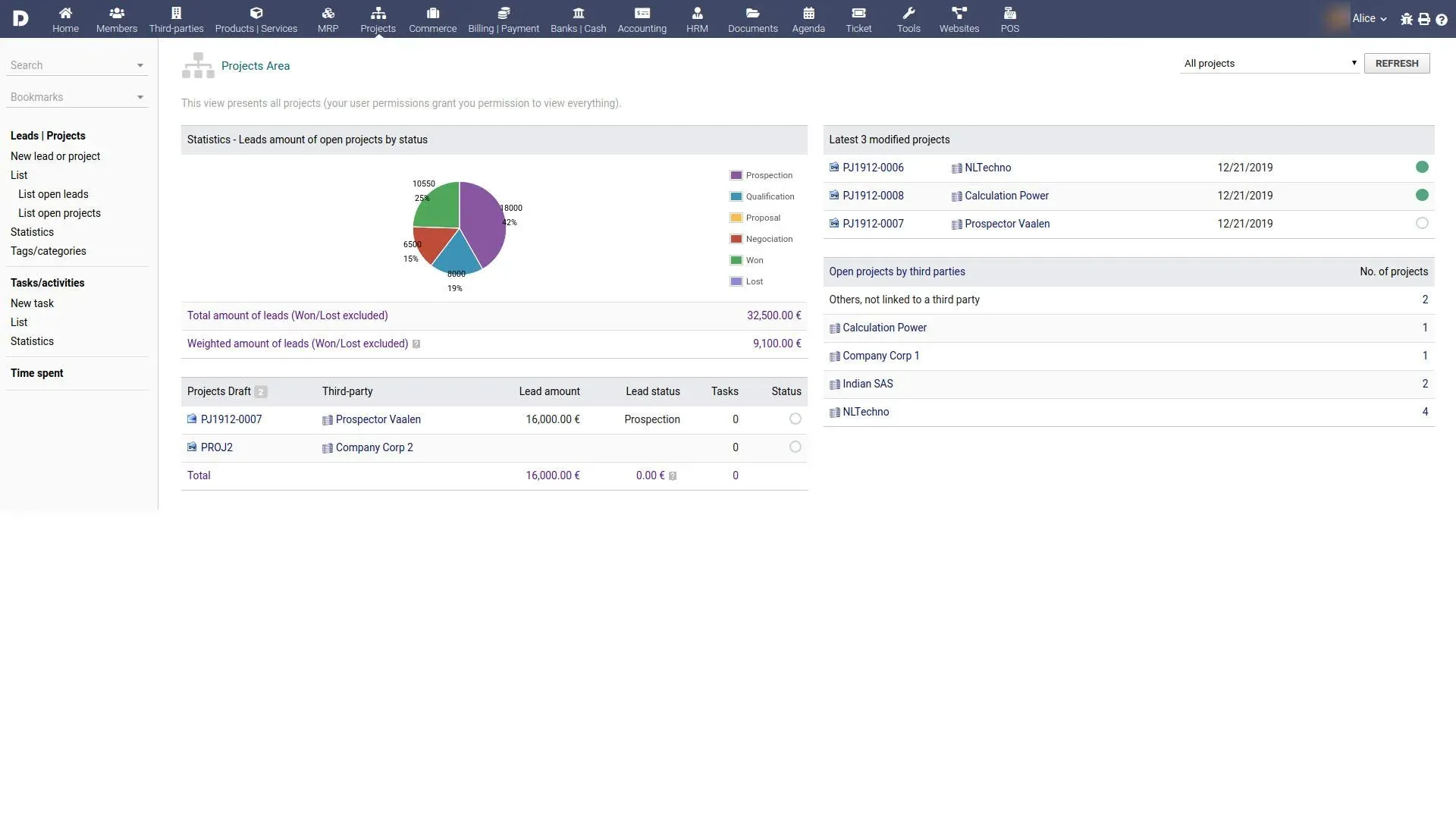
- Projects, tasks and timesheets Projects can be used as leads or opportunities with a status and an amount, and contain tasks with planned workload and time spent. The README states that task dependencies are not supported yet.
- Human resources HR modules cover employees, leave requests, expense reports, timesheets, recruitment, skills and job positions, and salaries, which gained PDF generation in 24.0. A payroll module is listed in the README as not available yet.
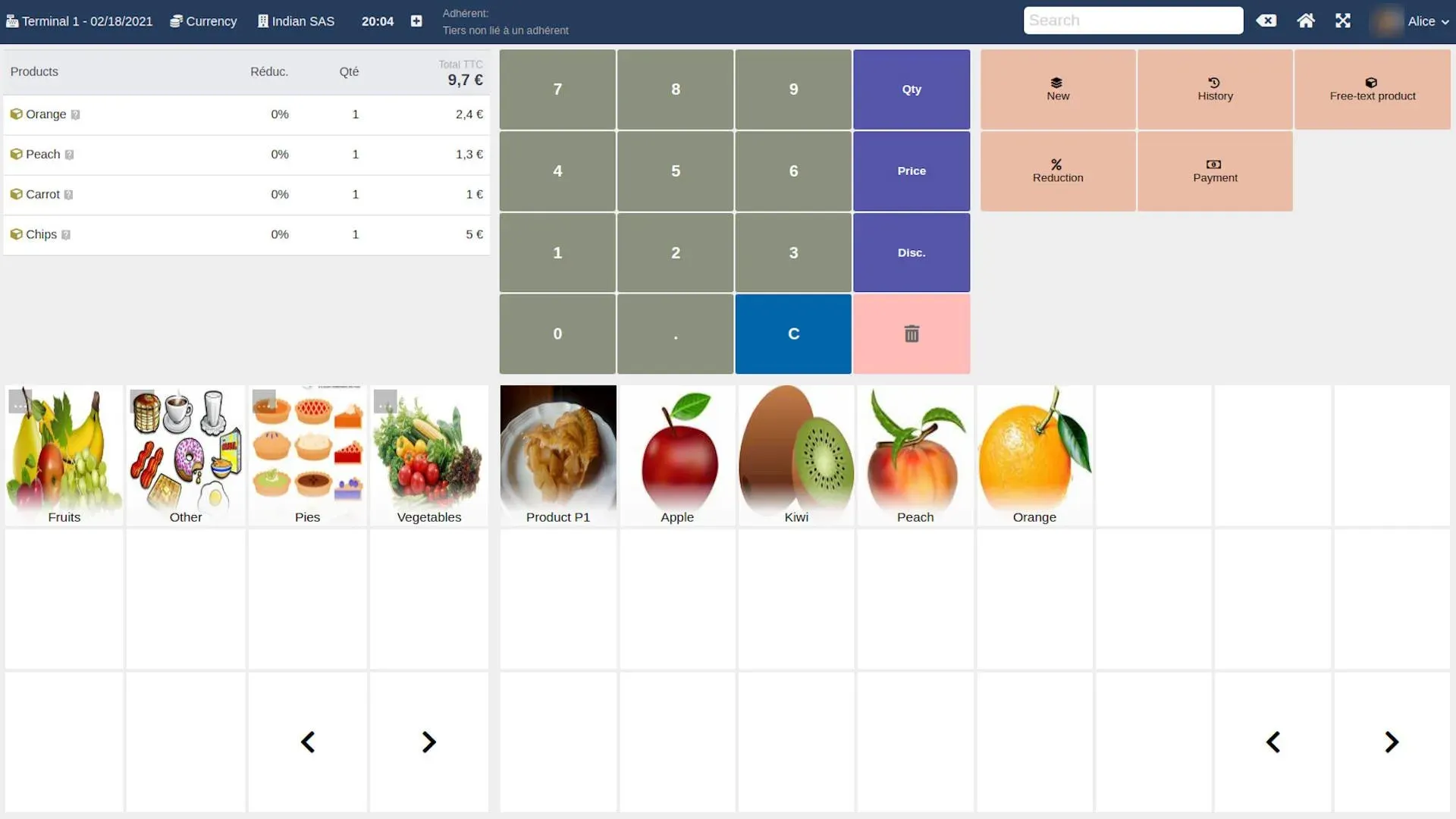
- Point of sale with TakePOS TakePOS is the built-in touch-screen point-of-sale module with a numeric keypad, product categories with images, discounts, free-text products and payment buttons. It depends on the invoice, bank, product and category modules, can decrease stock on invoice creation, and has optional bar and restaurant features with a table plan, receipt printers and order printers for sending orders to a kitchen.
- Websites, tickets and members The website module is a built-in CMS for publishing web pages from Dolibarr, and a ticket system with knowledge base handles customer requests. Members management covers associations and foundations with subscriptions, and further modules handle event organization, surveys, mass emailing and partnerships.
- Agenda and documents A shared agenda records events manually and automatically from business objects, with month, week, day and per-user views and iCal or vCal export. An electronic document management area stores generated and uploaded files per object.
- REST and SOAP APIs The API REST module exposes endpoints under
/api/index.php/with an interactive explorer and aswagger.jsondescription, authenticated with a per-user API key sent in theDOLAPIKEYheader. Since 24.0 the login APIs are off by default and must be enabled withAPI_ENABLE_LOGIN_API. The README also lists SOAP web services. - Experimental MCP server and AI assistant Release 24.0.0 introduced an experimental MCP server and AI assistant, and the README lists AI support via API. The project labels these features experimental.
- Module Builder and customization The low-code Module Builder generates new objects, pages and tabs, and 24.0 lets developers choose which optional tabs are generated. Extra fields, menu managers, themes, hooks and triggers allow changes without editing the core code.
- Localization and country rules The interface is translated into most major languages, with multi-currency and many country-specific rules in the core, for example Spanish RE and IRPF taxes, Canadian federal and provincial taxes, ZATCA e-invoicing QR codes and the European VAT directives.
- Windows installer: DoliWamp DoliWamp is an executable installer (for example
DoliWamp-24.0.3.exeon SourceForge) that bundles Apache, MySQL and PHP with Dolibarr for users without a web server. The wiki notes that a DoliWamp installation must be upgraded with a newer DoliWamp package. - Linux packages: DoliDeb and DoliRpm DoliDeb packages such as
dolibarr_24.0.3-4_all.debtarget Debian 8 or later and Ubuntu 18.04 or later and are installed withdpkg -i, followed byapt-get install -fto pull dependencies. DoliRpm packages exist for Fedora, Red Hat and openSUSE. - Docker image The official
dolibarr/dolibarrimage on Docker Hub is built from the Dolibarr/dolibarr-docker repository for amd64 and arm64. It does not contain a database: the documented Docker Compose file pairs it with MariaDB and persists/var/www/documentsand/var/www/html/customas volumes. - Generic install and requirements The generic archive runs on any web server with PHP, such as Apache, Nginx, Lighttpd or IIS. The 24.x releases support PHP 7.2 to 8.5 and MySQL 5.7.7 or later, MariaDB 10.3 or later, or PostgreSQL 9.1 or later, with at least 128 MB of PHP memory and about 150 MB of disk for the program files; Microsoft SQL Server support is experimental and not working.
Where Dolibarr ERP & CRM fits
Quote-to-cash for a small company
A typical sales flow starts with a third party marked as prospect, continues with a commercial proposal that the customer can sign online, and is converted into a customer order, a shipment and an invoice. Payments are recorded against the invoice and matched in the bank module, and the accounting module transfers the entries into journals for the period close.
Retail or hospitality sales with TakePOS
Shops and restaurants enable the TakePOS module, define terminals, product categories with images and payment methods, and, for bars and restaurants, a plan of tables. TakePOS records sales as customer invoices in the same database as the back office, can decrease stock when the invoice is created, and in restaurant mode can send orders to kitchen printers before payment.
Stock and light manufacturing
Companies that assemble products describe components in Bills of Materials and launch Manufacturing Orders that consume components and produce finished goods per warehouse. Lots and serial numbers, inventories, replenishment proposals and stock transfers between warehouses are handled in the Products and Stock area. Version 24.0 also allows recording a stock movement with a quantity of 0.
Association and membership management
Associations and foundations use the Members module for member types, subscriptions and renewals, together with donations, event organization, mass emailing and the website module for a public site. The README lists members and foundation management among the main modules.
Projects, time and expenses for service businesses
Freelancers and service teams create projects linked to customers, break them into tasks, record time spent in timesheets and bill the time. A project can also carry an opportunity status and amount, and the Projects area sums open lead amounts by status, including a weighted total. Employees submit leave requests and expense reports that managers approve in the HR modules.
Integrations through the REST API
External tools such as a web shop or a reporting job call the REST API after an administrator enables the API REST module and generates an API key for a dedicated user. The explorer at /api/index.php/explorer lists the available endpoints, and the swagger file describes them in a machine-readable form. Since 24.0 the login APIs are disabled by default, so clients send the user's API key in the DOLAPIKEY header; with the external multicompany module, a DOLAPIENTITY header selects the entity. Additional connectors and modules are distributed through DoliStore.
Reviews of Dolibarr ERP & CRM
Be the first to share your experience with Dolibarr ERP & CRM.
Write a review
Loading review form…
Found Dolibarr ERP & CRM useful? Upvote it todayYour vote helps other IT teams find it in the daily ranking.