
What is CCXT?
CCXT, short for CryptoCurrency eXchange Trading Library, is an open-source library for connecting software to cryptocurrency exchange APIs through one unified interface. According to the official About page, the project began in 2017 to replace the separate integration work that each exchange required, with different endpoints, signing schemes and data formats. The README describes its intended users as coders, developers, technically skilled traders, data scientists and financial analysts who build trading algorithms, market data storage, analysis, backtesting and related software.
The library is written once in TypeScript and transpiled into other languages. The README install section lists packages for JavaScript and TypeScript on npm, Python on PyPI, PHP on Packagist, C# on NuGet, Go as a Go module, Java on Maven Central and Rust on crates.io. The Python, PHP, C#, Go, Java and Rust folders in the repository are marked as generated from the TypeScript source. As of November 16, 2026, the README states that CCXT supports 103 cryptocurrency exchange markets and trading APIs plus 9 prediction market exchanges, and its summary line describes this as more than 100 exchanges and prediction markets. The full list with API versions, exchange types and certification status is kept in the Exchange Markets wiki page.
Releases are frequent. The latest GitHub release at the time of checking is v4.5.92, published November 4, 2026, following v4.5.91 on October 29 and v4.5.90 on October 23. Its changelog adds fetch_route and execute_route tools to the MCP server on top of the CCXT OrderRouter, a userAgent option for OrderRouter, unWatchTrades and unWatchOHLCV for HitBTC, conditional and take-profit or stop-loss orders for Revolut X, and fixes for Bybit liquidation streams, Bitget order streams and market loading, Coinbase International private calls in Python, and liquidation caches in the Go and Java builds.
CCXT is released under the MIT license. The README Disclaimer states that CCXT is software, not a service or a server, and describes it as free, open-source, non-custodian API broker software: it does not hold traders' money, users talk to exchanges directly, and the software is used at the user's own risk without warranties. The project is funded through rebates from exchange API broker programs. For a set of builder code exchanges listed in the README, an optional 1 basis point fee is added on top of exchange fees and can be disabled with exchange.options['builderFee']; the README states that no additional fee is charged on other exchanges.
Out of scope: CCXT does not create exchange accounts or API keys, and the README notes that some exchanges require identity verification before private API access. CCXT Terminal, a non-custodial trading platform from the same team that is promoted in the README, is a separate product and not part of the MIT library. Other trading-related projects on iThub include Hummingbot, OctoBot and OpenBB.
Key capabilities
- Unified exchange API Every supported exchange is exposed through the same method names and data structures, such as
fetchTicker,fetchOrderBook,fetchOHLCV,createOrderandfetchBalance. Symbols follow a common format likeBTC/USDT, and the library can optionally normalize responses for cross-exchange analytics. Not every exchange implements every method; theexchange.hasdictionary reports which unified methods an exchange supports. - Exchange coverage As of November 16, 2026, the README lists 103 cryptocurrency exchange markets and trading APIs and 9 prediction market exchanges, including Polymarket, Kalshi, Hyperliquid, Limitless and Myriad. A separate group of exchanges carries the CCXT Certified badge; the Certification page says certified integrations are technically supervised and tested by the CCXT team. The README notes that the list changes regularly.
- Public market data without an account The public part of the library works immediately after installation and needs no API key. It covers markets and trading pairs, price tickers, order books, trade history, OHLCV candles and other public endpoints offered by each exchange.
- Private account and trading APIs With API keys created on an exchange website, the private API can query balances, ledgers and personal orders, place market and limit orders, transfer funds between accounts, and deposit or withdraw where the exchange allows it. CCXT does not create accounts or keys, and exchange requirements such as identity checks remain with the exchange.
- WebSocket streaming (CCXT Pro) The Pro manual describes CCXT Pro as a free part of CCXT that adds WebSocket streaming through
watch*methods such aswatchOrderBook,watchTicker,watchTrades,watchOHLCV,watchBalanceandwatchOrders. The README states that full public and private REST and WebSocket APIs are implemented for all exchanges in TypeScript, JavaScript, PHP and Python, and documents WebSocket use through pro exchange classes in Java and the separateccxt-procrate in Rust. In the README exchange table on November 16, 2026, 72 of the 103 listed exchanges carry the CCXT Pro badge. - JavaScript and TypeScript package Installed with
npm install ccxt; the README feature list states Node 18 or newer, and the package supports both ESM and CommonJS. An all-in-one browser bundle is published on the jsDelivr and unpkg CDNs for use with a script tag; the README notes that CDN copies can lag behind new releases. - Python package Installed with
pip install ccxt. An asynchronous variant based on asyncio is imported fromccxt.async_support. For exchanges that sign requests with ECDSA, such as Hyperliquid, Binance and Paradex, CCXT detects the optionalcoincurvepackage, which the README says reduces signing time from about 45 ms to under 0.05 ms compared with the bundled pure Python implementation. - PHP package Distributed on Packagist as
ccxt/ccxtfor PHP 8.1 or newer. The README lists the cURL, mbstring, PCRE, iconv and gmp modules as requirements, and asynchronous use is supported with ReactPHP. - C# and Go packages The C# build is published on NuGet for netstandard 2.0 and 2.1. The Go module is installed with
go install github.com/ccxt/ccxt/go/v4@latestand requires Go 1.20 or newer; because Go has no optional arguments, the Go build uses option structs andWithXhelper functions for optional parameters. - Java and Rust builds The Java build requires Java 21 or newer, uses Gradle and is published as
io.github.ccxt:ccxt, with typed return values and both blocking andCompletableFuturemethods. The Rust cratesccxtandccxt-proare asynchronous and expect a Tokio runtime. The README warns that compiling every exchange needs about 19 GB of RAM for a debug build and 50 GB in release, and documents per-exchange cargo features to limit the build. - Built-in rate limiting Requests are paced by a leaky bucket rate limiter by default. Setting
rateLimiterAlgorithmtorollingWindowswitches to a window-based limiter with a default 60 second window that can be changed withrollingWindowSize. - Market metadata, precision and limits Loaded markets include precision, minimum and maximum amounts and prices, fee data and active status. The Manual documents the currency, network, market, order book, ticker and OHLCV structures, helper methods for formatting decimals, and pagination patterns for date-based, id-based and cursor-based endpoints.
- Testnets and sandbox mode For exchanges that offer a test environment,
setSandboxMode(true)switches the instance to it. The Manual states that this call must come immediately after creating the exchange instance, before any other call. - Implicit API methods In addition to the unified methods, each exchange class exposes implicit methods that map to the raw endpoints of that exchange API. They return the exchange-specific response format and cover functions not included in the unified API.
- Two naming styles All methods can be called in camelCase, preferred in TypeScript and JavaScript, or in snake_case, preferred in Python and PHP. Code examples for each language are kept in the examples folder.
- CCXT CLI The command-line interface is installed with
npm i ccxt-cli -gand calls any CCXT method by exchange id, method name and arguments, for example to fetch data or place an order from a shell. Theexplaincommand prints the arguments a method expects. API keys can be provided through environment variables or a config file, as described in the CLI documentation. - Official MCP server The ccxt-mcp server requires Node.js 18 or newer and runs locally over stdio for MCP hosts such as Claude Code, Claude Desktop, Cursor, VS Code and Windsurf. By default it offers public market data only; private reads, trading, fund transfers and raw endpoints are separate opt-in tiers set in a local config file. The README states that API keys stay on the local machine and are referenced by account name only, and live trading requires the explicit value
"live"plus amaxOrderValuedecision. - AI coding assistant skills and playground Language-specific skills for AI coding assistants are added with
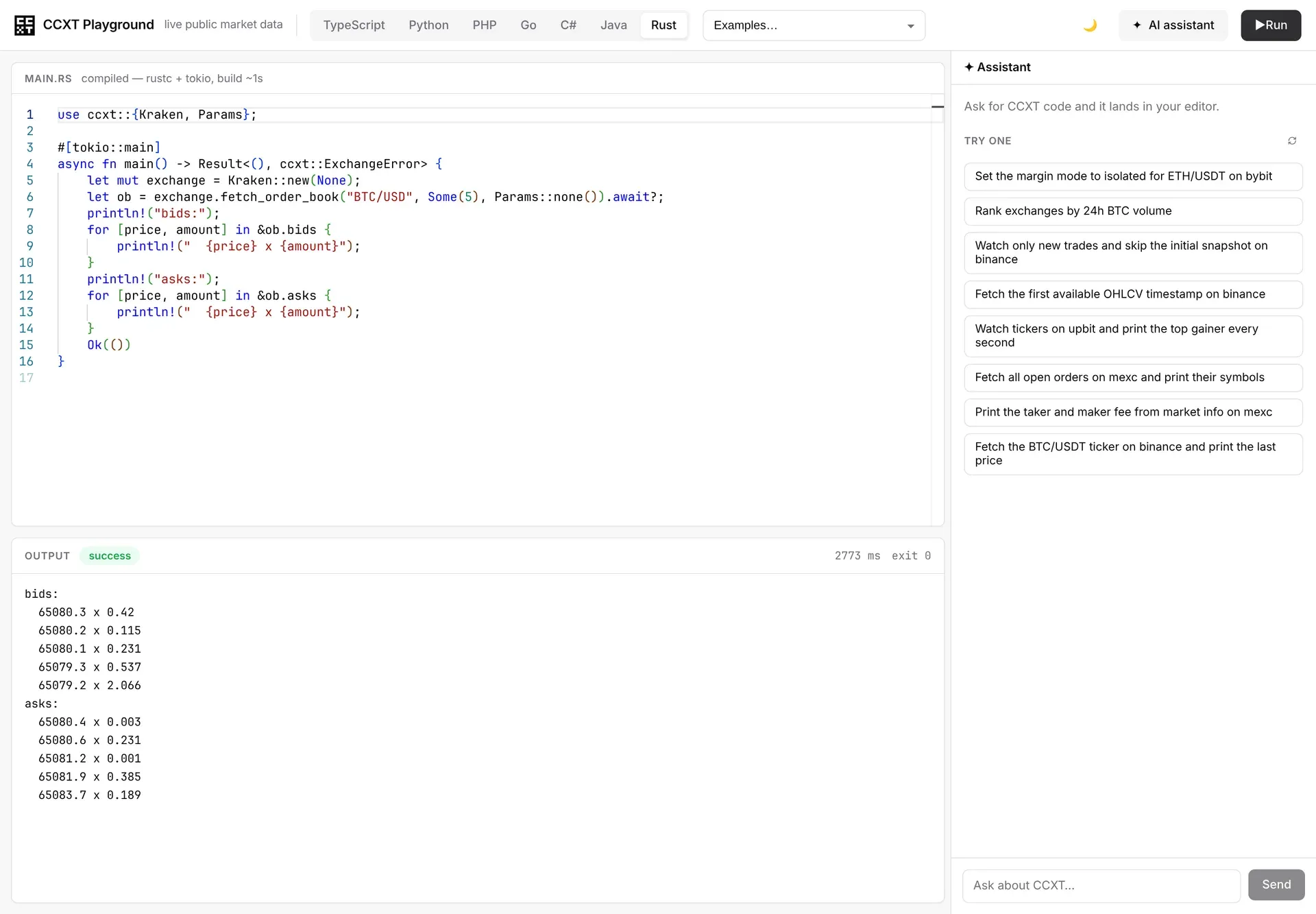
npx skills add ccxt/ccxt, and anllms.txtfile is published in the repository. The CCXT Playground on the documentation site runs code against live public market data in TypeScript, Python, PHP, Go, C#, Java and Rust, with an assistant panel that writes CCXT code into the editor. - Docker environment for contributors The repository includes a docker-compose setup, started with
docker-compose run --rm ccxt, that installs all supported languages and dependencies for running build scripts and tests. The README states that this image is only needed for developing CCXT itself, not for using the library as a package.
Where CCXT fits
Collecting market data for storage and analysis
The README names market data storage, analysis, visualization and indicator development as primary uses. Public methods such as fetchOHLCV, fetchTrades, fetchOrderBook and fetchTickers work without an account. The Manual documents date-based and cursor-based pagination for longer histories, and the built-in rate limiter paces requests to stay within each exchange limit.
Working with several exchanges from one codebase
Because each exchange class shares the unified method names and returns the same structures, the same code can query different venues by changing the exchange id. The README shows exchanges being selected at runtime from a string in every supported language. Exchange-specific options are passed through the params argument, and exchange.has shows which unified methods a given exchange implements.
Account management and order placement
With exchange-issued API keys, the private API reads balances, open and closed orders, trades and ledger entries, and creates, edits or cancels orders. Sandbox mode, where the exchange provides one, routes these calls to a test environment. The README disclaimer states that CCXT is non-custodial: orders and funds stay on the exchange, and CCXT acts as client software.
Streaming prices, books and orders over WebSocket
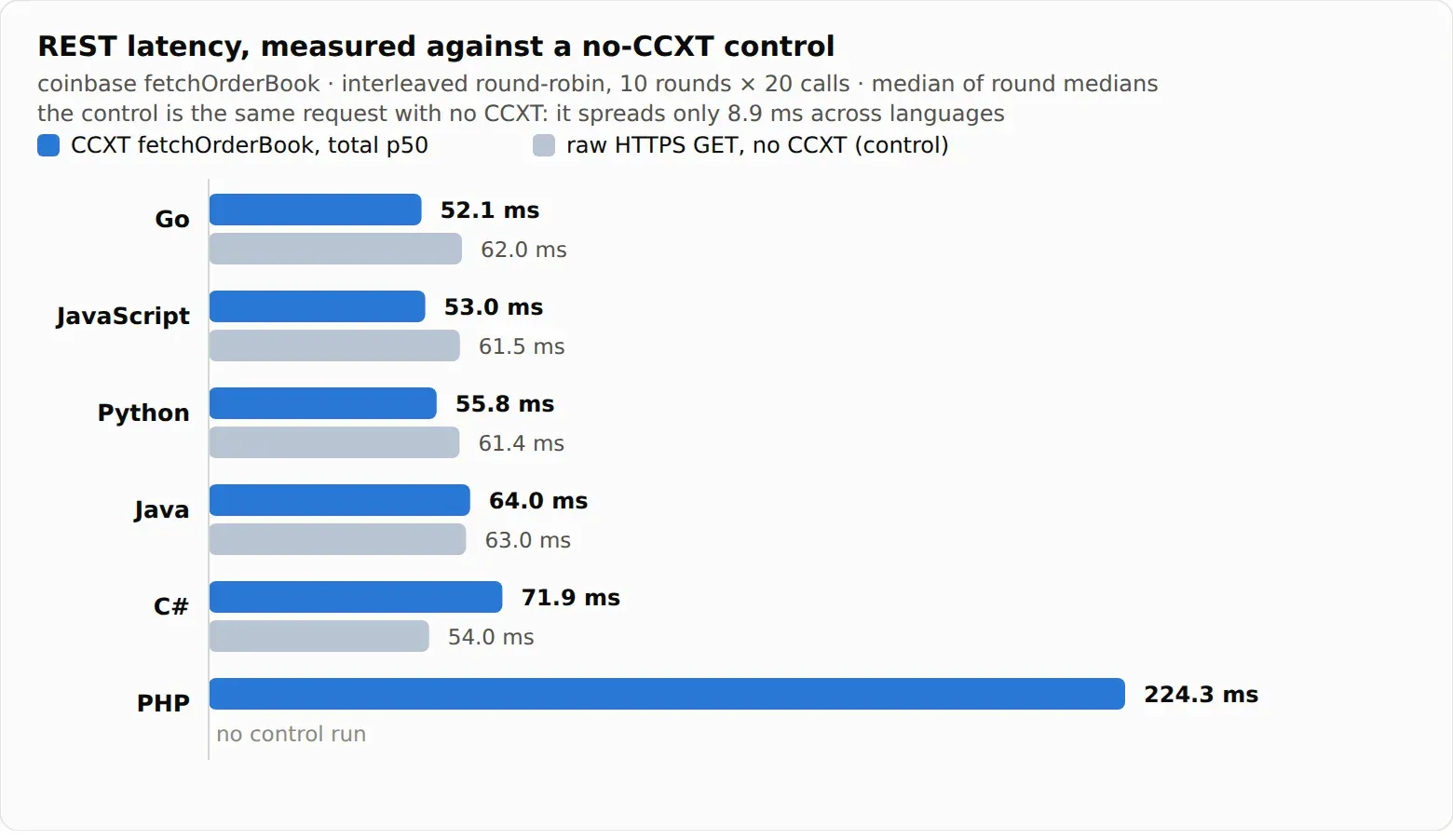
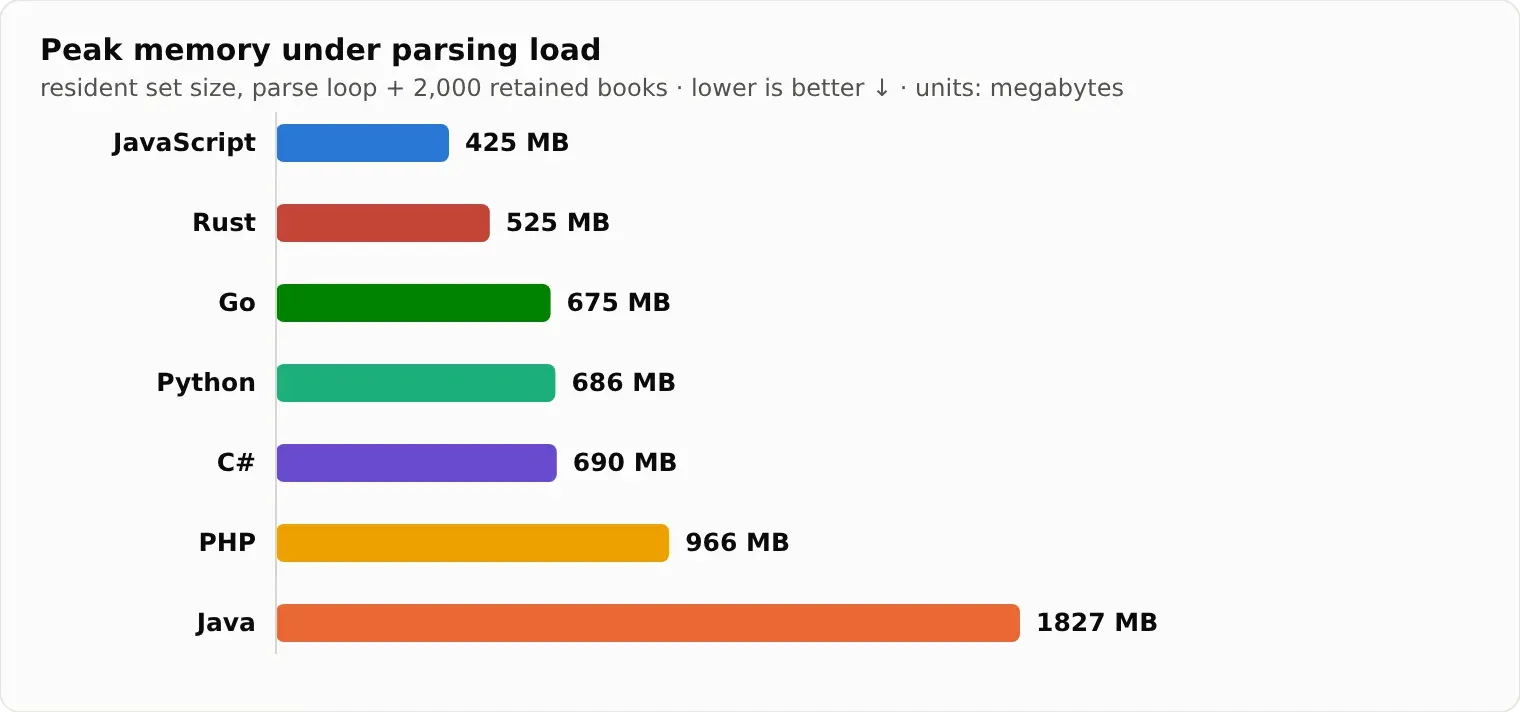
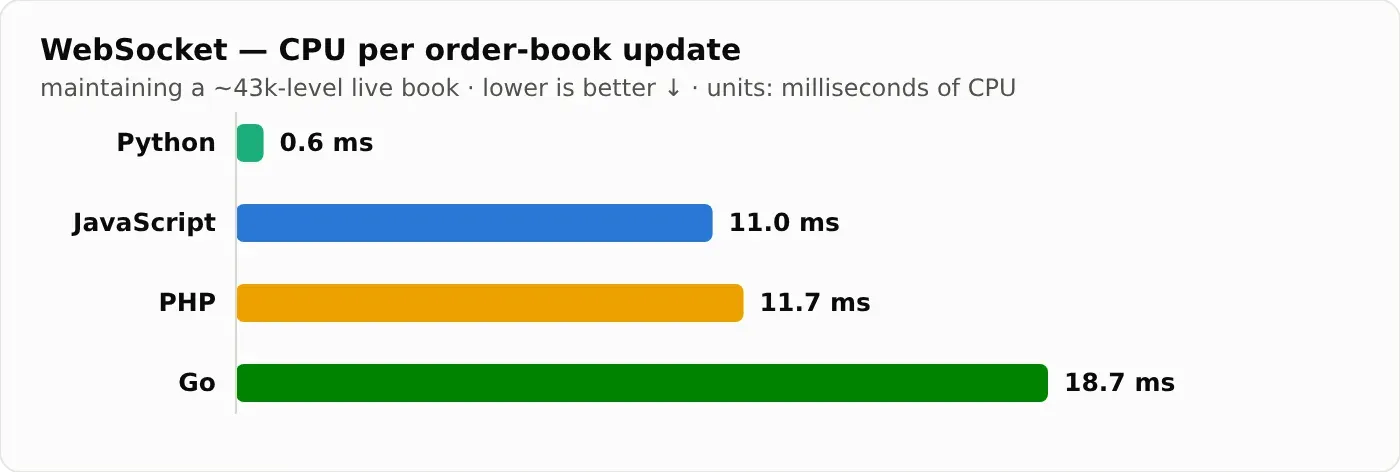
The CCXT Pro watch* methods keep a live order book, ticker, trade or OHLCV stream open and return updates as they arrive, with private streams for balances, orders, positions and own trades. Some exchanges also support WebSocket variants of REST calls, such as createOrderWs, listed in exchange.has. The CCXT blog post on performance across languages, published July 14, 2026, reports the team's own REST latency, parsing, memory and WebSocket CPU measurements per language.
Calling exchanges from the terminal
CCXT CLI exposes the same methods as shell commands, which the README positions for shell scripting, testing and debugging without writing an application. A call names the exchange id, the method and its arguments, and ccxt explain lists the required and optional arguments of a method.
Connecting AI agents and coding assistants
The official MCP server gives MCP hosts access to market data and, when enabled in the local config, to balances and trading on the supported exchanges and prediction markets, with confirmation flows, notional caps and an audit journal described in its README. The AI Skills documentation covers the language-specific skills for coding assistants, and the documentation playground includes an assistant that generates CCXT examples.
Install
npm install ccxtReviews of CCXT
Be the first to share your experience with CCXT.
Write a review
Loading review form…
Found CCXT useful? Upvote it todayYour vote helps other IT teams find it in the daily ranking.