

What is Hallmark?
Hallmark is an MIT-licensed design skill for AI coding agents that builds web pages and checks them against written design rules. It targets Claude Code, Codex CLI, Cursor and OpenCode, and its stated aim is a page that does not read as machine-made. A build deals a theme from a catalog of fifty, lays the page out around what the visitor came to do, and lints the result in a real browser for tells such as an eyebrow label above every heading, one coloured word in a headline, a hero that misses the first screen or a form that says thanks without sending anything. A reviewer in fresh context has the last word.
The repository belongs to the GitHub account Nutlope (Hassan El Mghari). The README states that Hallmark is made by Together AI, and the usehallmark.com website credits Hassan and Youssef as its creators. The repository was created in April 2026. The skill is free under the MIT licence and the website lists no paid plan. No API key is required: photographs come from a built-in library, and a TOGETHER_API_KEY is read only for optional comps and generated images.
Hallmark ships as one skill folder holding SKILL.md, Markdown references and Node.js scripts, installed with the skills CLI or as a Claude Code plugin. The SKILL.md front matter and the plugin manifest declare version 2.0.0, set on October 21, 2026. There are no GitHub releases, tags or release branches; the security policy states that the installer takes the latest main and that only main is supported. According to the README, v2 added the fifty-theme catalog, pages built from the visitor's job, a custom mode, screenshot capture of the user's own product, a 755-photo library, and the redesign and audit verbs.
The scripts have no dependencies of their own. theme.mjs deals themes and page anatomy and writes tokens.css and base.css scaffolds; sloplint.mjs implements the mechanical gates over HTML, CSS, framework components and Tailwind classes; capture.mjs takes screenshots; install-hook.mjs adds an edit-time check to Claude Code. Output is self-contained HTML and CSS, or edits in the project's framework files, stamped in the first CSS comment with the decisions taken. Node 18 or later is required; the browser checks also need puppeteer-core and Chrome, and without them only the static checks run.
Hallmark describes itself as a taste skill: it does not invent copy, choose a brand identity or build application logic, and it never starts on an existing design unless the user names it with redesign or audit. The README lists Impeccable, taste-skill and UI UX Pro Max among its inspirations. Similar listings on iThub: Impeccable, Taste Skill, Unslopovich and unslop.
Key capabilities
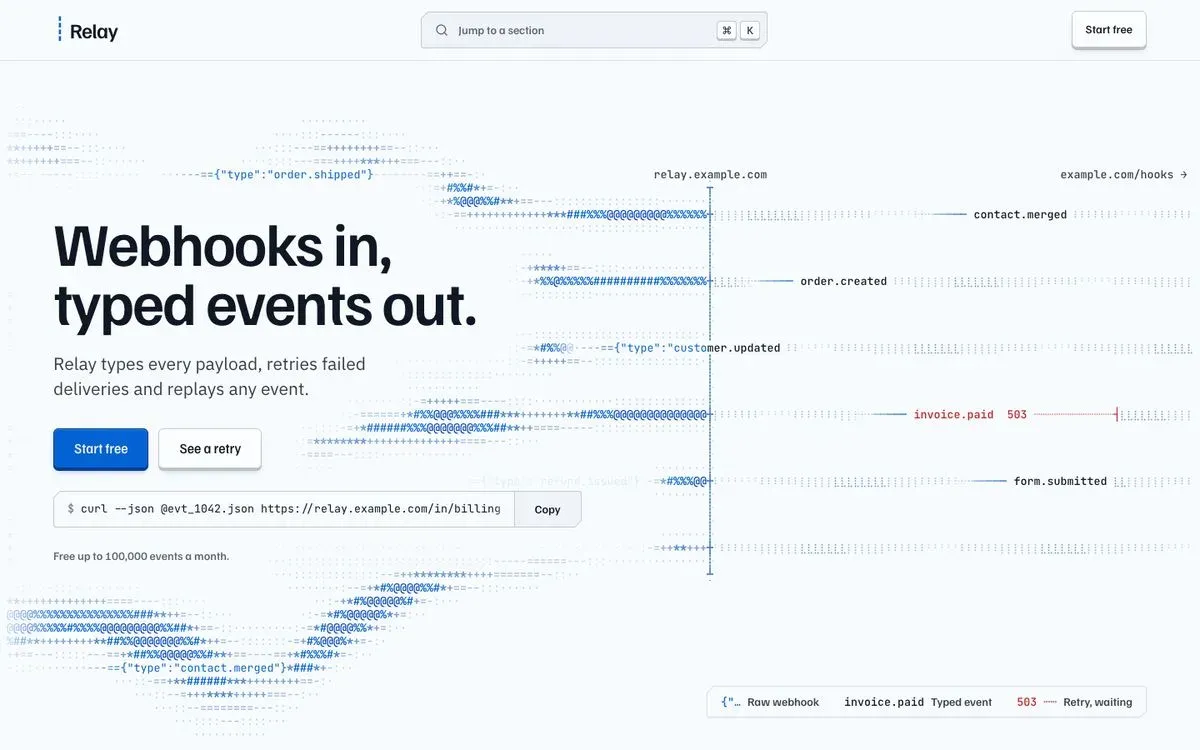
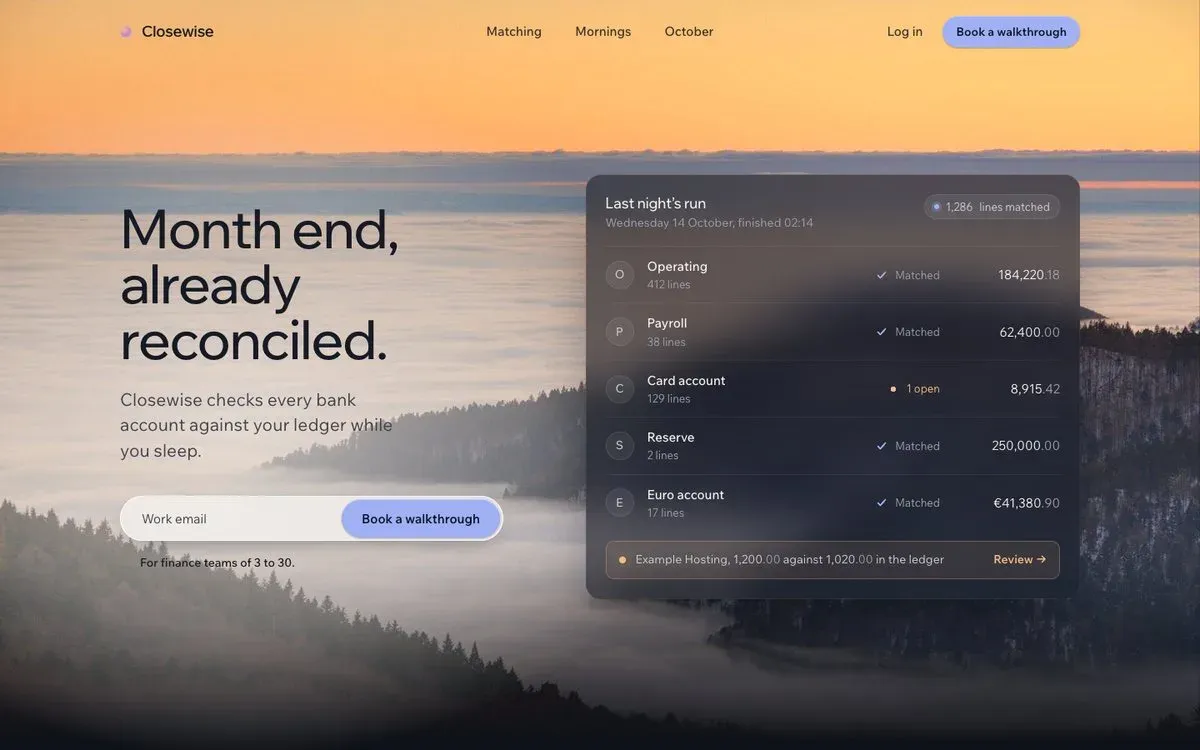
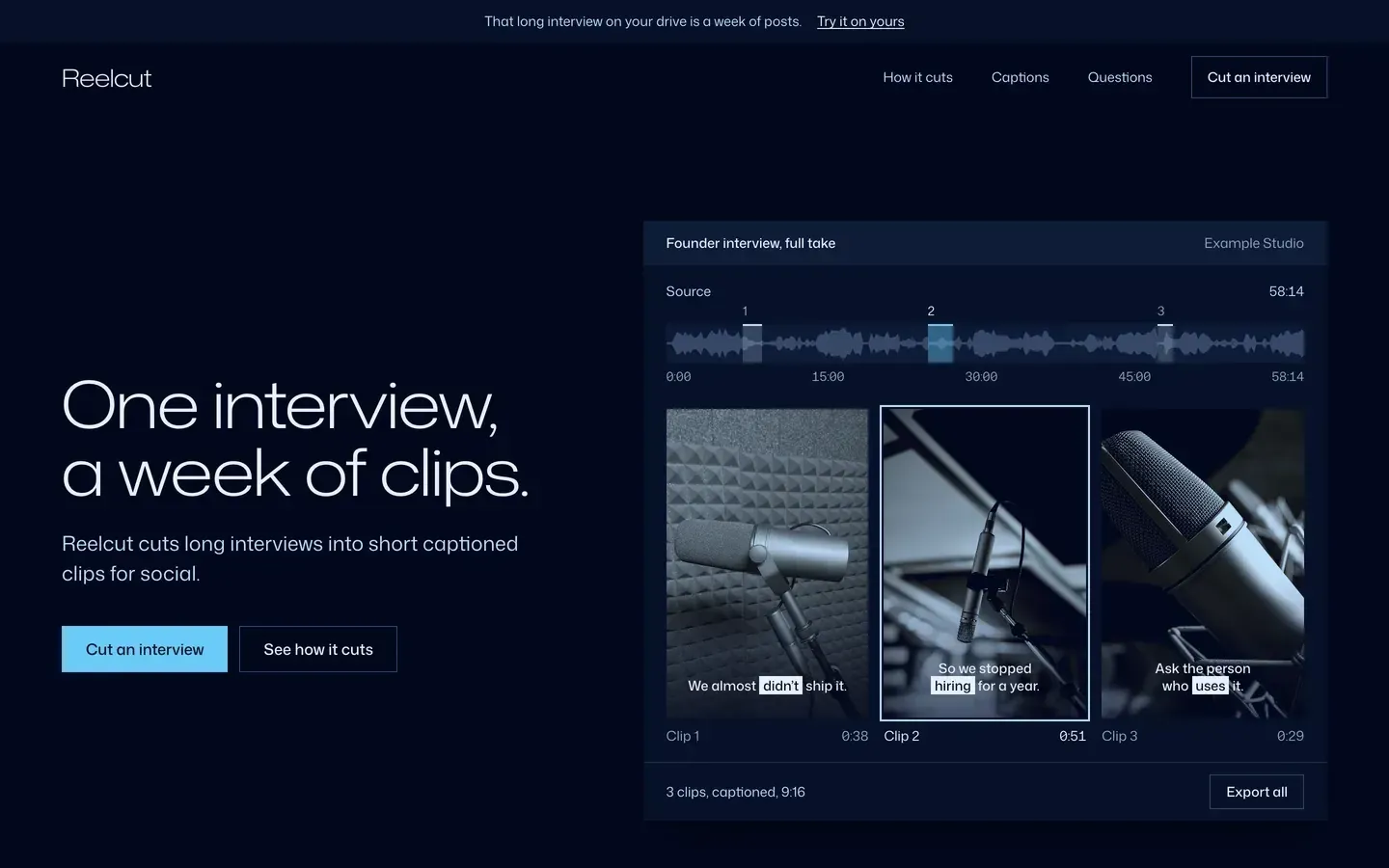
- Fifty themes Each theme is a material: paper, type, colour, surfaces and its own components and texture, shown with a picture of a finished page. The website groups them as 20 editorial, 12 modern minimal, 9 atmospheric and 9 playful, with names such as Cobalt, Dusk, Hedgerow and Midnight. Each theme is one file of at most 8 KB, and a build reads exactly one. A theme never fixes a page's sections or their order, so two prompts in one theme give two different pages; all fifty are on usehallmark.com.
- Theme deal and page draw
theme.mjs dealoffers three themes that fit the prompt and differ from recent builds in.hallmark/log.json; the agent picks one and says why.theme.mjs drawthen deals the page anatomy: a shape from 21 macrostructures (bento grid, long document, workbench, letter, catalogue and others), the hero posture, nav, footer and where the main action sits. - Custom mode Asking for custom drops the catalog, the draw and the layout files. The agent designs from the prompt alone with the brief in
direction.md, built around one idea specific to the client, while the Floor, the gates and the browser sweep still apply. - Pre-flight and one question Before building, Hallmark reads the project: a
design.mdat the root (a locked system that overrides everything else), a brand spec, fonts, palette, spacing, framework and Tailwind config. It then asks once for material (screenshots, photos, real numbers, quotes, usable logos), audience, the one action the page should drive, and tone. Skipped answers are inferred and stated; a number, quote or logo nobody supplied stays absent. - Pages built from the job The build names what a visitor comes to do (book, buy, subscribe, sign up, listen) and reads
anatomy.mdfor where sites in that category place the action and how they end. Budgets in SKILL.md: a headline of seven words or fewer, one sentence of twelve words or fewer, six to nine sections and at most 450 visible words. The hero is built and reviewed before the rest of the page exists. - The Floor Sixteen rules in SKILL.md that no build may waive, among them: every colour and font through a
:roottoken; notransition: all; an instant:focus-visibleon every interactive element; aprefers-reduced-motionfallback and content visible with scripting off; no invented metric, testimonial or logo wall; no eyebrows or tracked-caps labels; no purple-to-blue gradient, card inside a card or emoji icon; headline and primary action visible at 1280 x 800; about 80 words per screen. - Reflex and Finish tiers gates.md lists every gate with a tier. Reflex gates are defaults a model falls into and can be waived in the CSS stamp with the gate number, guard evidence and a reason; a waiver naming a Floor gate is rejected, and past three waivers sloplint notes a house style. Finish checks are craft details that are answered, never blocking. Grades are FAIL, REFLEX, WAIVED, WARN, ANSWERED and NOTE.
- sloplint static checks
sloplint.mjsis a dependency-free linter for HTML and CSS plus.jsx,.tsx,.vue,.svelteand.astrofiles, including Tailwind class strings, souppercase tracking-widest text-xson a label is caught inside a component. Static gates include Inter or Poppins as the display face, more than three font families, a stock palette such as Tailwind's indigo-500, raw spacing where a--space-*token exists, and placeholder or buzzword copy. - Browser render tier With
--render, or--urlfor a dev server, sloplint loads the page in Chrome through puppeteer-core. The README cites checks at eight widths; the roadmap lists the fold at three widths, contrast against the pixels behind the text, focus rings found by tabbing, section rhythm, photo share and text painted under another element. Without puppeteer-core and Chrome only the static tier runs, and the agent is told to say so. - Fresh-context reviews Two reviews close every build: one of the first screen and one of the finished page. The reviewer reads its own brief, which the builder never opens, and its first word sets the next step: recapture, rebuild, fix or ship. On Codex CLI, which has no subagents, the review runs in the same thread and says so.
- Stamp, critique and log The stylesheet opens with the Hallmark stamp of decisions, then a pre-emit critique scoring the planned page from 1 to 5 on philosophy, hierarchy, execution, specificity, restraint and variety. Each build is logged in
.hallmark/log.json, which later deals read to avoid repeating a page. - Screenshots of the real product Given a URL, a running dev server, a project or an app on the machine,
capture.mjstakes the screenshots that go into the page. A Reflex gate flags a built mock of a product that could have been captured. - Openly licensed photo library
photos.jsonlists 755 photographs hosted on Wikimedia Commons and holds no image files. Each keeps its licence (CC0, public domain, CC BY or CC BY-SA) and every photo used is credited on the page. The README states that Unsplash, Pexels and Pixabay are not used because their terms bar AI tools from picking their images. - Redesign with kept wiring
/hallmark redesign <path>keeps every fact, link, form, field, handler, route and test hook and changes the system and layout; keep the layout asks for a restyle and polish fixes only gate findings.sloplint --beforerecords the page first,sloplint --keptfails the run if anything went missing, and the handoff is a side-by-side before and after. Per redesign.md, no file or route is deleted without an approved plan. - Read-only audit
/hallmark audit <path>reports findings by tier withfile:linereferences and the lightest redesign depth that would settle them. It changes none of the project's files. - Install with the skills CLI
npx skills add nutlope/hallmark -ginstalls for every project; without-g, into the current one. Claude Code uses~/.claude/skills/hallmarkand/hallmark <prompt>; Codex CLI uses~/.agents/skills/hallmarkand$hallmark; Cursor and OpenCode find those copies.--agentwithclaude-code,codex,opencode,cursororgithub-copilotlimits the install to one harness. - Claude Code plugin and edit-time hook As a plugin:
/plugin marketplace add nutlope/hallmark, then/plugin install hallmark@hallmark, invoked as/hallmark:hallmark. From a clone,install.mjsvalidates every theme and reference before copying, and the opt-ininstall-hook.mjsregisters sloplint as a PostToolUse hook that reports Floor findings when a file is written. - Optional Together AI images With
TOGETHER_API_KEYset, a comp step generates two images of the first viewport at 1280 x 800 for approval before the build, andimagegen.mjsmakes a generated still when the user asks. Without a key the step is skipped. - Fast mode and scopes
--fastor a prompt saying quick or prototype skips the Finish tier but keeps the Floor, stamp and contrast checks. A prompt naming one element runs in component scope, and a dashboard or settings screen runs in app-screen scope with its own checks.
Where Hallmark fits
Building a landing page from a one-line prompt
A user types something like /hallmark a site for Five Mile Gin, a small distillery that forages its botanicals, the example on usehallmark.com. Hallmark reads the project, asks once for photos, real numbers, audience, action and tone, deals three themes, draws the page anatomy and prints a Picks block with the shape, theme, hero, signature and sections. It builds the hero first, has it reviewed, then builds the page, runs sloplint --render until the Floor has no FAIL, and closes with a list of the slots that still need the user's own material.
Designing a page without a theme
Adding custom to the prompt sends the build through direction.md instead of the catalog: no plan, no components and no palette recipe, only the Floor, the gates and a direction built around one idea specific to the client. The website's examples include custom pages for a couples' budget app, a mobile bike repair service, a photo-renaming CLI and a ramen counter.
Redesigning an existing site without breaking it
A team points the skill at existing code with /hallmark redesign ./src/app. In a framework project the dev server is started and recorded through --url. The before record lists every link, field, handler, heading and figure, the redesign keeps them, and sloplint --kept fails the run if one disappeared. A restyle keeps the layout and a polish fixes only gate findings. The handoff shows the page before and after and lists every changed line of copy.
Auditing a page for generated-looking design
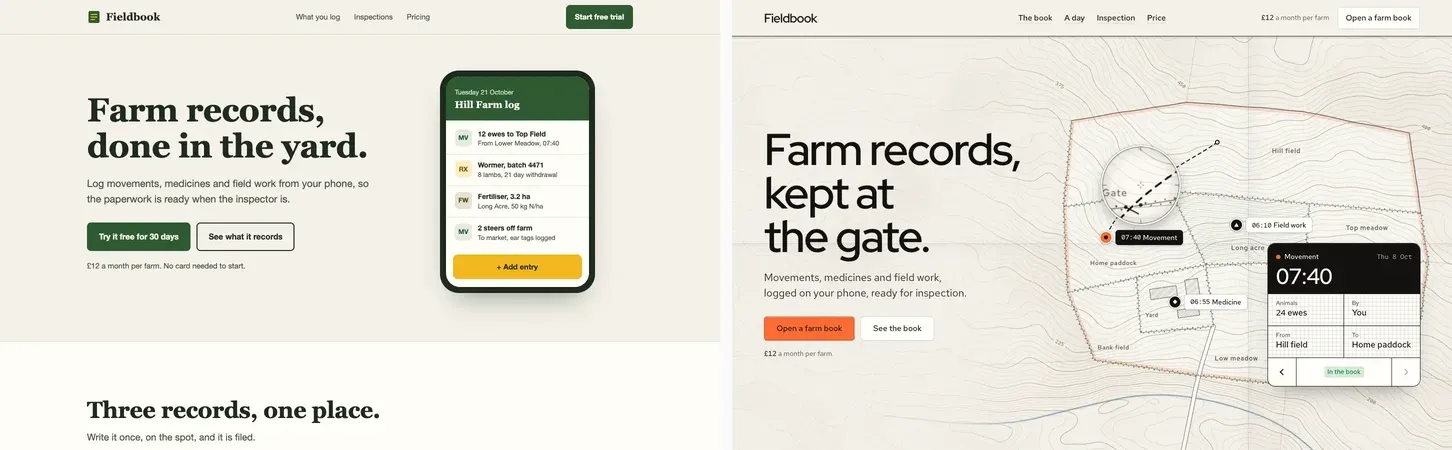
/hallmark audit ./index.html produces a report without editing files: findings grouped as Floor, Reflex and Finish with file and line, the screenshots the render tier took, and which depth of redesign would resolve them. The linter can also run outside an agent, for example in a review step, as node skills/hallmark/scripts/sloplint.mjs <file-or-dir> --render. The project's own comparison on the website shows a farm-records page built by Opus 5.5 at low effort from the prompt alone with 26 linter issues, against 0 for the Hallmark theme page.
Showing the real product in a launch page
For a product page, the user gives the app's URL, its folder or a running dev server, and capture.mjs takes the screenshots that fill the page's picture slots. Library photographs from Wikimedia Commons fill the rest, credited in the footer, and slots for material the user has not supplied are listed at the end so real screenshots or photos can replace them.
Keeping one design system across pages
After a build, Hallmark offers to lock the system: saying lock the system writes a design.md that later runs read first and treat as binding, so new pages share its tokens and type instead of dealing a new theme. Existing design systems work the same way: the pre-flight reads the project's tokens, Tailwind config and design.md before designing anything, and the roadmap lists multi-page coherence and a brand-first flow as next steps.
Install
npx skills add nutlope/hallmark -gReviews of Hallmark
Be the first to share your experience with Hallmark.
Write a review
Loading review form…
Found Hallmark useful? Upvote it todayYour vote helps other IT teams find it in the daily ranking.