

What is Taste Skill?
Taste Skill is an MIT-licensed Agent Skill for AI coding agents that build websites. Its repository holds one skill, installed under the name design-taste-frontend and versioned as tasteskill 2.5.1, which instructs an agent to build company websites from a fixed page system, real photographs and real product UI, and then to verify the result in a real browser before handing it over. The project site tasteskill.dev names Claude Code, Codex and Cursor in its headline and also lists OpenCode, Gemini CLI and Antigravity, stating that the skill works with any agent that reads SKILL.md files. The site credits Leon Lin and blueemi as its builders; the code is on GitHub.
The skill is a folder of instructions, references, assets and plain Node scripts. SKILL.md defines the workflow; references cover layout, copy, motion, photographs, icons, diagrams, effects and the finish gate; assets include a starter HTML page, a CSS system, eleven hero layouts, UI fragments, diagrams, shader grounds, scroll scenes and procedural 3D objects; the library holds palettes and Google Fonts pairings. The scripts need Node 22 or newer and an installed Chrome, Edge or Chromium, with ffmpeg as an optional extra for WebP output. The README states that the skill installs nothing, needs no API keys and works offline with its bundled Wikimedia Commons photographs, while fetching more photographs, fonts or icons uses the network.
Version 2.5.0, released November 5, 2026, was a full rebuild of design-taste-frontend around professional company websites, replacing the 2.1.x direction-sheet pipeline with a shared page system, business-kind routing, product UI fragments, curated photographs and over 100 browser checks across four viewport widths. The latest release, v2.5.1 of November 7, 2026, adds a finish gate (scripts/gate.mjs) that runs the checker, the layout check and a copy linter and holds a build until it prints GATE: PASS, with at most three rounds; in Claude Code it runs as a Stop hook declared in the skill. It also adds motion on every page, licensed stand-in photographs for products without pictures, palettes chosen by trade, a copy layer with copy-lint.mjs, accessibility, form and metadata checks and phone layout checks. The full history is in the changelog.
Earlier skills from the repository moved to separate repositories under the same install names: high-end-visual-design, minimalist-ui, industrial-brutalist-ui, gpt-taste and earlier versions of design-taste-frontend to taste-skill-classics, and the image-generation skills (imagegen-frontend-web, imagegen-frontend-mobile, brandkit, image-to-code) to imagegen-skills. The redesign skill was folded into design-taste-frontend. The same authors publish TasteCode, a desktop workspace described on the site as free and open source, which brings the skill into Codex, Claude Code and Grok.
Taste Skill is free; the site lists no paid tiers and funding comes from optional GitHub sponsorship. The README states the project has no token or coin. Other design skills listed on iThub include Impeccable, Hallmark and unslop.
Key capabilities
- Install with the skills CLI The documented command is npx skills add https://github.com/Leonxlnx/taste-skill --skill "design-taste-frontend", which uses the npx skills CLI. Running the same command again updates the skill; the install name did not change in 2.5. The site shortens it to npx skills add Leonxlnx/taste-skill.
- Claude Code plugin Inside Claude Code, /plugin marketplace add Leonxlnx/taste-skill followed by /plugin install taste-skill@taste-skill installs it as a plugin, namespaced under taste-skill: so it does not collide with other skills. /plugin update upgrades it later.
- Codex plugin Codex plugin marketplace add Leonxlnx/taste-skill and codex plugin add taste-skill@taste-skill install the Codex plugin; a new Codex session then loads the skill. The repository ships .codex-plugin and .claude-plugin manifests.
- Linked install from a clone Install.sh symlinks the skill into Claude Code, or into Codex with --codex, or both with --all-agents, so a git pull updates it in place. On Windows under Git Bash it creates a real link, or a directory junction when symlinks are not allowed, and reports an older copied folder instead of skipping it.
- Business-kind routing Every build first classifies the client as software, gaming, tech, product, service or place and plans the page screen by screen. Shader grounds, scroll scenes and procedural 3D prints are dealt only for software, tech and gaming pages, within a four-context WebGL cap and with static fallbacks for phones and reduced motion; cafes, shops, hotels and services get photo- and type-led moments and no WebGL.
- Palettes, type and hero layouts Scripts/start.mjs deals a palette made for the trade and a Google Fonts pairing for the page kind and prints the head links and :root tokens. assets/layout/deal.mjs deals one of eleven hero layouts (split, centred, product, photo, place, collage, editorial, word, film, statement or triptych), checked with long-headline stress tests.
- One page system Assets/starter.html, system.css and layout.css enforce one section per screen at 1440 by 900, equal left and right content edges, a fixed navigation bar and a single-screen closing footer. An empty folder gets a static page; an existing React, Vue, Svelte, Astro or Tailwind project is built in its own stack, and a Next.js brief is built as a static export.
- Real product UI and diagrams Software and tech pages use HTML UI fragments from assets/ui (the 2.5.0 changelog lists 19, such as chat, diff-review, pipeline-board and terminal-run) inside lit feature cards, plus node-and-line diagrams. Each software page carries one app window across the full content width.
- Photographs with credits Scripts/photos.mjs deals vetted photographs by trade from a library that includes bundled Wikimedia Commons WebP sets and Unsplash photographs, enforces image weight and writes one footer credit line. Searches for stand-ins are limited to Wikimedia Commons material under CC0, CC BY, CC BY-SA or public domain, and stand-ins are marked as drafts rather than presented as the client's own.
- Brand and interface icons Scripts/icons.mjs resolves real brand and interface icons into local SVG files, so logos of tools and services on a page come from actual icon sets rather than drawn approximations.
- Moments and micro-interactions Scripts/moments.mjs deals a hero entrance and one or two scroll moments per page; 2.5.1 added photo-chapters and a film look for picture-develops. Hover states are small: buttons move 1px, linked cards lift 2px and photographs zoom slightly, with only colour changes under reduced motion.
- Browser checker Scripts/consistency.mjs renders the page in headless Chrome over HTTP at 1440, 1024, 820, 768 and 390 pixels and prints PASS, WARN or FAIL per rule, catching empty visuals, broken shaders, contrast drops, misaligned columns, section-height drift, placeholder text, invented street numbers and slow-network image gaps. scripts/perf.mjs measures page weight and speed, and scripts/shoot.mjs takes full-page and per-section screenshots.
- Finish gate and copy lint Scripts/gate.mjs runs the checker, the layout check and copy-lint.mjs, and a build is not finished until it prints GATE: PASS, with three rounds and five waivers with reasons at most. A question to the user costs no round, and gate.mjs --done ends a build at the user's word. copy-lint.mjs counts the tells of model-written copy, described in the gate reference.
- Accessibility, forms and phones Version 2.5.1 checks accessible names, labels, the focus ring, heading order, share tags and real form sends. On phones it enforces 44px tap targets, sections that grow with their content, a phone action bar that appears after the hero button scrolls away, and collide, tap-size and 320px checks.
- Requirements Node 22 or newer and Chrome, Edge or Chromium (CHROME_PATH for a non-standard location) are required; ffmpeg on the PATH is optional for WebP photographs and the phone crop of a hero photograph. Scripts that open Chrome accept --profile and use the TASTE_SKILL_TMP folder or the system temp folder.
Where Taste Skill fits
Building a new company website from a brief
The user asks the agent to build a site for a business. The agent loads the skill, copies assets/ into the project, classifies the business kind, runs node scripts/start.mjs deal --page with that kind to get tokens and arm the gate, starts from assets/starter.html and fills each section from the section library. The workflow is described in SKILL.md and the documentation.
Redesigning an existing page
The former redesign skill is part of design-taste-frontend: the agent audits the existing page in a real browser before changing it. In a React, Vue, Svelte, Astro or Tailwind project the kit is served from the public folder and the page stays in its own stack, and the browser checks run on the served or built page.
Software and developer-tool landing pages
For a software, tech or gaming brief, the page uses product UI fragments in feature cards, one full-width app window, diagrams, brand icons and optionally shader grounds or a scroll scene within the WebGL budget. scripts/effects.mjs deals the grounds, and the checker includes forced shader-failure fallbacks and static versions for phones.
Shops, cafes, hotels and service businesses
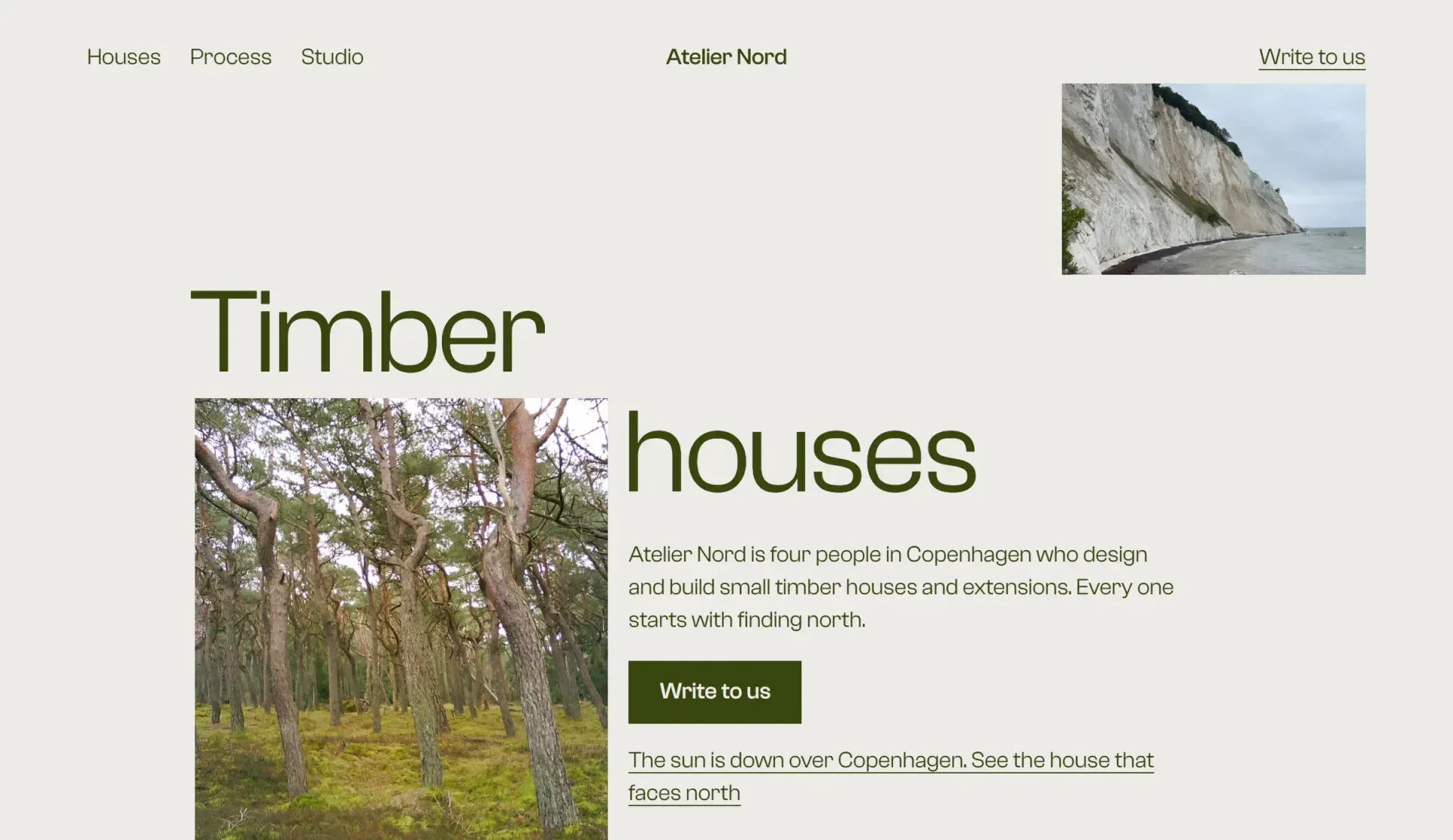
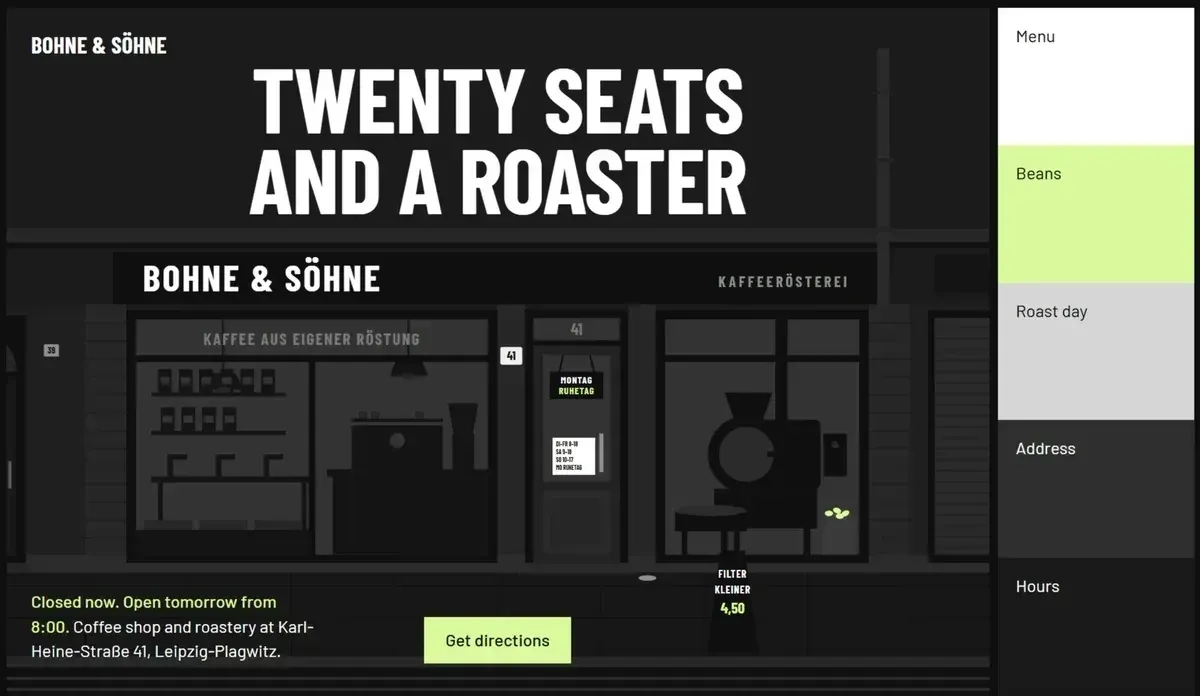
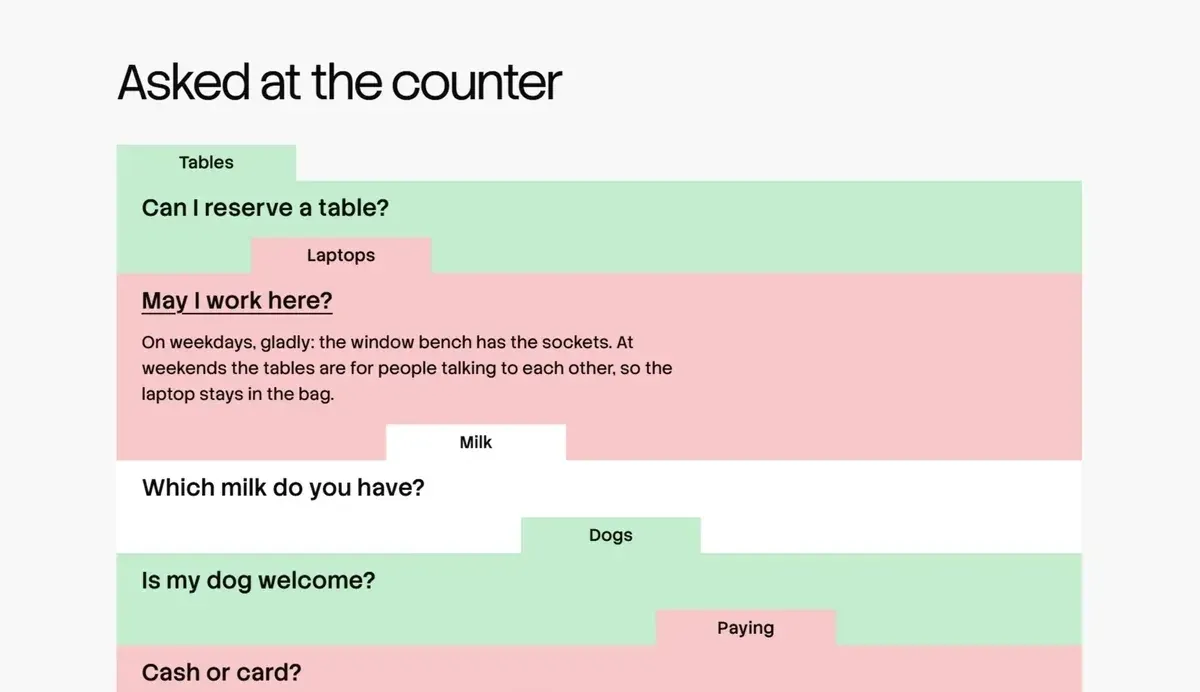
For place, service and everyday product pages, the skill leads with photographs, typography and flat colour. photos.mjs supplies trade-specific photographs or licensed stand-ins with a single expandable footer credit line, and moments are photo- or type-led. The example pages in the repository, a coffee roastery and a techno night among them, show this route; their photograph sources are listed in CREDITS.md.
Checking a page before hand-off
Any built page can be checked with node scripts/consistency.mjs followed by a URL or file and --page with its kind. The report lists PASS, WARN or FAIL per rule at each width; a measurement that timed out reads partly measured. In Claude Code the finish gate runs automatically as a Stop hook until the build passes or the user ends it.
Installing older style skills
Teams that used earlier styles install them from the classics repository under their original names, for example npx skills add https://github.com/Leonxlnx/taste-skill-classics --skill "high-end-visual-design". The image-generation skills are installed from the imagegen-skills repository in the same way, as listed in the moved skills table.
Install
npx skills add https://github.com/Leonxlnx/taste-skill --skill "design-taste-frontend"Reviews of Taste Skill
Be the first to share your experience with Taste Skill.
Write a review
Loading review form…
Found Taste Skill useful? Upvote it todayYour vote helps other IT teams find it in the daily ranking.