

What is RapidAPI?
RapidAPI is an API marketplace and API hub at rapidapi.com. According to the official about page, the company previously known as Rapid was established in 2015 by Iddo Gino, and the platform serves more than 6 million developers with access to tens of thousands of APIs through a single account. The site now presents the product as Nokia API Hub, "previously known as Rapid", while the footer and domain keep the RapidAPI name.
On November 13, 2024, Nokia announced that it had acquired Rapid's technology assets, including the API hub, and its research and development unit; financial terms were not disclosed. Nokia described the plan to combine the hub with its Network as Code platform so that telecom operators can expose network APIs to Rapid's developer base. The public hub now features Nokia Network as Code APIs for 5G network capabilities alongside third-party APIs.
The product has two parts. The Public Hub is a marketplace where API providers list REST, GraphQL and SOAP APIs and consumers search, test in the browser, subscribe to plans and call the APIs through Rapid's gateway with one application key. The Enterprise Hub is a private, customizable API hub for an organization and its partners, with an admin panel, approvals, audit trails, gateways, custom domains and a GraphQL Platform API, described on the Enterprise page.
Consumer access is free with an account; many listed APIs have a free BASIC plan within a quota, and paid plans are monthly subscriptions set by each provider, with overage fees above the quota. Providers receive payouts through PayPal after a flat 25 percent marketplace fee, as stated in the payouts documentation. Enterprise Hub pricing is not published.
Recent hub features include MCP support, which exposes each endpoint of an MCP-enabled API as a tool on mcp.rapidapi.com, and an AI chat in the Playground that is being rolled out gradually. RapidAPI is a proprietary hosted service and is not available for self-hosting. Related listings on iThub include Merge for unified integration APIs and Paragon for embedded integrations.
RapidAPI screenshots
Explore the interface. Open a screenshot to view it at full size.
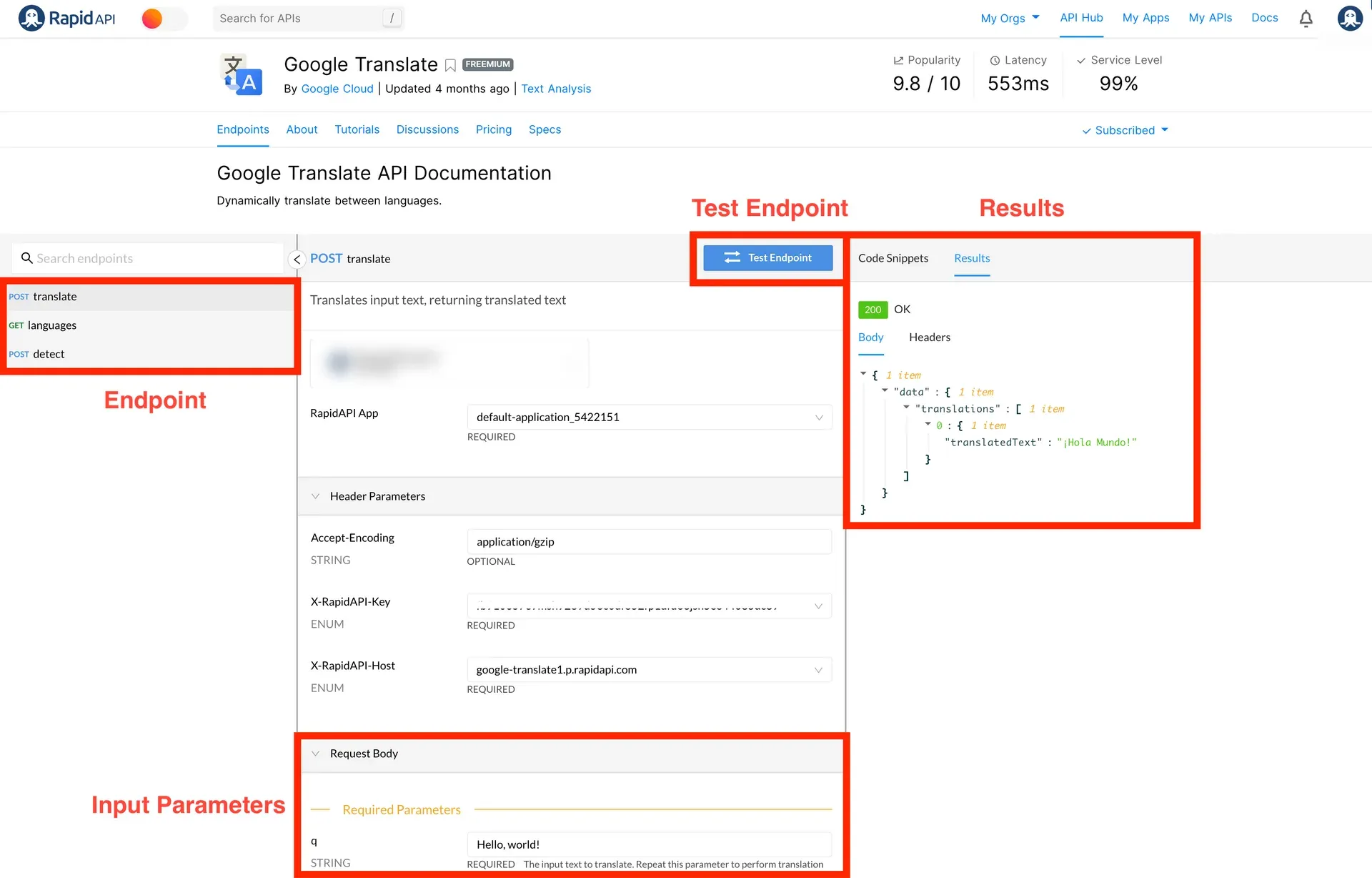
Official RapidAPI documentation screenshot of endpoint testing on an API page; account name blurred.
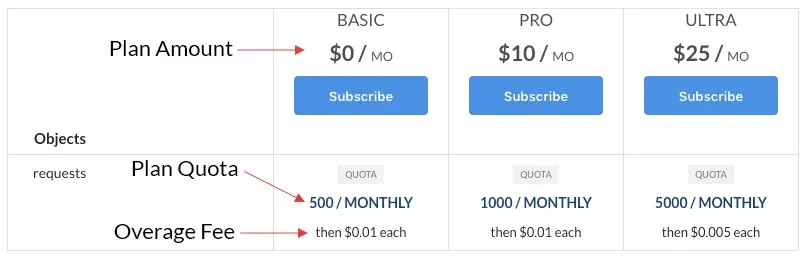
Official RapidAPI documentation figure explaining plan amount, quota and overage fee.
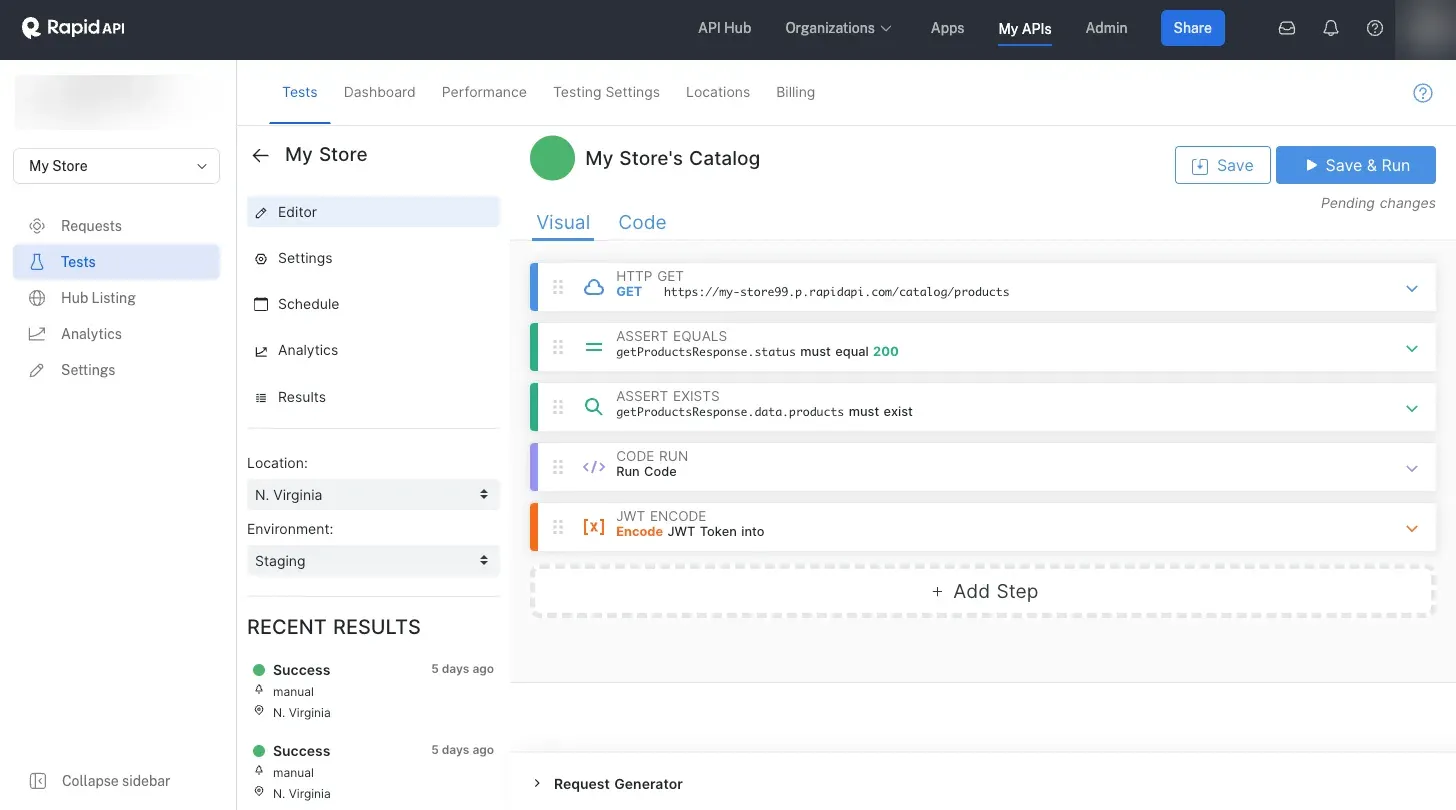
Official RapidAPI documentation screenshot of the test visual editor; account name and avatar blurred.
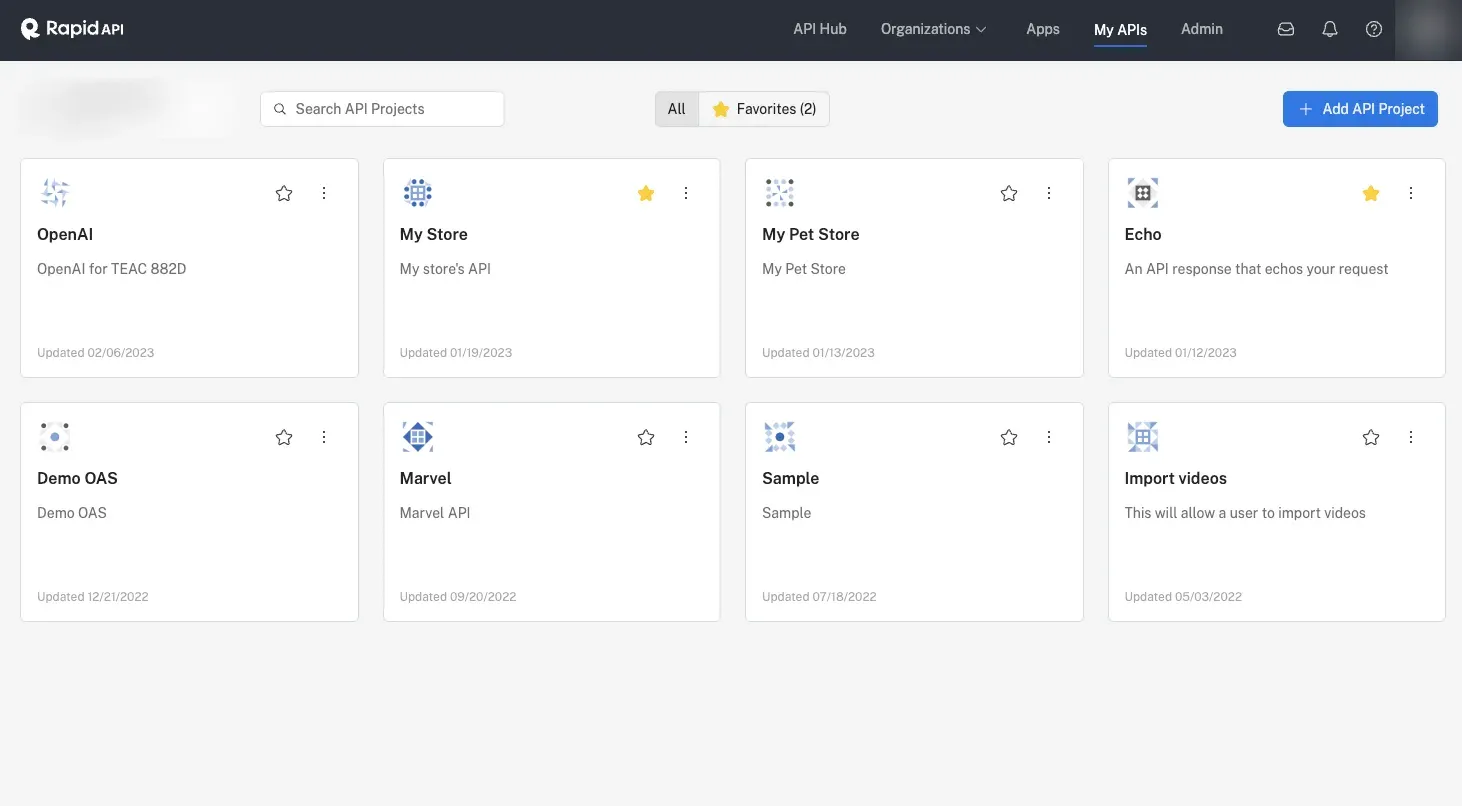
Official RapidAPI documentation screenshot of API projects in Studio; account name and avatar blurred.
Source: official RapidAPI project page.
Key capabilities
- Public API marketplace The Public Hub lists tens of thousands of APIs grouped into categories and collections, with search, popularity, latency and service-level figures shown for each API. Each listing has tabs for endpoints, about, tutorials, discussions, pricing and specs.
- One account and key for many APIs A free account gives access to the hub, and consumers authenticate calls through an application key sent in the X-RapidAPI-Key header, with an X-RapidAPI-Host header that identifies the target API. Usage and remaining quota appear in the developer dashboard and in response headers.
- Plans, quotas and overages Providers define plans such as BASIC, PRO and ULTRA with a monthly price, a request quota and an overage fee per extra request. Many APIs include a free BASIC plan for testing within its quota. Paid plans renew monthly, and usage above the quota is charged, according to the consumer quick start guide.
- In-browser endpoint testing After subscribing, the Endpoints tab lets a consumer fill in header, query and body parameters and run Test Endpoint, with the response body and headers shown next to the request.
- Code snippets The Code Snippets tab generates request code for the selected endpoint in several languages and HTTP libraries, such as Node.js with Axios, including the required RapidAPI headers.
- MCP access to APIs APIs with MCP enabled expose one tool per endpoint through the dedicated host mcp.rapidapi.com. MCP clients authenticate with the existing application key in the x-rapidapi-key header, and the consumer's subscription controls access. The Playground shows a ready MCP configuration for the selected app, as described in Consume APIs using AI.
- Playground AI chat An AI chat in the Playground, rolled out gradually, turns natural-language requests into calls to an API's endpoints before integration through REST or MCP. The documentation describes it as powered by a Nokia-deployed LLM.
- Studio for API providers Studio is the provider workspace, opened from My APIs, for building, testing, publishing and managing APIs of different types, including REST, SOAP and GraphQL. Hub Listing defines the API description, plans and team access before publishing to the hub, and the Analytics tab shows traffic by endpoint or consumer, errors and latency, as described in the Studio overview.
- API testing RapidAPI Testing is a cloud-based testing tool for REST, SOAP and GraphQL APIs that picks up APIs from the hub automatically. Tests are built in a visual editor with steps such as HTTP requests, assertions, code runs and JWT encoding, generated automatically or written as code, and can be run per location and environment. A dedicated webhook triggers tests from CI/CD pipelines, per the testing guide.
- Monetization and payouts Providers set prices for their plans, and Rapid takes a flat 25 percent marketplace fee on all payments made through the API Hub, covering payment processing, infrastructure and administration. Payouts are made only through PayPal, after a holding period for collections, refunds and disputes, and are reduced by PayPal's own fees.
- Gateway Calls from consumers pass through the Rapid Runtime gateway, which forwards requests to the provider's endpoint or to another gateway. In the Enterprise Hub, administrators configure default timeouts (504 on expiry), request size limits (413 when exceeded), HTTPS-only traffic by default, custom error messages and alternative gateways such as Amazon API Gateway.
- Enterprise Hub The Enterprise Hub is a private API hub for an organization and its trusted partners. Its admin panel covers API management, approvals, audit trails, events and webhooks, users, organizations and teams, subscriptions, collections, categories and tags, theming and localization, login options, roles and permissions, extensions and a custom domain.
- GraphQL Platform API Enterprise Hub customers can use the GraphQL Platform API to query and modify all entity types, including APIs, users, teams, roles, permissions, categories, tags, collections and audit logs. The documentation includes examples that update an API definition from GitHub Actions or GitLab when a change is merged, listed in the Platform API overview.
- Nokia Network as Code APIs The hub features Nokia Network as Code, a set of developer APIs for programmable 5G network capabilities with simulators for experimentation. Nokia's acquisition announcement describes using the hub so operators can expose and control network APIs.
- Notifications and alerts The documentation covers email alerts, a daily email summary and email notifications for API activity, as well as additional request headers and request chaining in the testing tools.
- Support resources Documentation is published at docs.rapidapi.com with separate sections for consuming, building and testing APIs and for Enterprise Hub administration. Customer support runs through a help center at support.rapidapi.com.
Where RapidAPI fits
Finding and calling a third-party API
A developer searches the Public Hub or browses categories, compares listings by popularity, latency and service level, and opens the Pricing tab to choose a plan. After subscribing, Test Endpoint runs calls in the browser and Code Snippets provides request code with the X-RapidAPI-Key and X-RapidAPI-Host headers for the application.
Selling access to an API
A provider creates an API project in Studio, defines endpoints and documentation, and configures plans with prices, quotas and overage fees in Hub Listing before publishing. Payments from subscribers are collected by Rapid, which keeps the 25 percent marketplace fee and pays the remainder through PayPal after the holding period.
Connecting AI agents to APIs
For APIs where MCP is enabled, an MCP client such as an LLM desktop application is configured with the Rapid MCP host and the application key, and each endpoint becomes a callable tool. Access follows the existing subscription, so plan quotas and billing apply to tool calls as they do to REST calls.
Testing and monitoring APIs
Teams build functional test flows in RapidAPI Testing with the visual editor or in code, chain requests, assert on response fields and run tests in a chosen location and environment. The CI/CD webhook starts tests from a pipeline, and results are listed per run with status and location.
Running an internal API catalog
Organizations that use the Enterprise Hub publish private and partner APIs in a branded hub with their own domain, login options, roles and approval workflows. Administrators automate catalog changes through the GraphQL Platform API, for example from CI jobs, and route traffic through the Rapid Runtime or another configured gateway, as described in the Enterprise Hub documentation.
Exposing telecom network APIs
Nokia uses the hub to publish its Network as Code APIs, which give developers programmable access to 5G and 4G network capabilities, with simulators for experimentation before production use. In Nokia's acquisition announcement, operators integrate their networks with the hub to control API usage and exposure and to reach the hub's developer base on the public marketplace.
Reviews of RapidAPI
Be the first to share your experience with RapidAPI.
Write a review
Loading review form…
Related to RapidAPI
 MergeMerge offers one Unified API per category (HRIS, ATS, CRM, accounting, ticketing, file storage, knowledge base, chat), Agent Handler for MCP tool access by AI agents, Gateway for LLM routing and Merge for Workforce.
 ParagonParagon lets SaaS and AI products offer native integrations with 130+ connectors: a Connect Portal for user auth, ActionKit tools and an MCP server for agents, Managed Sync with permissions for RAG, and an embedded workflow engine.
 NangoNango is an open-source platform for product integrations, with managed auth for 1,000+ APIs and TypeScript functions run on its production runtime.