

What is Merge?
Merge is a commercial integrations platform from the company of the same name. Its main product, Merge Unified, lets a software company add integrations with its customers' business systems through one API per category instead of building each connector separately. The How Merge works page describes the model: an end user connects a third-party system through the embedded Merge Link component, which creates a Linked Account with its own account token, and the product then reads and writes normalized Common Model objects through the Unified API, for example GET /hris/v1/employees regardless of which HR platform was connected.
The documentation lists four products. Merge Unified covers eight categories: HRIS, ATS, CRM, Accounting, Ticketing, File Storage, Knowledge Base and Chat, with more than 260 documented integrations as of August 2026. Merge Agent Handler gives AI agents authenticated access to third-party tools through MCP connectors, with more than 190 connectors in the documentation and thousands of tools according to the product page. Merge Gateway routes requests to more than 270 LLMs from over 20 model families through one API. Merge for Workforce distributes approved models, MCP connectors and skills to employees' AI tools with cost controls and audit logging.
According to its about page, Merge began in 2020, founded by Shensi Ding and Gil Feig after building integrations at different B2B companies. The team works from offices in San Francisco, New York and Berlin, and the company lists a $55M Series B among its news items. Merge is offered as a hosted service with a web dashboard at app.merge.dev; single-tenant deployment and a self-hosted option are listed on the pricing page as available for purchase on higher plans. The software is not open source.
The product is updated continuously rather than in numbered releases. The public changelog entry for Agent Handler on November 6, 2026 added eight connectors (AWS Redshift, CyberArk Identity, Drata, Elasticsearch, JumpCloud, MyCase, Splunk and Terraform), OAuth 2.0 as an option for eight existing connectors and a Registered Users tab per connector and Tool Pack, while recent Gateway entries added models, key-pinned customer controls for zero data retention, vendor and region settings, and a flex service tier.
On security, Merge states on its security page that data is stored in AWS data centers, encrypted at rest and in transit with an additional application encryption layer for PII, and that it follows SOC 2 Type II, ISO 27001, HIPAA, GDPR and CCPA. Multi-tenant data can be stored in US, EU or APAC regions, the EU multi-tenant environment stores data only in Stockholm, and a Destinations option streams normalized data into the customer's own storage.
Merge screenshots
Explore the interface. Open a screenshot to view it at full size.
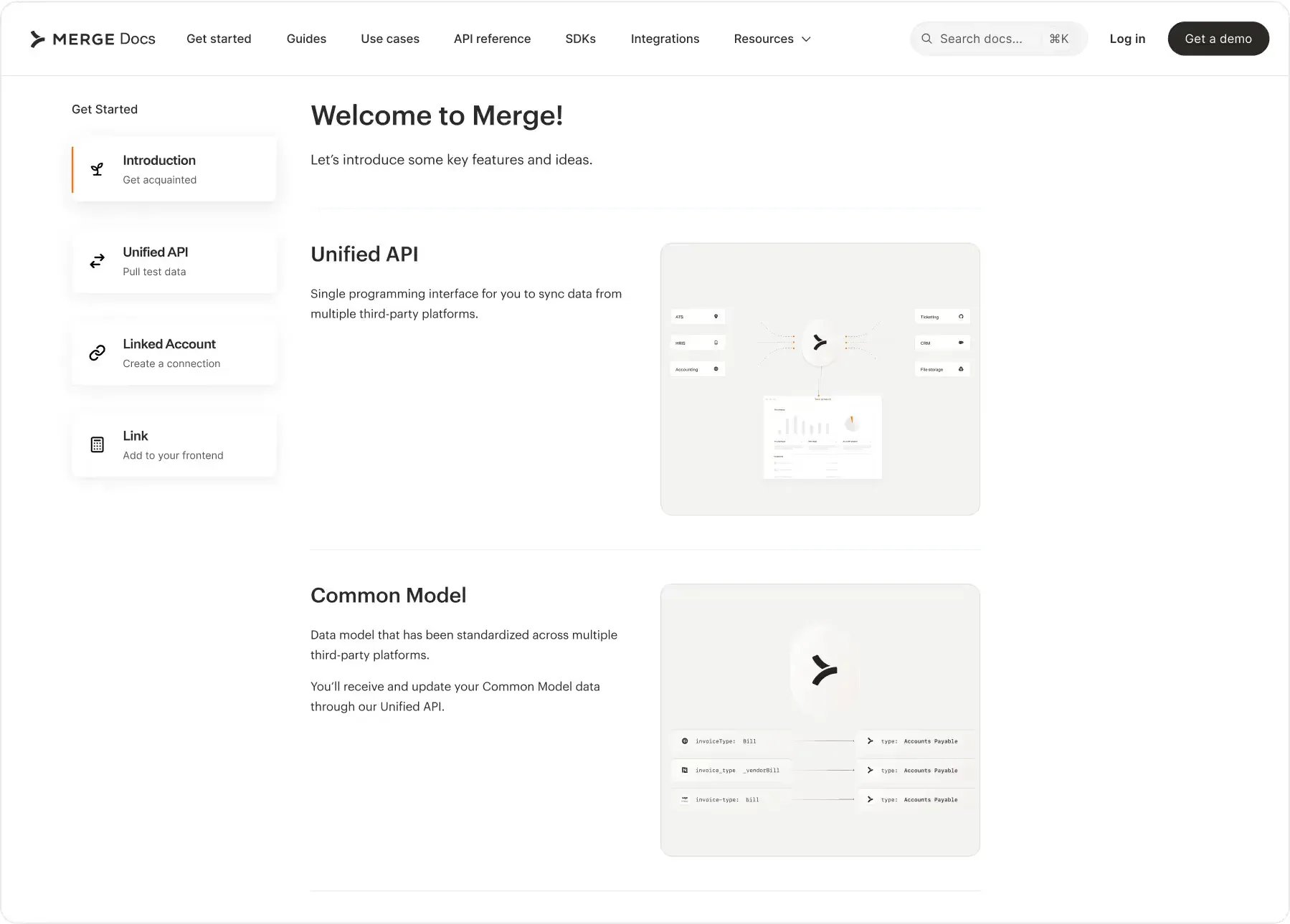
Merge docs introduction with Unified API and Common Model diagrams, from the Merge developer tools page.
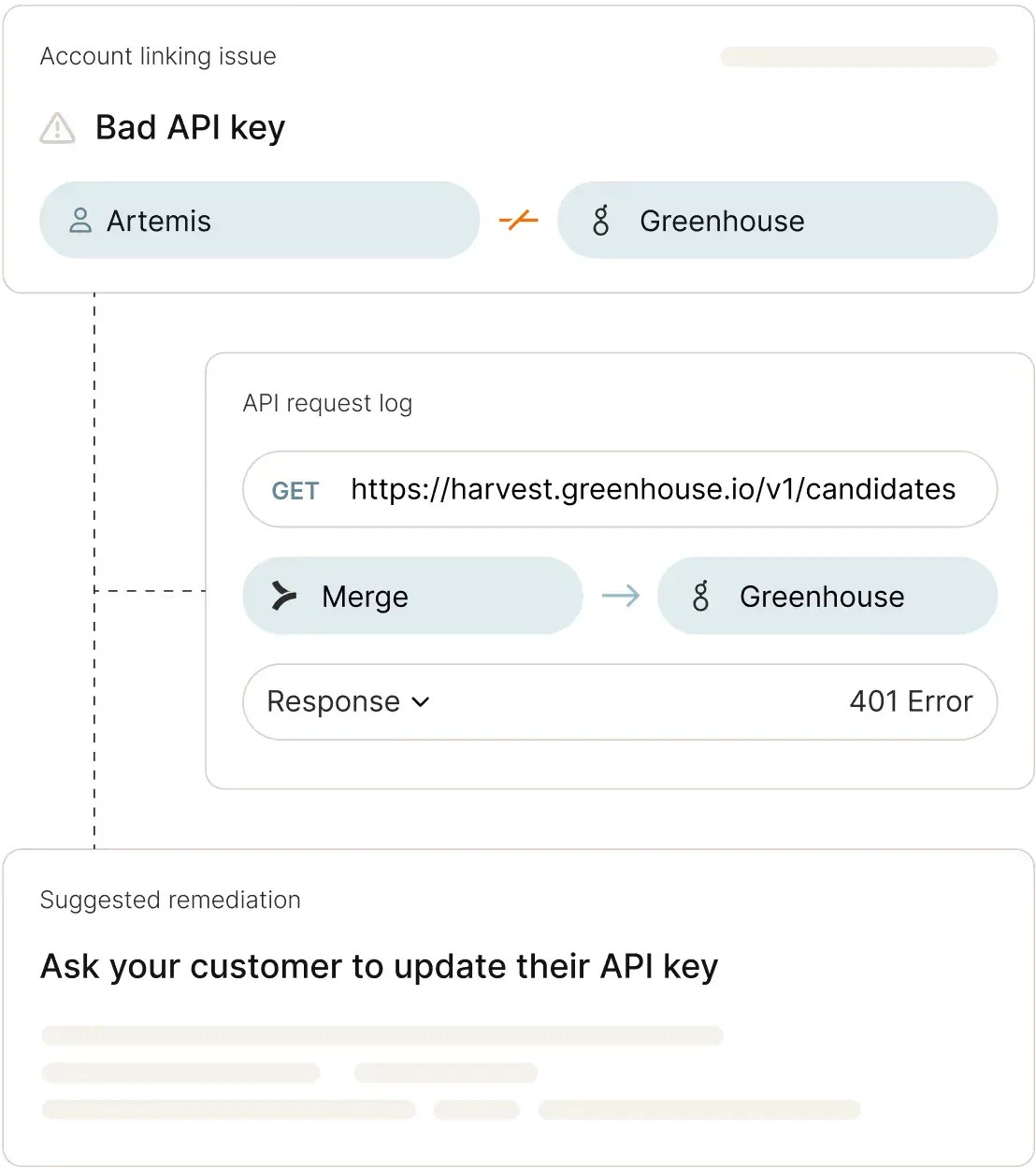
Automated issue detection from the Merge integration observability page.
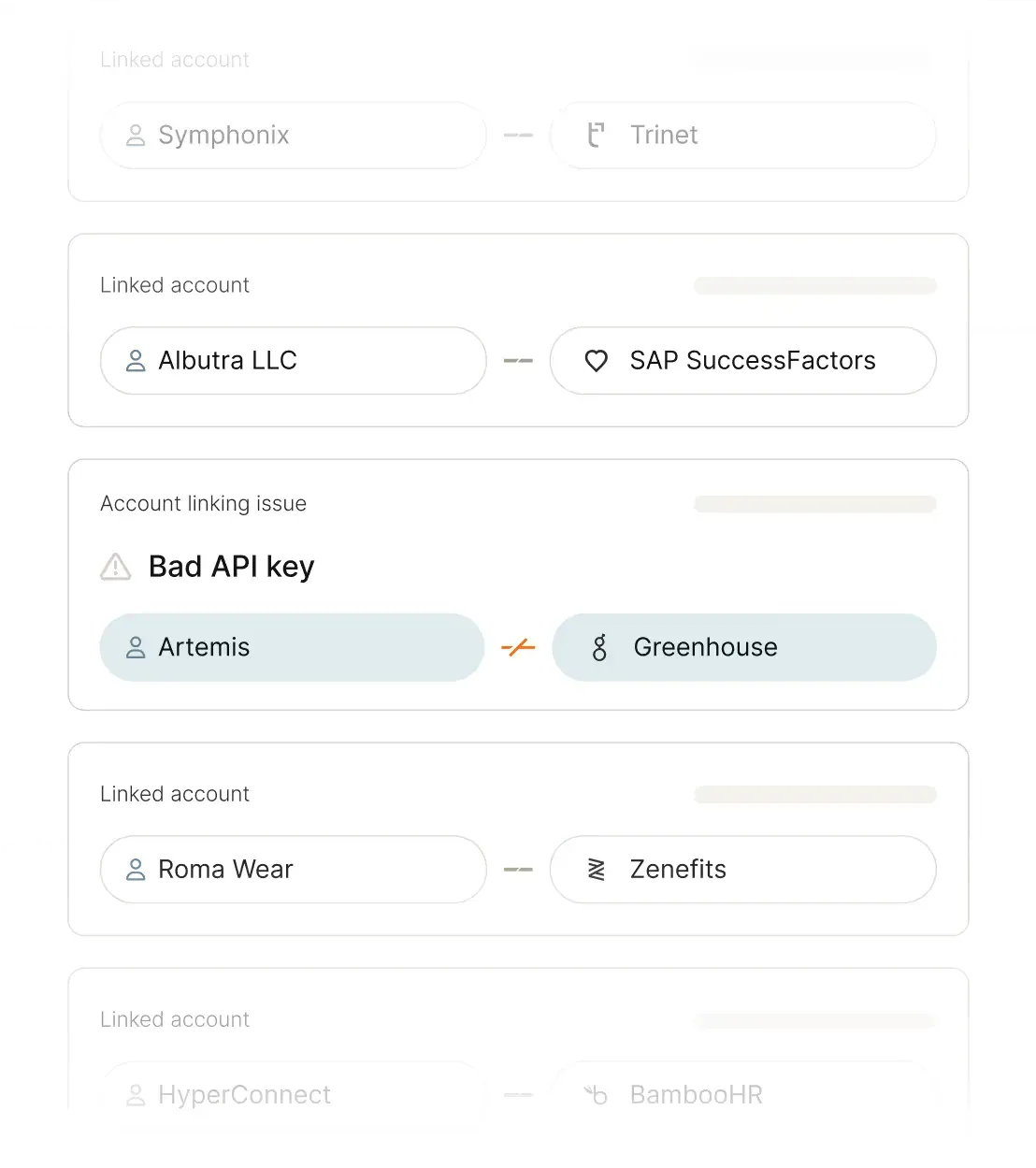
Linked Account overview from the Merge integration observability page (sample data).
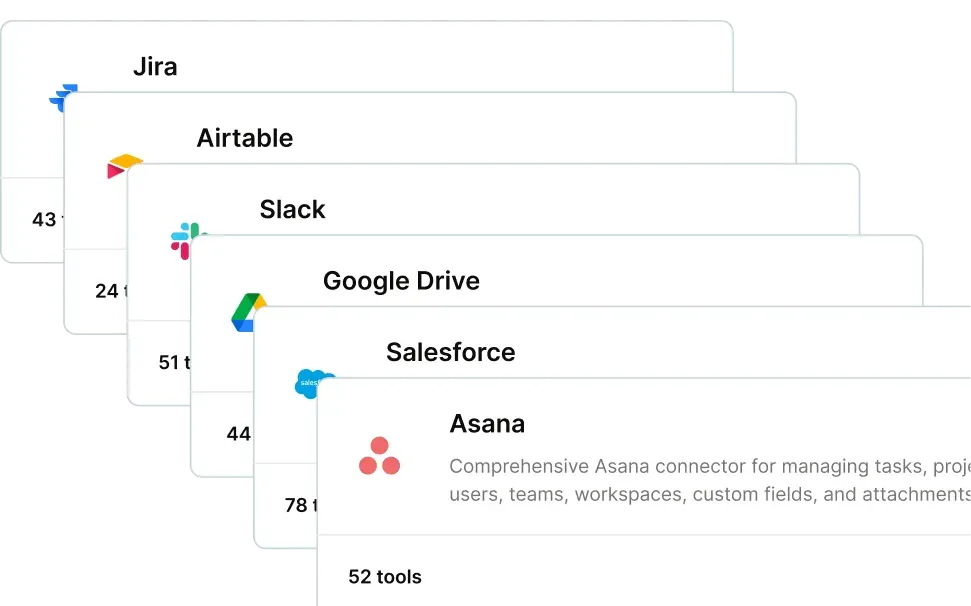
Agent Handler connector cards with tool counts, from the Merge Agent Handler page.
Source: official Merge project page.
Key capabilities
- Unified API per category Each category has one API and one set of Common Models, so a product reads employees, candidates, contacts, invoices, tickets or files the same way across all providers in that category. OpenAPI specifications are published per category in the Merge documentation, and incremental syncs use the
modified_afterparameter with cursor-based pagination. - Integration categories Merge Unified covers HRIS (with payroll), ATS, CRM, Accounting, Ticketing, File Storage, Knowledge Base and Chat. The HRIS Employee model, for example, normalizes fields such as
first_name,last_name,work_emailand employments across BambooHR, Workday, ADP and more than 50 other HRIS platforms. - Merge Link A drop-in UI component embedded in the customer's frontend lets end users pick an integration, sign in and authorize access, while Merge handles the OAuth and credential exchange. The same Merge Link flow is used for the Unified API and Agent Handler, and the plan comparison also lists Magic Link and localization of Merge Link.
- Linked Accounts and account tokens Every connection created through Merge Link becomes a Linked Account with an
account_tokenthat is sent with API requests in theX-Account-Tokenheader next to the API key. Test Linked Accounts can be created in the dashboard during development, and a test token returns dummy data. - Writes and metadata Read and write access is included on all plans. Before POST requests, the
/metaendpoint returns the fields required for a given integration and Linked Account, because they differ between providers. - Webhooks and sync frequency Merge webhooks notify an application of data changes, and third-party webhooks are listed as a further option. Sync frequency is daily on Launch and customizable on Professional and Enterprise, with options from quarterly to the highest setting.
- Customization and passthrough Authenticated Passthrough requests proxy calls to the underlying provider API, Remote Data and Remote Fields expose fields not mapped by Merge, and Field Mappings (also via API) map custom fields onto Common Models. Custom objects are also listed among the customization features on the pricing page.
- Data minimization controls Scopes restrict which models and fields are synced, Selective Sync limits synced rows by third-party fields and parameters, and unmapped data can be redacted from logs and remote data. Deleting a Linked Account deletes its associated data from Merge, and an ignore endpoint excludes specific individuals' personal data.
- Integration observability The dashboard shows Linked Account status, logs of API requests to third-party systems and automated issue detection, such as a bad API key returning a 401 error, with suggested remediation. Merge detects when an issue is resolved, and end users see platform-specific error messages in Merge Link.
- SDKs Official SDKs are available as complete-category and single-category packages; the documentation shows examples for an advanced Python SDK and a single-category HRIS Ruby SDK. API keys are managed in the dashboard at app.merge.dev.
- Merge Agent Handler AI agents get per-end-user OAuth access to third-party tools through MCP connectors. Tool Packs bundle the connectors a given agent may call, and a Security Gateway redacts or blocks sensitive tool arguments and screens tool responses against guardrails, with an audit trail of every call. The Agent Handler page lists connectors such as Jira, Slack, Google Drive, Salesforce and Asana.
- Merge Gateway Gateway routes LLM requests across providers through its native
/v1/responsesAPI and surfaces compatible with the OpenAI SDK, the Anthropic SDK and the Vercel AI SDK. It supports ranked and ML-based routing with failover on outages and rate limits, per-response cost, budgets at organization, project and key level, context compression and security filters, and has Python and TypeScript SDKs. - Merge for Workforce This product gives employees governed access to more than 300 connectors and multiple model providers from AI tools such as Claude Desktop, Claude Code, Cursor, ChatGPT Enterprise and Copilot. A lightweight client distributed through MDM applies policy on the device to block unapproved models and MCP servers, and each call is attributed to a person, team and model with its cost.
- Launch plan Launch is self-serve: the first 3 production Linked Accounts are free, $650 per month covers up to 10 production Linked Accounts, and each further Linked Account costs $65. It includes unlimited data usage, all production integrations, daily sync, a rate limit of 100 requests per minute, 3 days of log retention, up to 3 test Linked Accounts and email support.
- Professional and Enterprise plans Both use contract-based pricing. Professional raises the rate limit to 400 per minute, keeps logs for 30 days and adds custom fields, field-level scopes, custom sync frequencies and 60 days of sandbox access. Enterprise has a 600 per minute rate limit, 90 or more days of log retention, Audit Trail, unlimited sandboxes, a dedicated account manager with a shared Slack channel and support and uptime SLAs; single-tenant and self-hosted options are available for purchase.
- Security and compliance SOC 2 Type II, ISO 27001, HIPAA, GDPR and CCPA are listed, with SAML SSO and role-based access control for the dashboard. Merge signs a data processing agreement based on the GDPR Standard Contractual Clauses with all customers and, according to its EU page, applies the GDPR obligations to all data transfers regardless of geography.
Where Merge fits
Adding HR and payroll integrations to a SaaS product
A product embeds Merge Link so its customers connect their HRIS, then reads employees and employments as Common Models through the HRIS API. Merge lists auto-provisioning, where onboarding and permissions are assigned from real-time HR data instead of CSV uploads, as one of its use cases.
Recruiting and candidate sourcing
Recruiting software connects to ATS platforms such as Greenhouse through the ATS category and reads or writes candidate data. The observability views show failing connections per Linked Account and the related third-party request logs.
Accounting reconciliation and financial analysis
Finance products sync bills, invoices and payments with their customers' accounting platforms to reconcile vendor and customer payments, or read transaction data for financial analysis, according to the use cases on the Unified API page.
Feeding AI features with customer data
AI products pull files, tickets, CRM records and knowledge-base content from their customers' systems through the Unified API to build internal knowledge bases or project-status analysis. Data minimization settings such as scopes and Selective Sync limit what is synced.
Giving agents actions in third-party tools
Agent developers register Tool Packs in Agent Handler, connect end users through the guided authentication flow and let the agent call tools such as creating tickets or sending messages, with the Security Gateway checking arguments and responses. The connector catalog lists the available connectors.
Routing and governing LLM usage
Teams send model requests through Merge Gateway to switch providers by changing the model string, fail over on outages and enforce budgets, or use Merge for Workforce to distribute approved models and MCP connectors to employees. Similar integration platforms listed on iThub include Paragon and Nango; for LLM routing, see LiteLLM.
Reviews of Merge
Be the first to share your experience with Merge.
Write a review
Loading review form…
Alternatives to Merge
 ParagonParagon lets SaaS and AI products offer native integrations with 130+ connectors: a Connect Portal for user auth, ActionKit tools and an MCP server for agents, Managed Sync with permissions for RAG, and an embedded workflow engine.
 NangoNango is an open-source platform for product integrations, with managed auth for 1,000+ APIs and TypeScript functions run on its production runtime.
 LiteLLMSelf-hosted AI gateway and Python SDK from BerriAI. It translates OpenAI-format requests for 100+ model providers and adds virtual keys, budgets, spend tracking, routing with fallbacks, guardrails, an MCP gateway and an Admin UI.