

What is Probo?
Probo is an open-source governance, risk and compliance (GRC) platform for engineering and security teams that run programs such as SOC 2, ISO 27001 and GDPR. One organization-scoped system connects frameworks, controls, internal controls, tasks, evidence, risks, third parties, privacy records, documents, audits and findings. The company behind it, also called Probo, was founded by Antoine Bourchardy, an ISO 27001 auditor, and Bryan Frimin, who previously ran SOC 2 and ISO 27001 compliance at a startup. The repository was created in January 2025 and the code is published under the MIT license, with DCO sign-off and no CLA for contributions.
The same product is available in three ways. Probo Cloud is the managed offering with an EU region (eu.probo.com) and a US region (us.probo.com). Self-hosting is documented for Docker Compose and Kubernetes. The company also sells a Compliance Officer Service in which a named compliance officer runs the program with the customer; prices for the managed offers are not published and are handled through the contact form.
Each component ships on its own release track. The server, probod, bundles the web console, the compliance portal and the employee portal. The latest release is probod v0.340.0, published November 4, 2026, with archives for Linux, macOS, Windows, FreeBSD and OpenBSD, a multi-arch Docker image at artifact.probo.inc/probo/probo, a CycloneDX SBOM and cosign-signed checksums. Version 0.339.0 added email notifications built on the in-app inbox: per notification type, an organization or member can choose no email, one email, up to four reminders or a weekly digest, and the document reminder variables were renamed to PROBOD_NOTIFICATION_EMAIL_*. Version 0.340.0 sends task mention and assignment emails to people who have not saved a preference. Version 0.337.0 added cookie banner scans and 0.335.0 added retries for failed access review sources.
The backend is Go on PostgreSQL, with GraphQL and MCP APIs, React, TypeScript and Relay frontends, and OpenTelemetry instrumentation. Separate tracks cover the prb CLI (v0.264.0), the Helm chart (v0.32.0), the device posture agent (v0.8.0, with v0.9.0-rc.1 in pre-release), an n8n community node, cookie banner packages and agent skills. Changes are logged per track; the server history is in the probod changelog.
Probo records and organizes compliance work; it does not issue certifications. An external auditor still performs SOC 2 or ISO audits. Recording an access review decision does not change the account in the source system, and the device agent reports posture without acting as an MDM. Self-hosted operators are responsible for TLS, secrets, backups, monitoring and upgrades, and the supplied Compose file is described as a single-host, non-high-availability setup.
Probo screenshots
Explore the interface. Open a screenshot to view it at full size.
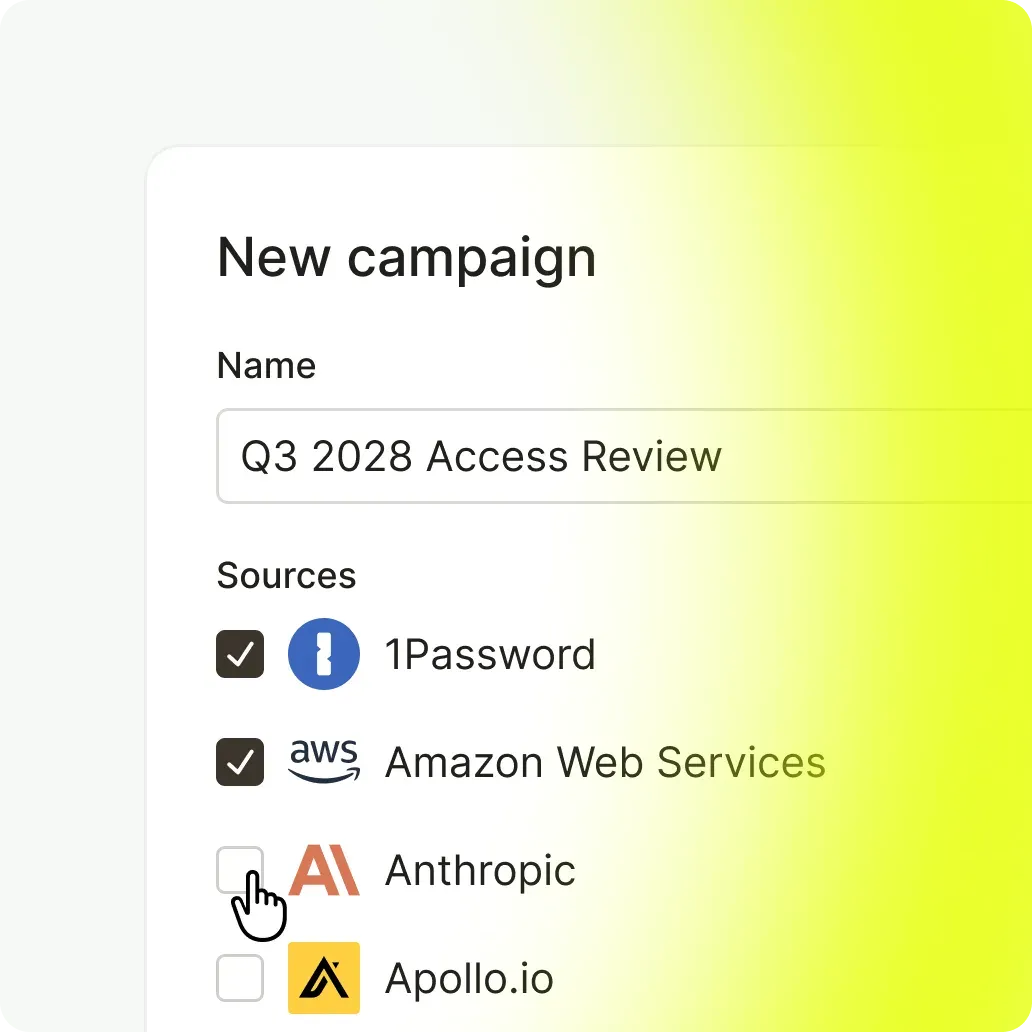
Official Probo product image of the access review campaign form, from the Access Review product page.
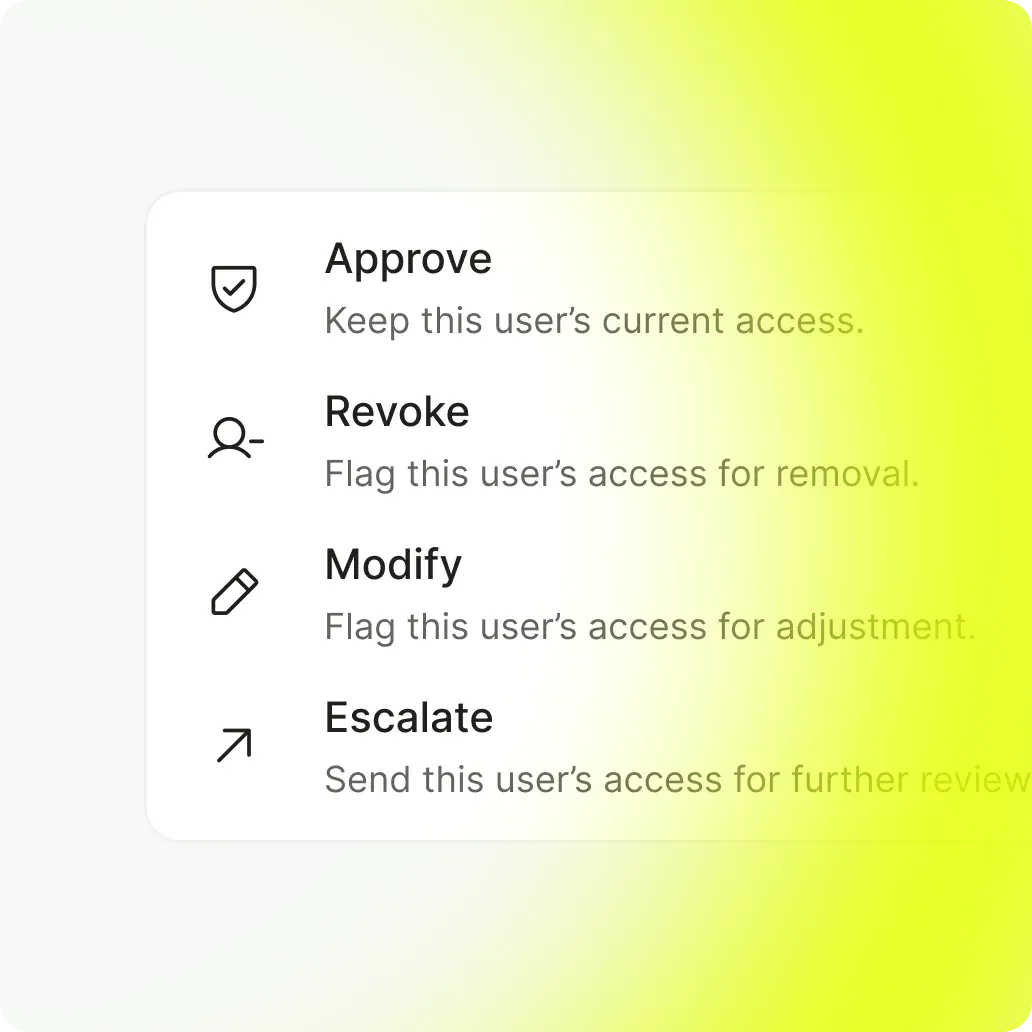
Per-account review decisions: approve, revoke, modify or escalate. Changes still happen in the source system.
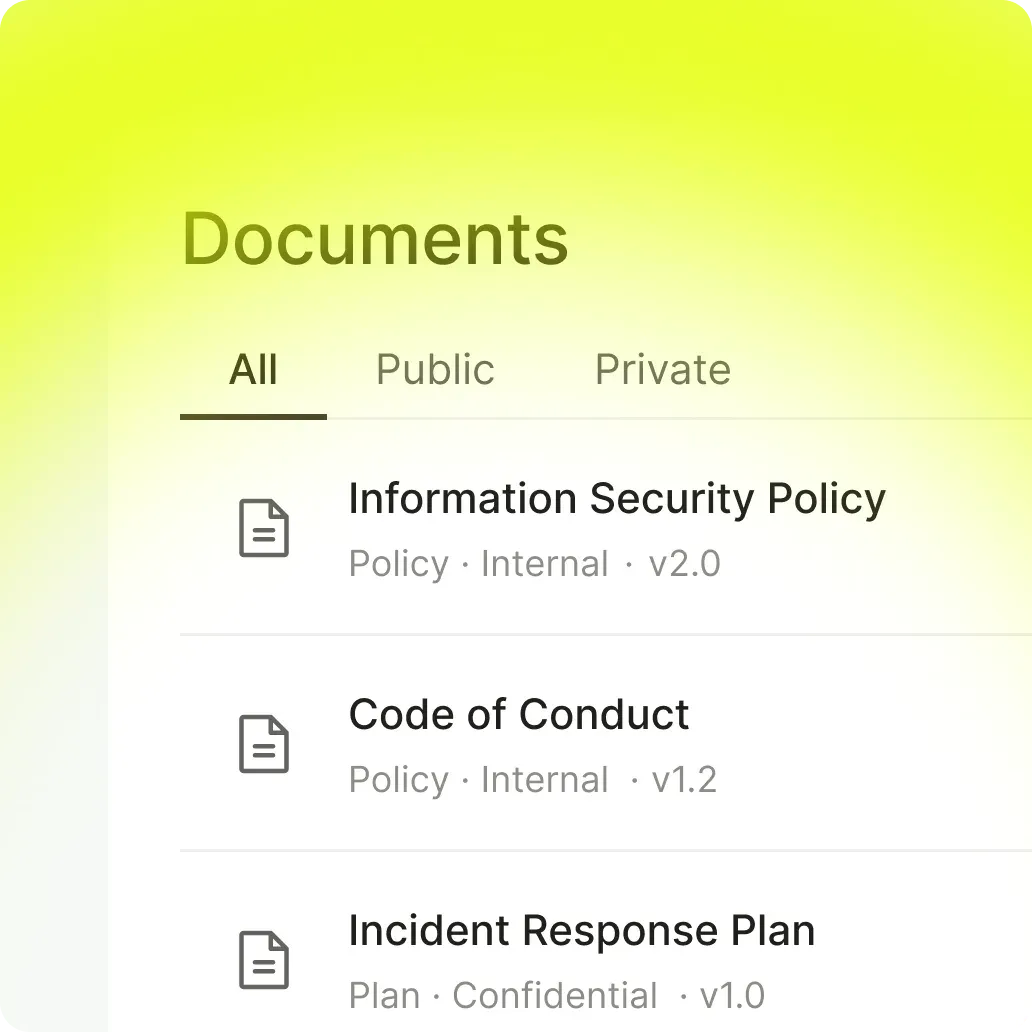
Document management list with document type, classification and version for each policy.
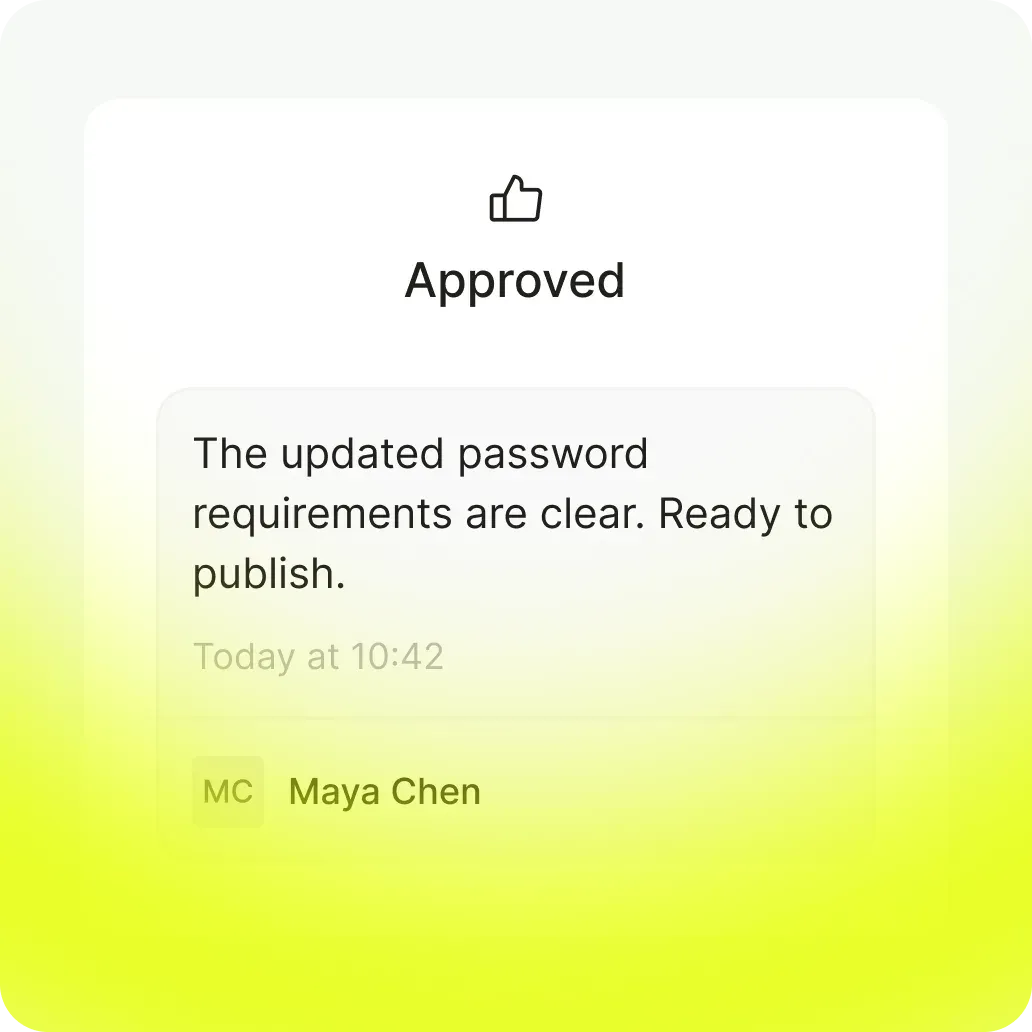
Approval step in a document quorum, with the approver's comment and time.
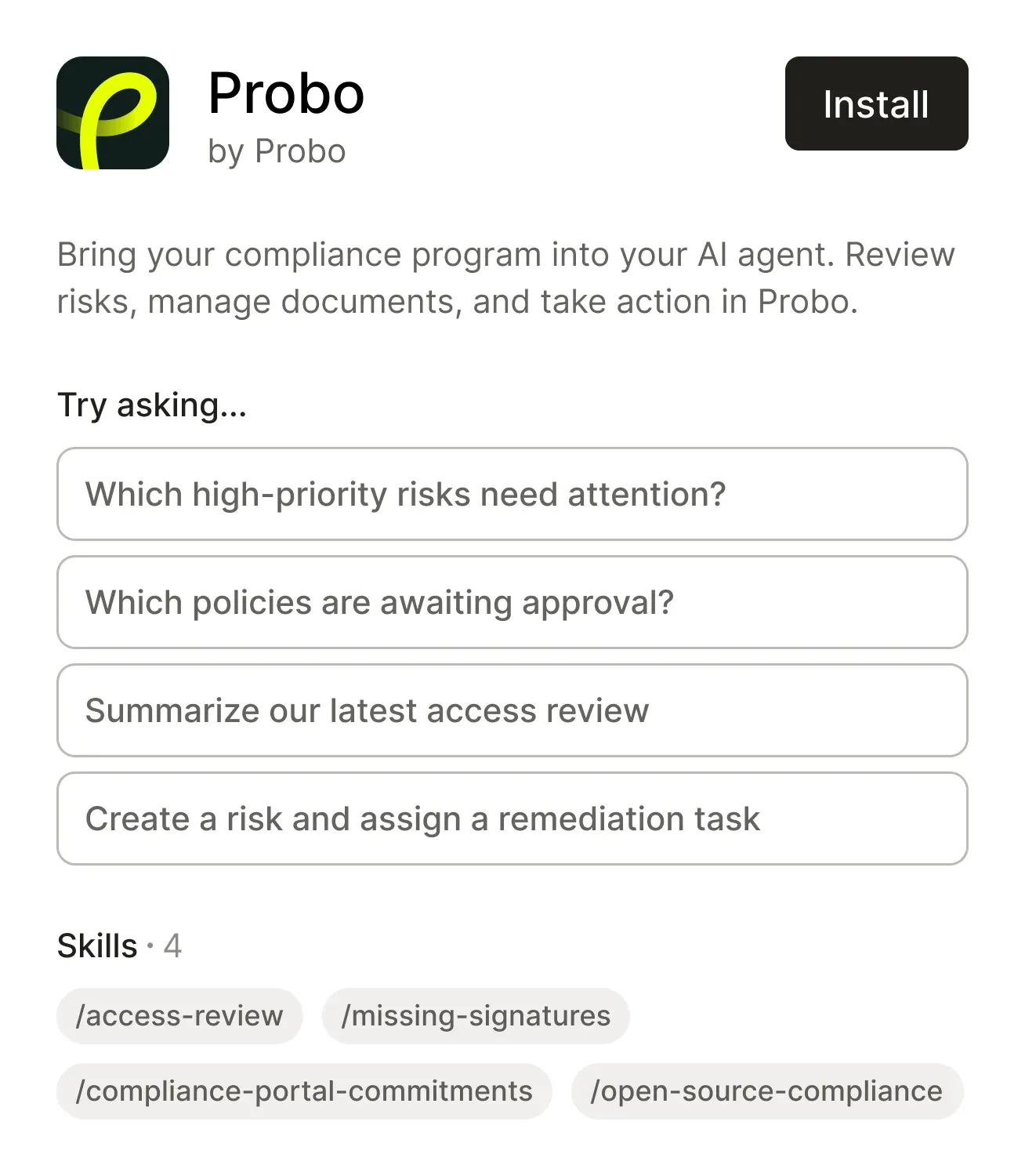
Probo plugin for AI clients, with example compliance questions and bundled skills.
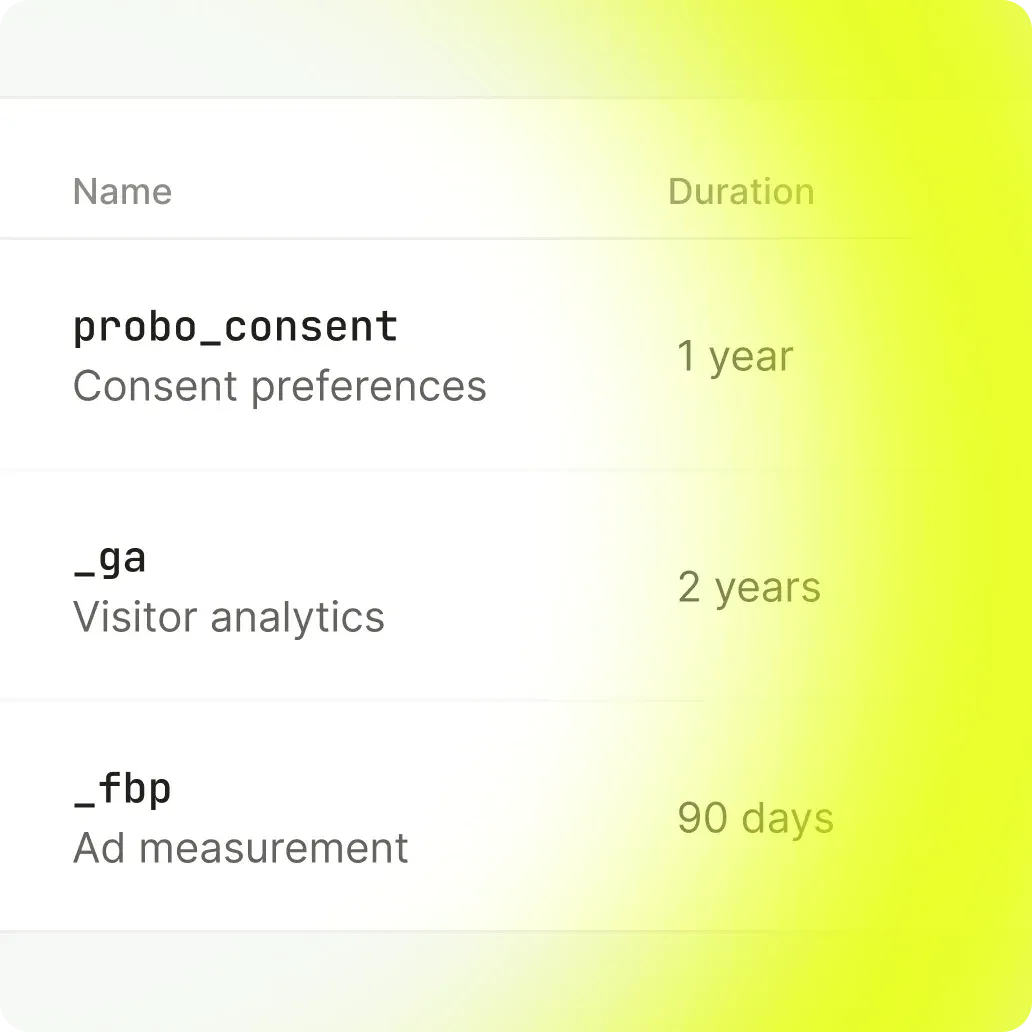
Cookie banner inventory with each cookie's purpose and retention period.
Source: official Probo project page.
Key capabilities
- Risk register and assessments Risks carry inherent and residual scores and a treatment strategy: mitigate, accept, avoid or transfer. Threat-based assessments let a team model scopes, systems, threats and scenarios that lead to a risk. Each risk can be linked to the measures and controls that reduce it, so the register shows which safeguards exist rather than only listing concerns. The risk management guide covers the first risk walk-through.
- Frameworks, controls and Statement of Applicability A control library with maturity levels maps framework requirements to the internal controls the team actually operates. Custom frameworks can be imported and exported, and the Statement of Applicability records which controls apply and why. The managed service lists SOC 2 Type 1 and Type 2, ISO 27001, ISO 27701, ISO 42001, GDPR, HIPAA, CCPA, FERPA, CASA, NIS2 and DORA among the frameworks it handles.
- Evidence, measures and tasks Evidence can be a file or a URL attached to an internal control, together with its implementation state. Tasks are assigned to owners, can be mentioned and commented on, and now generate email reminders under the notification schedule introduced in 0.339.0. Evidence upload is also available from the CLI, which suits scripted collection in CI.
- Vendor and third-party risk The vendor inventory records services, DPA and BAA status, and subprocessors. An automated website risk assessment can prefill information about a vendor, and selected vendors can be published as the subprocessor list on the compliance portal. Third-party assessments are available in the console, the CLI and MCP.
- Privacy management The privacy module holds records of processing activities, a data inventory, Data Protection Impact Assessments and Transfer Impact Assessments. Data subject requests such as access and erasure can be received through the compliance portal and tracked to completion. These records support GDPR work but do not replace legal review of the processing itself.
- Access review campaigns A campaign snapshots identities from selected sources and records an approve, revoke, modify or escalate decision for each account. The documentation lists more than 50 connectors, including Okta, GitHub, Slack, 1Password, Cloudflare and OpenAI, plus CSV import for systems without a connector. AWS, Google Cloud and Azure use workload identity; for AWS, Probo assumes a read-only IAM role and stores no AWS credentials. Fields a provider does not return, such as MFA or last login, stay blank. See the access review overview.
- Document management and e-signature Policies and procedures are versioned, edited collaboratively, approved through approval quorums and signed electronically by employees. Documents can be exported to PDF and handled in bulk. A certificate of completion records the signing, and signature reminders follow the organization notification schedule.
- Audits and findings Audit programs define scope, map controls, attach evidence and track findings to resolution. Reports can be generated from the audit record. The software prepares the material an auditor reviews; the audit opinion itself comes from the audit firm.
- Compliance portal A branded public page shares frameworks, audit reports, documents, security commitments, references and subprocessors. Each item is not published, public or restricted; restricted items require sign-in and approval, and an NDA can be required before protected documents are exported. Custom domains use ACME certificates, several portals can run side by side, and nothing is published automatically. The compliance portal guide explains each setting.
- Employee portal Staff see the documents they need to sign, the approvals they owe, their enrolled devices and the tasks assigned to them. Notification preferences are set there, including the weekly digest option. This keeps everyday compliance actions out of the administrator console.
- Device Agent
probo-agentruns as an OS service and reports disk encryption, screen lock, firewall, time sync, OS version, auto-update, password policy, remote login and malware protection. It ships as a signed universal .pkg for macOS, a signed .msi for Windows and an install script for Linux and FreeBSD servers. It is push-only and is not an MDM: the server cannot send commands or new checks. Updates are verified with cosign before installation. See the Device Agent overview. - Cookie banner and consent records A cookie banner with categories, theming, geolocation rules and resource blocking is configured in Probo and embedded with a JavaScript SDK or React. Consent records are retained, and since 0.337.0 a scan of the site lists the resources and trackers it found. Separate npm packages exist for the standard banner and a TCF variant.
- prb command-line client The CLI covers organizations, frameworks, controls, risks, audits, documents, access reviews, privacy records, webhooks and devices. Install it with
brew install getprobo/tap/prborgo install github.com/getprobo/probo/cmd/prb@latest, then sign in with an OAuth device flow to the EU, US or a self-hosted instance. Commands support JSON output and non-interactive mode for CI, andPROBO_HOSTandPROBO_TOKENprovide temporary credentials. See the CLI overview. - MCP server for AI clients The server exposes Streamable HTTP at
/api/mcp/v1on the EU, US or self-hosted origin. The current documentation lists 402 generated tools with JSON schemas and read-only, destructive and idempotent hints; the README still quotes a lower count. Connections use interactive OAuth or a scoped token, and every call is checked against both token scopes and the user's own permissions. Setup guides cover Claude, Cursor, VS Code, OpenAI, OpenCode and Dust in the MCP documentation. - GraphQL API, webhooks and n8n node The GraphQL API is the integration surface for applications, signed webhooks report supported record changes, and the
@probo/n8n-nodes-probocommunity node brings Probo operations into n8n workflows. The API fundamentals page explains endpoints, organization identifiers, pagination and errors. - Identity, roles and audit log Policy-based role access control governs what each member can see and change. SSO is documented for Google Workspace, Microsoft Entra ID and Okta, and SCIM provisioning for Google Workspace, Microsoft 365 and Okta. An audit log records activity in the organization.
- Self-hosting with Docker Compose The repository ships
compose.prod.yaml, which runsprobod, PostgreSQL, SeaweedFS and headless Chrome on one Linux host with Docker Compose v2. You generate an encryption key, cookie secret, password pepper, trust-token secret and an RSA OAuth signing key, provide SMTP settings and put the service behind a TLS reverse proxy. The file publishes database and storage ports and uses fixed development credentials, so the guide asks operators to firewall ports, replace those credentials and pin the image tag. - Kubernetes with Helm The Helm chart is published at
oci://artifact.probo.inc/probo/proboand requires Kubernetes 1.23 or newer and Helm 3.8 or newer. Production installs point it to an external PostgreSQL 18 database, with the citext, pgcrypto, unaccent and pg_stat_statements extensions, and an S3 bucket. The chart renders its own Secret from Helm values, so secrets also appear in Helm release metadata. - Verifiable release artifacts Each
probodrelease publishes checksums signed with cosign, GitHub build provenance and an SBOM attestation, with archives for Linux, macOS, Windows, FreeBSD and OpenBSD on amd64 and arm64 where provided. The Docker image covers linux/amd64 and linux/arm64. Release notes include the exact verification commands.
Where Probo fits
Preparing a first SOC 2 or ISO 27001 audit
Create the organization, add the framework and review which controls apply in the Statement of Applicability. Link each control to the internal control the team actually runs, assign owners and collect evidence as files or URLs. Before the auditor arrives, check that every in-scope control has current evidence and an owner, and that open findings from earlier reviews are resolved or explained. The first framework guide walks through the setup.
Running a quarterly access review
Connect providers under Settings, add them as access sources, then create a campaign that names the sources in scope. Starting the campaign snapshots the accounts; reviewers record a decision for each entry and the campaign completes only when every entry has one. Revocations must still be carried out in the source system. Check that blank MFA or last-login fields are understood as missing data, not as a pass, and keep the completed campaign as audit evidence.
Publishing a trust page for sales and procurement
Use the compliance portal to publish the frameworks, reports and policies a prospect usually asks for. Mark audit reports as restricted, require an NDA for exports and review access requests as they arrive. Add the subprocessor list from the vendor inventory so it stays consistent with internal records. Verify the custom domain certificate and confirm that unpublished documents are not reachable before sharing the link.
Collecting policy signatures and device posture from staff
Approve policies through a quorum, publish them and request electronic signatures from employees through the employee portal. Roll out the Device Agent with the signed macOS and Windows packages, or the install script on Linux and FreeBSD servers, and enroll each device with a one-shot token. Check the notification schedule so reminders reach people who have not signed, and review devices that fail disk encryption or screen lock checks.
Automating evidence and records from CI or an AI client
Use prb with a purpose-specific token in CI to upload evidence or list open risks, with --json output and non-interactive mode. For AI clients, connect to the MCP endpoint with a scoped token, start with read-only questions and require approval before write or destructive tools run. Give each client its own token so it can be revoked separately, and paginate list tools until no cursor remains when a complete answer matters.
Running Probo on your own infrastructure
Start with Docker Compose for evaluation or a small internal deployment, then move to the Helm chart with managed PostgreSQL 18 and S3 when you need separate scaling or rolling updates. Store the generated secrets safely, since changing them later can invalidate sessions or make stored data unreadable. Test sign-in, file upload, email delivery, backups of database and files as one set, and an upgrade to a pinned image tag before inviting users.
Reviews of Probo
Be the first to share your experience with Probo.
Write a review
Loading review form…
Related to Probo
 SailPointSailPoint provides enterprise identity governance: access certification, automated provisioning and separation-of-duties controls, on-prem or SaaS.
 SaviyntSaviynt Identity Cloud is a cloud-native identity security platform combining identity governance, privileged and just-in-time access, application access governance for SAP and ERP, non-human identity management and Zuma for AI agents.