

What is Bluesky?
Bluesky is a social network and the app that people use to read and post on it. The client in bluesky-social/social-app is a React Native application written in TypeScript. The same codebase produces the web app at bsky.app and the iOS and Android apps. A small amount of Go code in the bskyweb folder runs the web service that serves the React Native Web build.
The app is one client for the Authenticated Transfer Protocol, usually shortened to AT Protocol or atproto. It builds on the open @atproto/api packages, which live in a separate repository, and its schemas use the app.bsky.* namespace. The company behind it is Bluesky Social PBC, a public benefit company. Its founder wrote that Bluesky was announced in 2019 and that the legal entity was set up later, in 2022.
Users reach it at bsky.app, in the App Store (iOS 16.4 or later) or on Google Play. The service is free to use, and the App Store description states that it carries no ads. The reviewed release is 1.137.0, published on October 29, 2026. It upgrades the app to React Native 0.88 and Expo SDK 58, adds a shared-password change for bsky.app and bsky.social with a /.well-known/change-password route, and continues work on profile links with a blocklist of link shorteners and redirect domains. Release 1.136.0 wired up endpoints for a Moderation Inbox beta feature.
The source code is MIT licensed, and the company has announced a patent non-aggression pledge. The repository also carries an asset licensing file: illustrations, the UI icon set, logos and app icons are licensed to Bluesky or are trademarks and are not covered by the MIT license. A fork has to replace them. This profile covers the client application; running your own server for the wider network is a separate project.
Bluesky screenshots
Explore the interface. Open a screenshot to view it at full size.
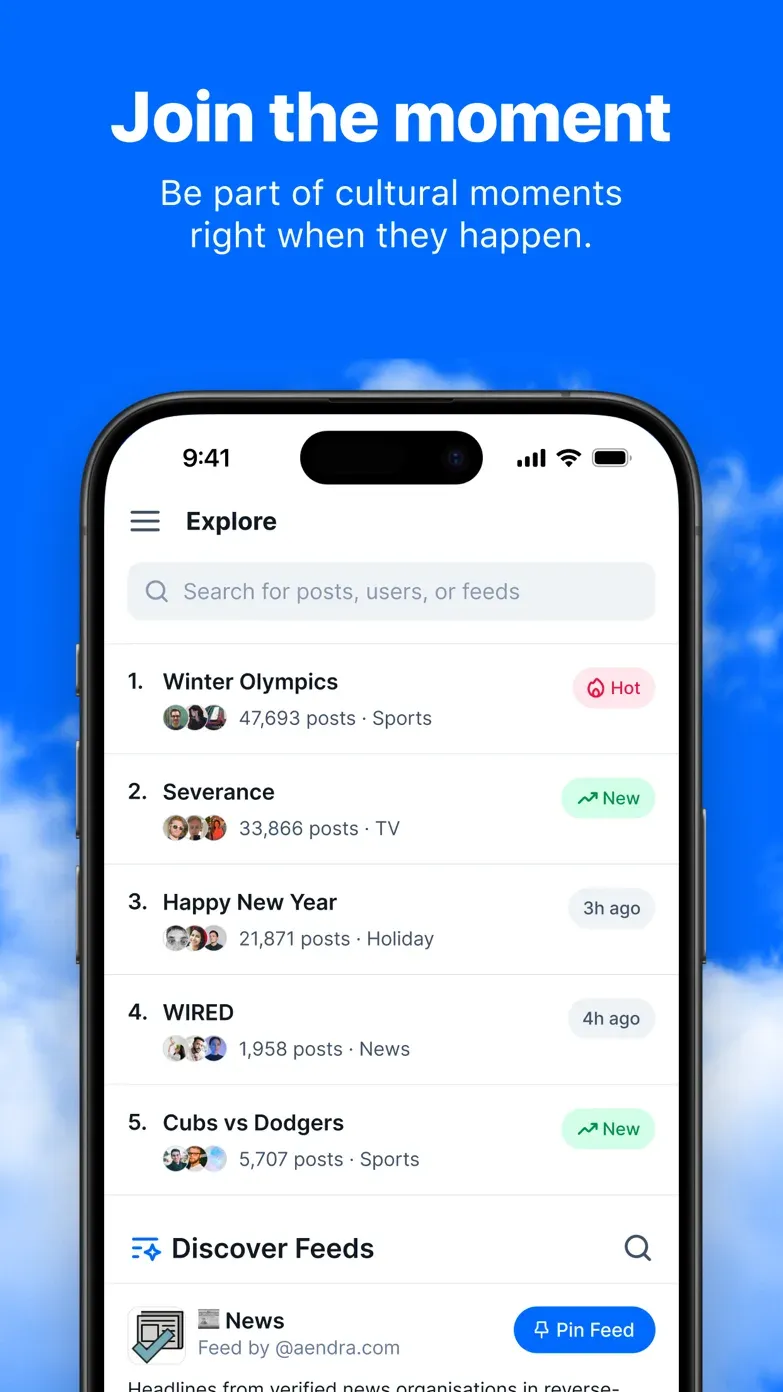
Official App Store screenshot of the Explore screen; trending topics depend on current activity.
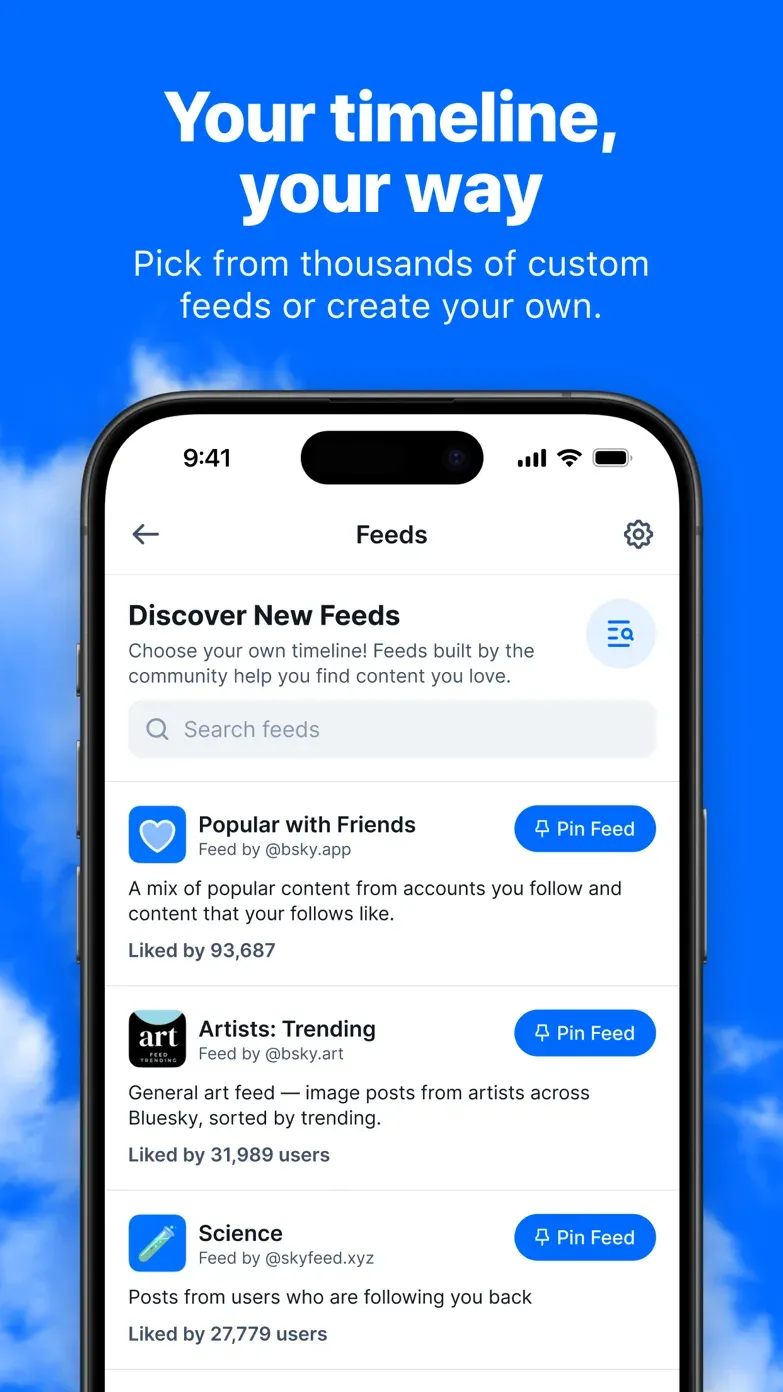
Official App Store screenshot of the feed catalogue, where community-built feeds can be pinned.
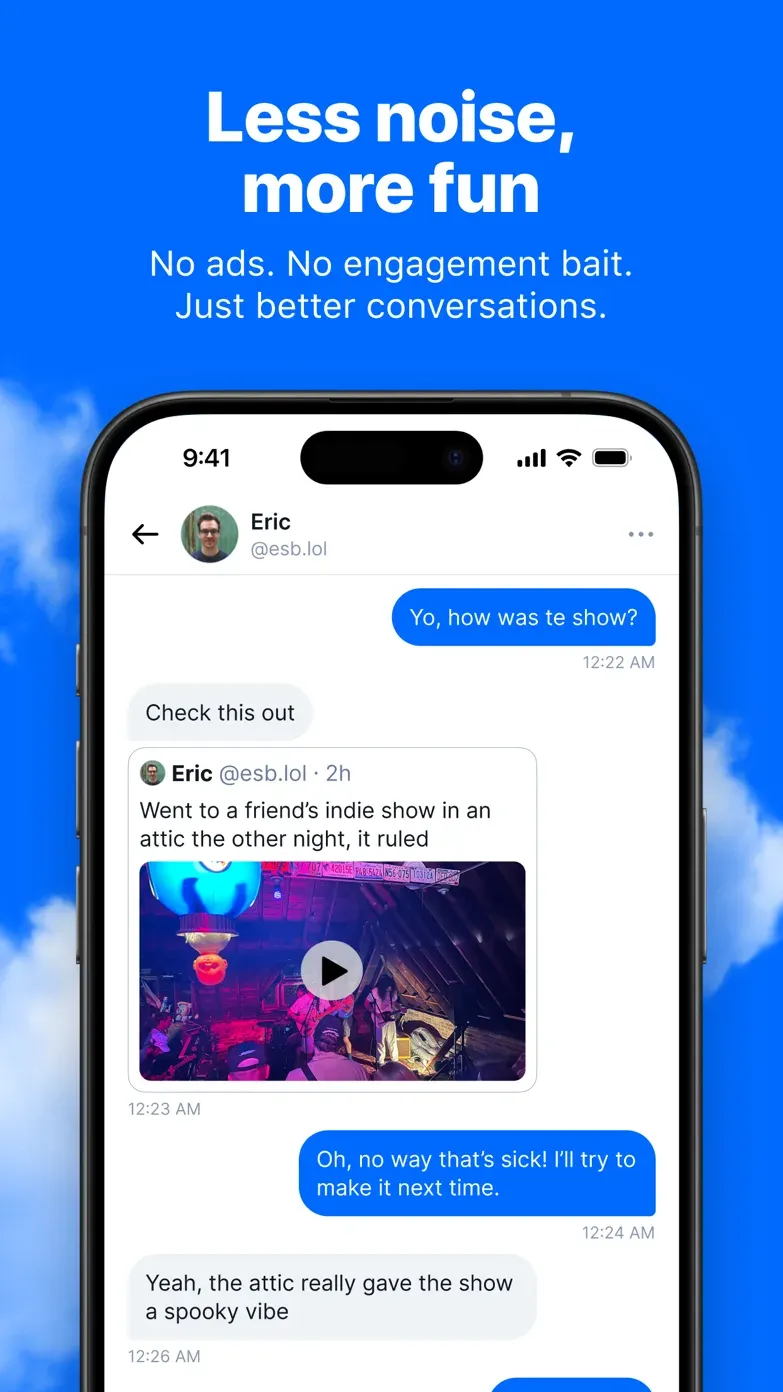
Official App Store screenshot of a direct message conversation with a shared post.
Source: official Bluesky project page.
Key capabilities
- Web, iOS and Android clients One TypeScript codebase targets all three. The web app runs at bsky.app, and the project documents fixed browser minimums: Chrome and Edge 97, Firefox 104, Safari 15.4 and Samsung Internet 18. The iOS app requires iOS 16.4 or later according to its App Store listing.
- Following timeline and custom feeds Besides the Following feed, users can pin feeds built by the community, covering topics such as news, art or science, or create their own. The feed catalogue is searchable from the Feeds screen, and each feed shows who built it and how many users liked it.
- Explore and trending topics An Explore screen combines a search field for posts, users and feeds with a list of trending topics. Which topics appear depends on current activity on the network and is not something a client fork controls.
- Starter Packs The App Store description lists Starter Packs as a way to get going quickly: curated lists of people and feeds that a new user can follow in one step. They shorten the empty-timeline problem for new accounts.
- Moderation tools and content filters Users can mute and block accounts, apply content filters and use moderation lists to control what reaches their timeline. The about page also describes plans for open tools that let people and organizations contribute to moderation more directly. Release 1.136.0 added endpoints for a Moderation Inbox beta feature, so this area is still changing.
- Direct messages Chat is part of the app, with message threads, shared posts and link cards inside conversations. Check current limits and privacy details in the product's own help pages before treating it as a secure messenger.
- Profile links Recent releases added profile links, blocklists for shorteners and redirect domains, suggestions from a standard.site blog, and a status-bar preview of where a link goes on the web. Links to bsky.app profiles open in the app from the link details sheet.
- AT Protocol identity and data An account is tied to a protocol identity rather than only to this app. The protocol allows other clients and services to read and write the same network data, which is why the project describes itself as an open ecosystem. Read the protocol overview to see what that means for account portability.
- Public APIs and developer documentation The Bluesky developer docs cover the HTTP API, the firehose of public events, custom feed generators and sign-in with Bluesky. The
@atproto/apipackage is a typed TypeScript client for those endpoints. - Build from source The build instructions start the web app with
pnpm installandpnpm web. Native builds follow the Expo local-development guide, need JDK 17 (the project names a Zulu 17 build) and requirepnpm prebuildwheneverapp.jsonor native dependencies change. A real Firebase project is not required. - Release process The release model uses one strict version for the branch, native tag, release document and GitHub Release, plus separate tags for over-the-air updates. Each release has a published changelog with pull request links.
- Localization A localization guide in the docs folder describes how translations are handled, so the interface is not limited to English. Check the language you need in the app before relying on it.
- Security reporting and contribution rules Security issues go to security@bsky.app. The README is explicit that issues and pull requests may go unanswered, that build support is not provided and that large refactors or new features need prior discussion.
- Forking rules Forks are welcome, but the README asks for different branding, your own support links and analytics, and replacement of commissioned artwork, icons and logos that the MIT license does not cover.
Where Bluesky fits
Joining and following people
Create an account from the app or at bsky.app, then start from a Starter Pack or the Suggested for you list instead of an empty timeline. Check what the Following feed shows after a day and unfollow accounts that do not fit. The service is free, so the practical limit is attention, not a plan tier.
Building a timeline from feeds
Open Feeds, search by topic and pin a few community feeds next to Following. Note who maintains each feed and how many users liked it, because a feed is code run by a third party and can change or disappear. Remove feeds that you cannot explain, and revisit the list after a few weeks to see which ones still earn their place.
Controlling what you see
Review content filters, muted words, blocks and moderation lists in settings, and decide who can reply to you. Test the result from a second account if you manage a brand or community profile. Moderation behavior changes between releases, so recheck after major updates.
Building on the network
Developers can read the API documentation, install @atproto/api and write bots, custom feeds or alternative clients. Start with read-only calls against public data, then add authentication. Respect rate limits and the protocol specifications linked from the docs.
Running the app from source
Clone the repository, run pnpm install and pnpm web, and confirm the web build loads before attempting native builds. For iOS and Android set up the Expo local environment, use JDK 17 and expect to run pnpm prebuild after native changes. The maintainers do not offer support for build problems.
Forking the client
A fork has to change branding, support links and analytics and replace the illustrations, icon set and logos listed in ASSETS.md. Read that file before shipping anything, and keep the license notices for bundled fonts such as Inter. Also replace the analytics and error-collection setup, so that reports from your fork do not reach the original maintainers.
Reviews of Bluesky
Be the first to share your experience with Bluesky.
Write a review
Loading review form…
Alternatives to Bluesky
 MastodonMastodon is free, open-source social network server software. Each server runs its own community and moderation rules, and federates with other Mastodon and ActivityPub servers. It runs on Rails, PostgreSQL, Redis and Node.js.
 DiscourseDiscourse is a GPL-2.0 community platform built on Ruby on Rails and Ember.js. It offers topics, built-in chat, moderation tools, plugins and an API, and can be self-hosted with Docker or run on official hosting plans.