

What is Bishop Fox?
Bishop Fox is an offensive security company that sells penetration testing, continuous security testing, red team exercises and AI security assessments. Its company page describes two decades of work in offensive security and names Vincent Liu as CEO and co-founder and Francis Brown as co-founder and board member. The contact page lists global headquarters in Tempe, Arizona, offices in San Francisco, London and Barcelona, and a remote-first team present in 19 countries and 38 US states.
The services are delivered by Bishop Fox consultants rather than sold as installable software. They fall into four groups on the services overview: penetration testing (applications, AI-powered application testing, mobile, secure code review, cloud, hardware, external and internal networks, and partner assessments such as CASA, Oracle and ioXt certification), Continuous Security Testing, red team and readiness work (red teaming, social engineering, ransomware readiness, incident response tabletop exercises), and AI security services.
The technology behind the services is Cosmos, a cloud-native platform built on stateless microservices. The Cosmos page states that Cosmos is operated and managed by Bishop Fox as part of its services, that customers do not deploy or maintain it, and that its validated output reaches customers through the Bishop Fox Portal. Through the OpenAI Daybreak Defense Network, Bishop Fox has integrated OpenAI GPT Cyber Models into its services and into Cosmos.
Bishop Fox Labs also publishes open-source offensive security tools on GitHub. The tools page lists more than 20 maintained tools, among them the Sliver command-and-control framework, CloudFox for AWS attack paths, Cirro for cloud identity graphs, JSluice, Eyeballer, the Joro web exploitation framework and AIMap for exposed AI infrastructure. These tools are free downloads and are separate from the paid services.
Pricing is not published; engagements start from the get started form. The company page cites customers including 70% of the Fortune 10 and one in three of the Fortune 100. Comparable listings on iThub include Trail of Bits, a security audit and research firm, and crowdsourced programs such as Bugcrowd and HackerOne.
Bishop Fox screenshots
Explore the interface. Open a screenshot to view it at full size.
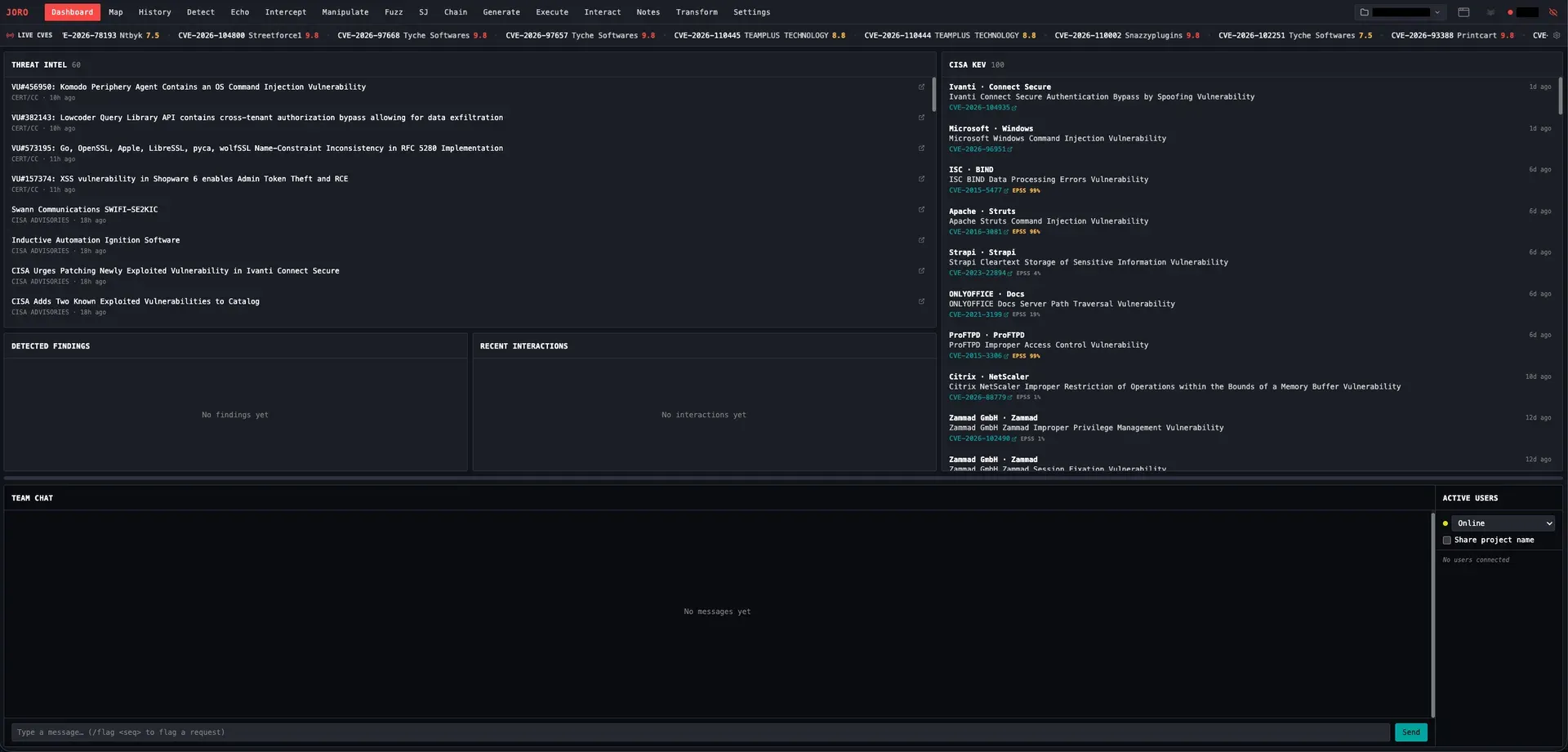
Joro, the open-source collaborative web exploitation framework from Bishop Fox, from its GitHub README.
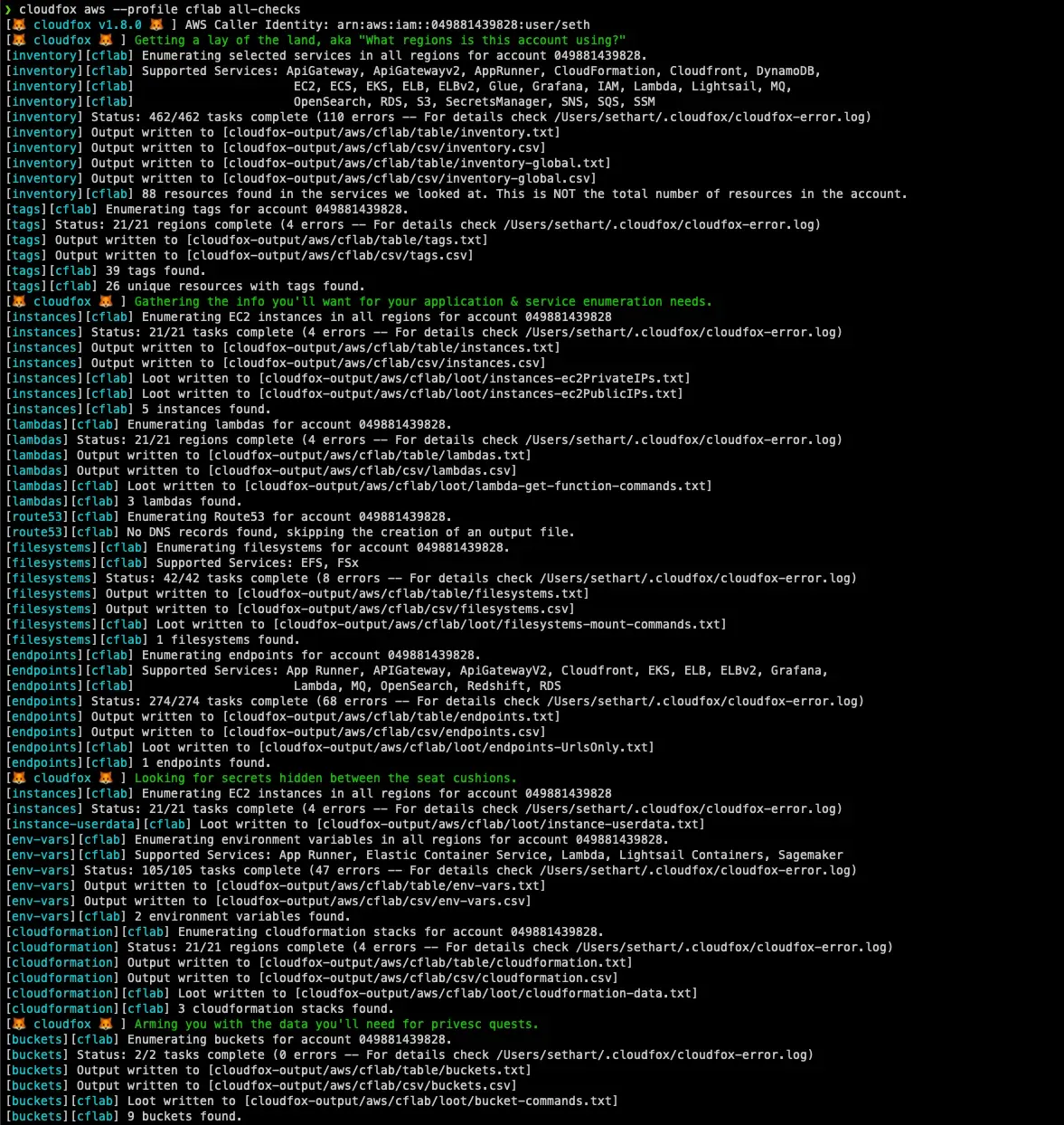
CloudFox running all checks against an AWS lab account, from the CloudFox README.
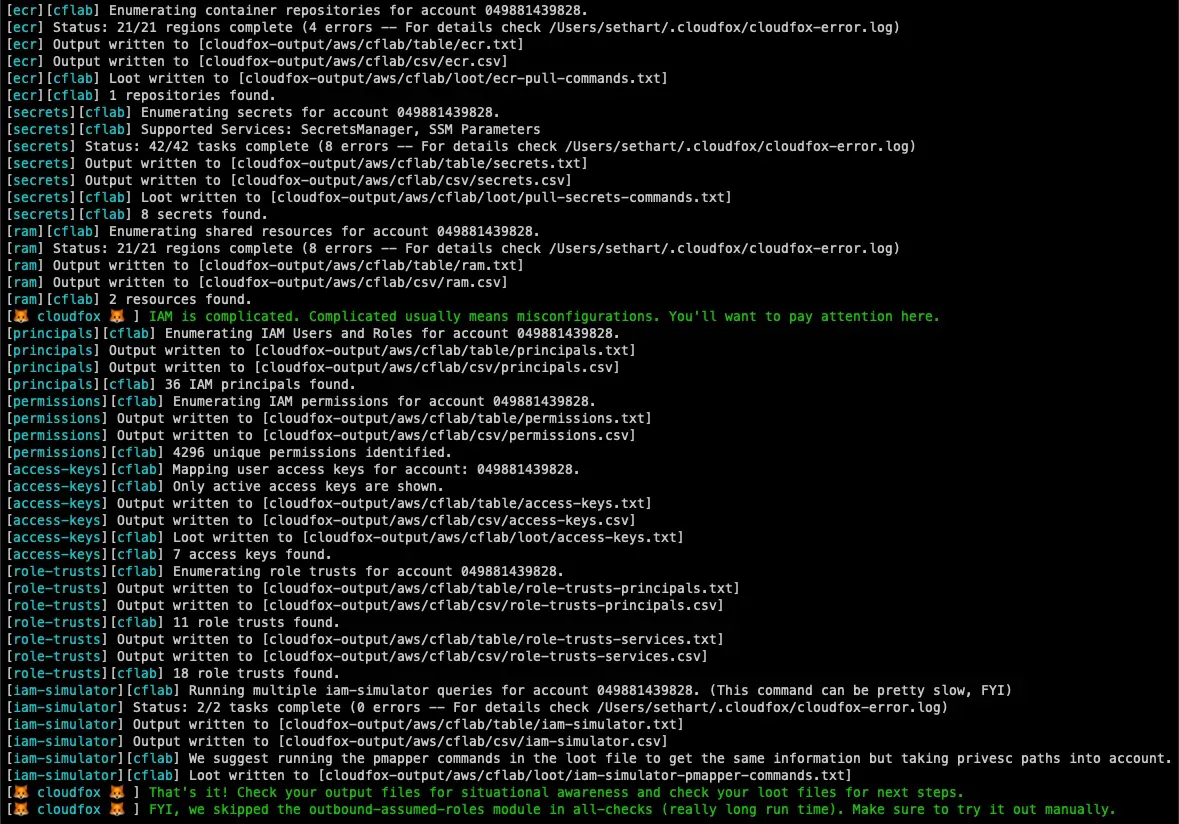
Second part of the CloudFox all-checks output, covering secrets and IAM analysis.
Source: official Bishop Fox project page.
Key capabilities
- Application penetration testing Assessments of web applications, APIs and products, including an AI-powered application penetration testing variant, mobile application assessments and secure code review. Each engagement ends with a report that combines technical detail for remediation with executive-level context, as described on the penetration testing page.
- Cloud penetration testing Testing of cloud environments for misconfigurations and exploitable attack paths. Cloud work at Bishop Fox is supported by its own research tools such as CloudFox for AWS and Cirro for identity and permission graphs.
- Network penetration testing External penetration testing targets internet-facing infrastructure; internal testing assumes an attacker already inside the network. Both are listed under network security services.
- Hardware penetration testing Security testing of hardware and embedded devices. Related published research covers RFID badge cloning, Zigbee attacks with ZigDiggity and firmware decryption for SonicWall appliances with Sonicrack.
- Partner and certification assessments Bishop Fox performs assessments required by platform programs, including CASA, MASA and ADA, Oracle security assessments and ioXt Alliance testing and certification for connected devices.
- Attack Surface Discovery Part of Continuous Security Testing. It continuously discovers internet-facing assets, validates ownership with an evidence-based confidence rating and reports hygiene issues such as certificate and TLS, DNS, email and exposed service findings.
- Attack Surface Testing Exploitation testing across the external perimeter with findings proven by Bishop Fox testers and captured as evidence. It goes beyond discovery to show which exposures an attacker could actually exploit.
- Emerging Threat Testing Bishop Fox's Threat Enablement and Analysis team validates newly published vulnerabilities against a customer's attack surface and reports whether the customer is affected or not, with fixes confirmed after patching. The CST page describes it as a managed service.
- Bishop Fox Portal All Continuous Security Testing results are delivered through the portal, segmented and access controlled by user and team. Findings flow into Jira and ServiceNow, data can be pulled through a public API, and a read-only AI assistant answers questions about results.
- Cosmos platform Cosmos continuously discovers external assets, performs protocol-level verification and evidence-first scanning (technology fingerprints, screenshots, service metadata) and routes high-confidence findings to human validation. Cloud connectors ingest assets from AWS, Google Cloud, Azure, Cloudflare and Oracle APIs.
- Red teaming Covert attack simulations that measure how a blue team detects and stops an adversary. Engagements are modular, built from strategic objectives, methodologies, knowledge types and threat graphing, according to the red team page.
- Social engineering, ransomware readiness and tabletops Readiness services include social engineering tests, ransomware readiness assessments and incident response tabletop exercises for testing response plans.
- AI security testing Assessments of LLM-enabled applications, AI agents and their surrounding architecture, covering prompt injection, data exposure, excessive agency and insecure integrations. The AI security page pairs adversarial testing with architecture review.
- OpenAI Daybreak Defense Network Bishop Fox applies OpenAI GPT Cyber Models within customer-authorized testing engagements and in Cosmos, through the Daybreak Defense Network and OpenAI's Trusted Access for Cyber program.
- Sliver Open-source, cross-platform command-and-control implant framework for adversary emulation, described as an alternative to Cobalt Strike. It supports asymmetrically encrypted C2 over DNS, HTTP(S) and mTLS and has a multiplayer mode for team operations. The repository is licensed under GPLv3.
- CloudFox and Cirro CloudFox is a command-line tool that finds exploitable attack paths in cloud infrastructure and currently supports AWS; it writes tables, CSV files and loot files per module. Cirro maps cloud identities, resources and permissions into a graph to show how access turns into compromise.
- Web, recon and AI testing tools Other published tools include JSluice for extracting URLs and secrets from JavaScript, Eyeballer for triaging recon screenshots with a neural network, Joro as a collaborative web exploitation framework with an embedded web UI, Swagger Jacker for exposed OpenAPI files, GitGot for secrets in public repositories, and AIMap and Broken Hill for testing AI systems.
Where Bishop Fox fits
Pre-release application security testing
A software company commissions an application penetration test or secure code review before a product launch. Bishop Fox consultants test the application, APIs and, where in scope, mobile clients, then deliver a report with technical findings for developers and summarized risk for leadership.
Continuous external exposure management
Organisations with changing perimeters use Continuous Security Testing: Attack Surface Discovery keeps an inventory of internet-facing assets, Attack Surface Testing proves exploitability and Emerging Threat Testing checks new vulnerabilities against the inventory. Results stay live in the Bishop Fox Portal and sync to Jira or ServiceNow. Bishop Fox relates this to the Gartner CTEM framework on its CST page.
Measuring detection and response
A security team engages a red team to run covert, objective-based attacks against its environment, sometimes combined with social engineering. The engagement shows whether defenders detect and contain the activity before sensitive systems are reached, and tabletop exercises test the incident response plan on paper.
Assessing AI applications and agents
Teams deploying LLM features or agents request AI security testing focused on prompt injection, data exposure, excessive agency and integrations with other systems. Assessments combine adversarial testing with a review of the surrounding architecture.
Meeting platform certification requirements
App developers and device makers use partner assessments such as CASA, Oracle security assessments or ioXt certification for connected devices, where the platform owner requires a third-party evaluation.
Using the open-source tools directly
Penetration testers and red teams download Sliver for C2 during engagements, run CloudFox against AWS accounts to enumerate resources, secrets and IAM relationships, or use Joro for collaborative web testing. Each tool has a detail page on the Bishop Fox tools page and source code in the BishopFox GitHub organisation.
Reviews of Bishop Fox
Be the first to share your experience with Bishop Fox.
Write a review
Loading review form…
Alternatives to Bishop Fox
 Trail of BitsTrail of Bits is a security firm doing audits and research in cryptography, blockchain, AI/ML and application security, with 200+ open-source repos.
 BugcrowdBugcrowd runs bug bounty, vulnerability disclosure and penetration-testing-as-a-service programs through a managed platform and vetted researcher community.
 HackerOneHackerOne supports vulnerability disclosure programs and bug bounty programs with defined researcher rules.