

What is Deta Space?
Deta Space was a personal cloud platform from Deta that let people install apps into their own private cloud and let developers build and publish those apps. It is discontinued. Deta announced the shutdown on September 2, 2024 and the service closed on October 17, 2024, after which apps and data were scheduled for deletion. When iThub checked on November 7, 2026, the Space website (deta.space) returned an HTTP 530 error and the older deta.sh address did not respond. This listing documents what the product was, what its archived documentation says, and where to look for what came next. It does not describe a working service.
Deta began as Deta Cloud, a free platform for developers to put code online without managing servers; the company's February 2023 post says it had served more than 40,000 developers over two years, and the Deta GitHub organization dates from 2019. In February 2023 Deta merged Cloud into Space, with Deta Cloud projects continuing to run until June 1, 2023 and migration tools provided. Space then added Collections for data, Micros for compute, a store called Discovery and a canvas-style interface. New signups were halted on September 19, 2023 until a release on October 10, 2023, which the team described as the alpha of Space OS.
The official sunset page in the documentation repository says Space was shutting down and gave export steps for Horizon data, installed app data, Collections, builder instance source code and release source code. It names Deta Surf as the company's future product and does not give a reason for the shutdown. The documentation source lives in the deta/space-docs repository, which is now archived and read-only, as are the Space CLI, the Python SDK and several other Space repositories.
Deta's current work is Deta Surf, a local-first AI notebook for files and web pages. According to its repository it is open source under the Apache License 2.0, built mainly with Svelte, TypeScript and Rust, and runs on macOS, Windows and Linux. Surf is a different product and not a hosting platform, so it is not a drop-in replacement for Space.
Space itself was not self-hostable and was not presented as open source. Code and documentation for parts of it are public, but the hosted runtime, Discovery and Horizon were Deta services. Anything you built on it needs a new home. The sunset page remains the primary statement of what was offered at the end.
Deta Space screenshots
Explore the interface. Open a screenshot to view it at full size.
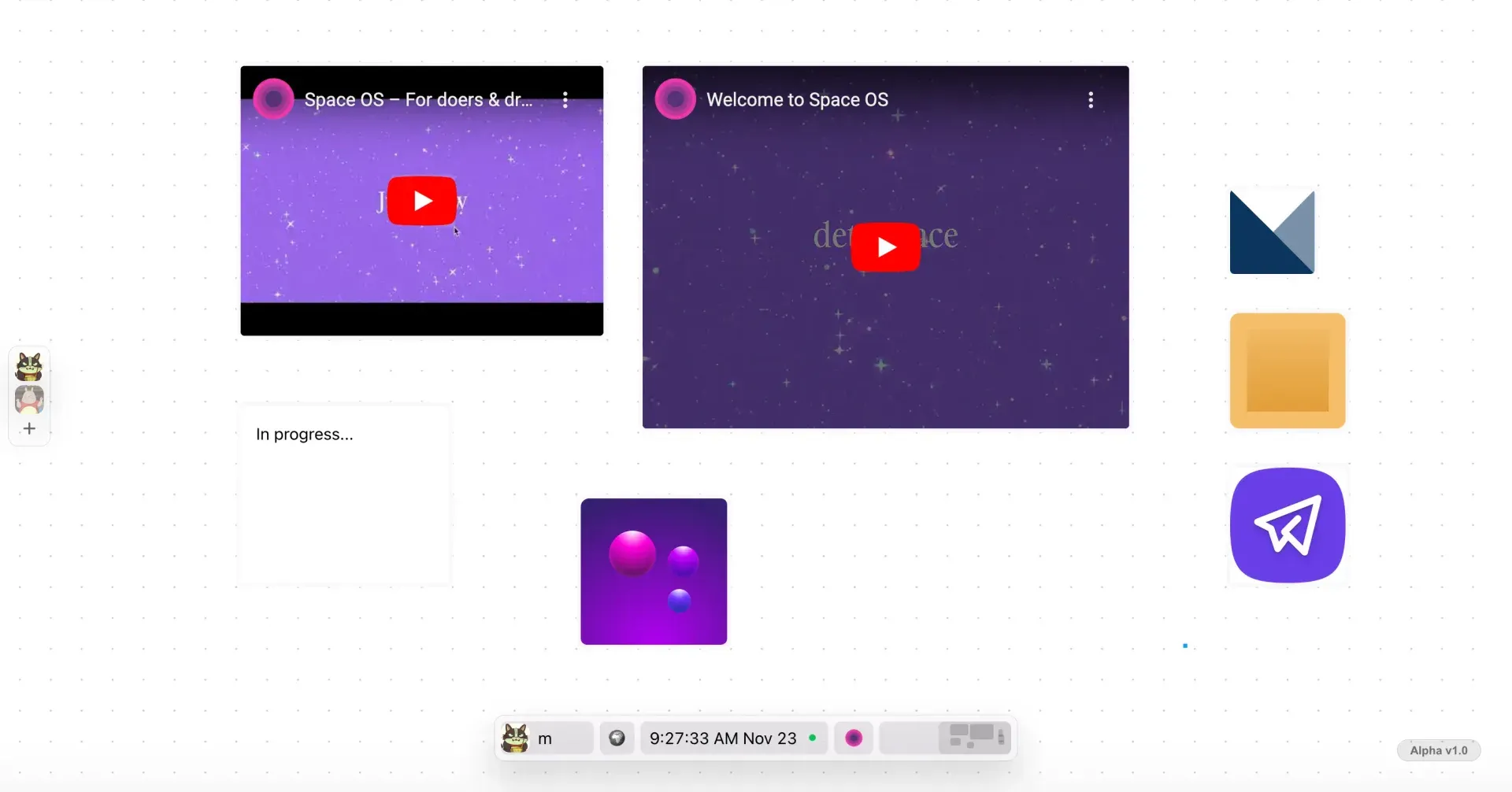
Horizon from the archived Space documentation: a free-form canvas of cards and pinned apps with the Teletype bar at the bottom. This is the alpha interface of Space OS.
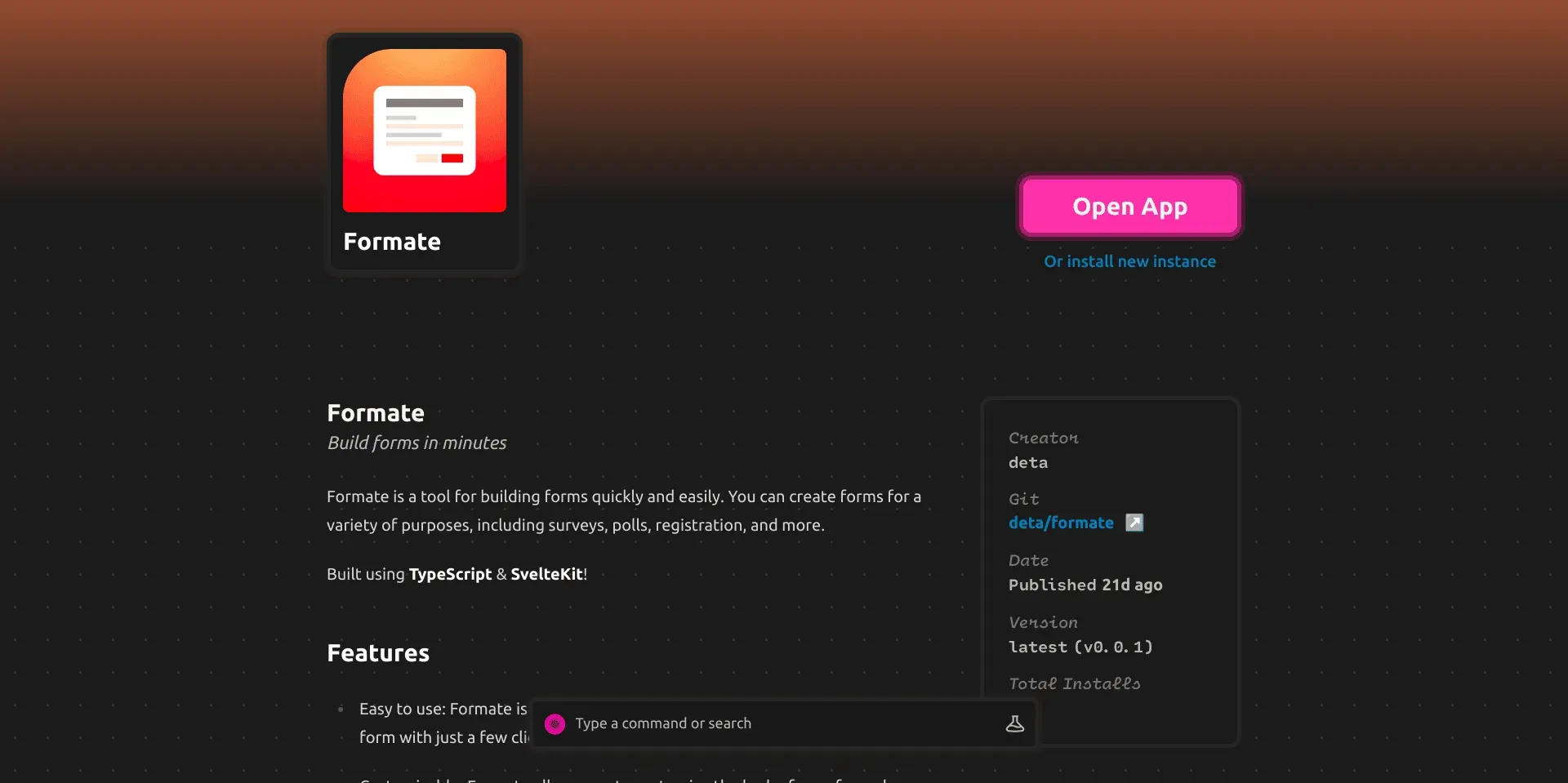
Discovery app page from the archived Space blog assets: the Formate app with its creator, source link, release date and version.
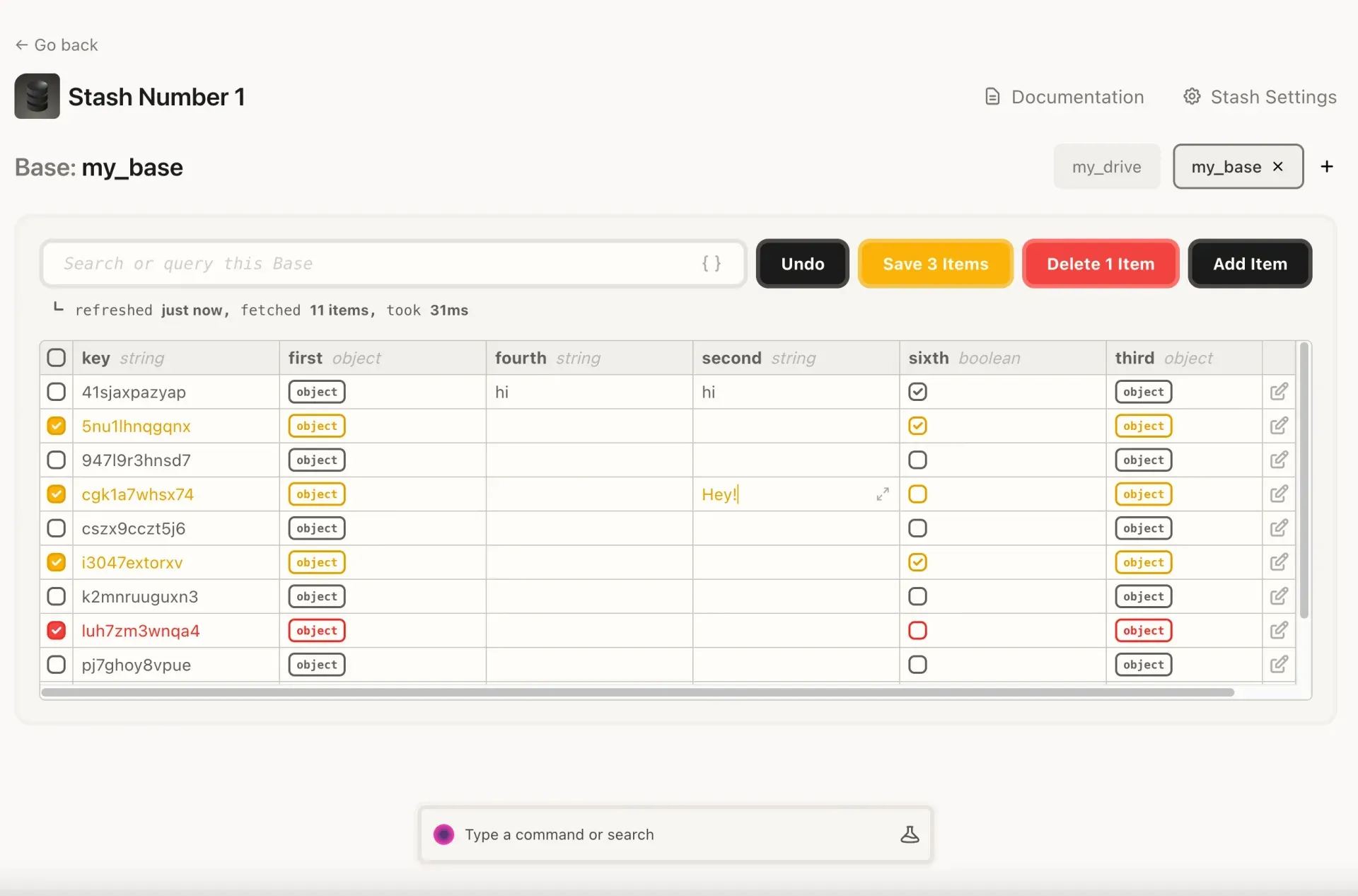
Collections interface from the archived Space blog assets, showing a Deta Base table with query, edit and delete controls.
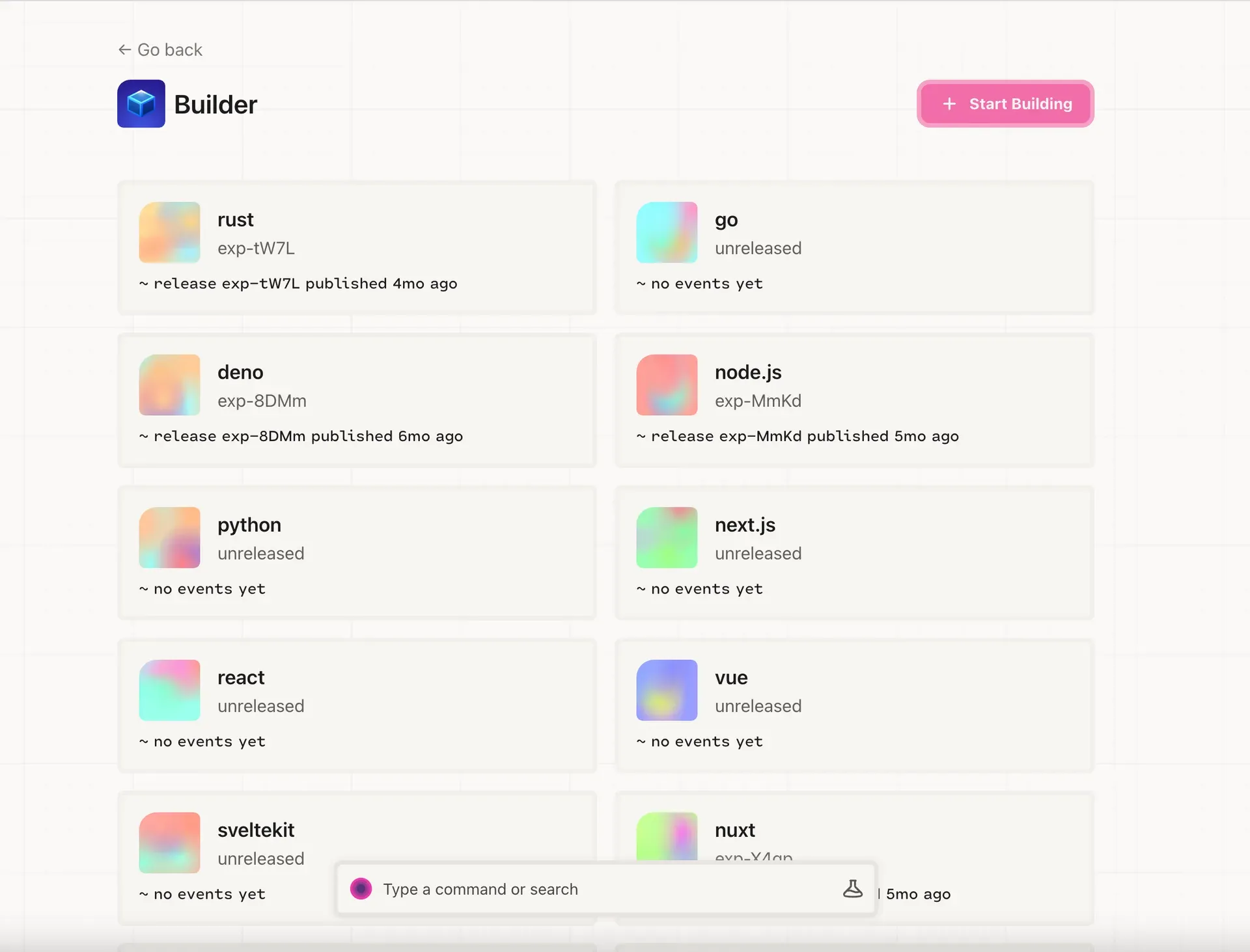
Builder view from the archived Space blog assets: a list of projects with their release status and a Start Building button.
Source: official Deta Space project page.
Key capabilities
- Current status: discontinued Space shut down on October 17, 2024, after a 45-day export window announced on September 2, 2024. The archived sunset documentation says exports were zip archives and that deleting an account ended the ability to log in and export. Nothing in this list can be used today; it describes the design for people who inherit a Space project or study the model.
- Personal cloud model Each user received their own copy of every installed app, with separate compute, database and file storage, instead of all users sharing one hosted instance. The documentation contrasts this with the public cloud model, where the app owner controls the shared resources. The personal cloud page explains the idea.
- Horizon and Teletype interface Horizon was a free-form canvas of cards such as text, embeds, installed apps, custom HTML cards and themes. Teletype was a command bar for searching and running actions. The interface was announced as an alpha of Space OS in October 2023.
- Discovery app library Discovery listed apps with Popular, Recent and Hot views and an install button that provisioned a personal copy in the user's Space. Each page showed the creator, optional Git link, release date, version and install count. Developers could publish listed releases, which anyone could find, or unlisted ones reachable only by link.
- Micros for compute A Micro was a small serverless service exposed over HTTP, and an app could combine up to five Micros. The FAQ states limits of 20 seconds per request, 512 MB of memory, a 5 MB request payload and 250 MB of dependencies, and says Micros did not support websockets.
- Supported runtimes The Space Runtime supported static sites, React, Vue, Svelte, Next.js, Nuxt, SvelteKit, Node.js, Python and Go, with Rust and a custom engine documented in the Spacefile reference. Python versions followed what AWS Lambda offered, according to the FAQ.
- The Spacefile A YAML-style file at the project root declared the app version, icon, Micros, engines, run commands, public routes and scheduled actions. The Spacefile reference is the best surviving description of how an app was packaged, and it is the file to read when porting.
- Collections with Deta Base and Deta Drive Every app had a Collection, and users could also create headless Collections. Base was a NoSQL key-value store with queries and expiring items, and Drive stored files. Base rows larger than 400 KB could cause errors according to the FAQ. Data in a Collection belonged to the end user, not the app developer.
- Space CLI and Builder The
spacecommand-line tool created projects, pushed revisions to a builder instance and published releases. The CLI repository is archived under the MIT license. Developers could also use a graphical Builder with logs, revisions and release management. - Private by default with public routes Apps sat behind Deta authentication, and developers could write code as if there were a single user. Selected Micros or routes could be made public for websites and webhooks, and API keys allowed access outside the browser. The managed authentication did not work on public routes.
- Domains, SSL and API keys Each app had its own personal URL with SSL, and custom domains were documented. This kept hosted apps reachable without manual certificate work, but also tied them to the platform's domain handling.
- HTTP API and SDKs Data Keys authorized the Base and Drive HTTP APIs, and SDKs existed for JavaScript, Python and Go. The Python SDK repository is archived under the MIT license. These libraries only make sense with the old service, so remove them from dependencies.
- Actions and scheduled tasks Micros could run tasks in response to triggers such as schedules. Teams that relied on scheduled jobs on Space need to recreate them with another scheduler or hosting platform.
- Custom cards and AI-assisted creation Horizon custom cards were written in HTML, CSS and JavaScript and could store data in Base and Drive. The documentation also mentions an option to create a card from a natural-language prompt.
- Free for developers Deta described Space as welcoming and cost-free for developers building on it, and the documentation does not list prices. There is no paid plan to buy now.
- Exports at sunset Horizon, installed app data, Collections, builder source code and releases could be downloaded as zip files while the service ran. The window has closed, so only exports made before then are recoverable. See the exports page.
Where Deta Space fits
Checking whether anything still depends on Space
Search code, infrastructure notes and webhooks for deta.space, deta.sh, deta.app and the Deta SDK packages. Any production dependency is already broken, so the task is recovery and replacement. Record which apps, domains, scheduled actions and data stores used Space, and whether a copy exists elsewhere. Also check documentation and package manifests that still point to the old SDKs.
Recovering a project from an export
Unzip any builder instance or release source export you saved before October 17, 2024 and inspect the Spacefile, the Micro folders and the data export. The sunset page describes what each archive contained. If you have no export, check Git remotes, CI artifacts and local clones, because Deta cannot restore data now.
Porting a Micro-based app to another host
Treat each Micro as an independent service in its own directory. Node.js, Python and Go Micros can usually run as containers or functions on platforms such as those listed in Coolify, Dokku or CapRover. Replace the per-user authentication with a real login system, recreate public routes in your web server and check the 20-second request design assumptions.
Replacing Base and Drive data storage
Map Base items to a database such as PostgreSQL, MongoDB or SQLite, and Drive files to object storage or a file system. Base keys and expiring items need explicit equivalents, and data previously isolated per user needs a tenant column or separate databases. The Base reference shows the query and key model.
Understanding what Deta builds now
If you followed Deta for its personal computing ideas, look at Deta Surf in its repository rather than expecting a Space replacement. Read the license, installation guide and data format notes, since Surf stores data locally. It targets note-taking and research, not application hosting.
Using the archived docs as a design reference
The documentation repository is a compact description of a per-user app model with built-in authentication and storage. Use it to compare designs, not to plan a deployment. Check each claim against the date of the page, because the repository froze in September 2024.
Reviews of Deta Space
Be the first to share your experience with Deta Space.
Write a review
Loading review form…
Alternatives to Deta Space
 CoolifyCoolify is an open-source, self-hostable platform for deploying apps, databases and 360+ one-click services to your own servers over SSH.DDokkuDokku is an MIT-licensed, Docker-powered PaaS for a single host that builds Heroku-compatible apps with buildpacks and runs them in isolated containers.
 CapRoverCapRover is a free, self-hosted PaaS under the Apache 2.0 license that deploys apps from a dashboard, CLI, webhook or Git workflow onto Docker Swarm.