

What is Web Animation Skills?
Web Animation Skills is an MIT-licensed pack of nine Agent Skills that teach AI coding agents how to build web motion: GSAP timelines and scroll scenes, page transitions, micro-interactions, SVG and Lottie animation, frosted-glass effects, ASCII animation, frame-rate fixes and reduced-motion handling. It is published by iArt.ai, the company behind an AI motion graphics product, in the iart-ai/web-animation-skills repository. The README states that the skills run in Claude Code, Cursor, Codex and more than 40 other agents. The pack is not an animation editor or a runtime library: it is a set of instruction files that an agent reads when a request matches one of the skills.
Each skill is a folder under skills/ with a SKILL.md file and one or more reference documents. The SKILL.md front matter lists the phrases that should activate the skill, such as "add ScrollTrigger", "make animation 60fps" or "respect prefers-reduced-motion", followed by techniques, code samples, a quick reference and known gotchas. gsap-web also ships a hero timeline example and a standalone HTML template, and ascii-animation ships an image-to-ASCII Node script. The repository root holds a shared scripts/ toolkit, a showcase.html animation built with GSAP 3.12.5 and the showcase.gif embedded at the top of the README.
The pack is distributed from GitHub only. It installs with the skills CLI (npx skills add iart-ai/web-animation-skills) or as a Claude Code plugin marketplace, declared in .claude-plugin/marketplace.json and plugin.json. The plugin manifest and each SKILL.md carry version 0.1.0; the repository has no tagged GitHub release. The repository was created on June 22, 2026, when all nine skills, the verify toolkit and the plugin manifests were added. The latest commit, on November 11, 2026, updated the README to link the iart.ai/skills catalog and list all 19 packs.
Web Animation Skills is one of 19 open-source packs from iArt.ai, which the catalog page counts as 56 skills in total, all MIT licensed for personal and commercial work. Sibling packs cover kinetic typography, data animation, explainer video, WebGL, Manim, lower thirds and other motion topics, and each pack installs on its own. The motion-skills hub repository lists them all. The README and site also point to iArt.ai itself, a separate commercial service described as an AI motion agent, and the catalog calls the open-source skills the craft inside that product.
The MIT license covers the skill files and scripts. Libraries named in the skills, such as GSAP, Framer Motion, Lenis, dotLottie, Flubber, next-view-transitions and Three.js, are installed separately in the user's own project under their own terms. Other skill packs listed on iThub for frontend work include GSAP AI Skills, UI UX Pro Max and Impeccable.
Web Animation Skills screenshots
Explore the interface. Open a screenshot to view it at full size.
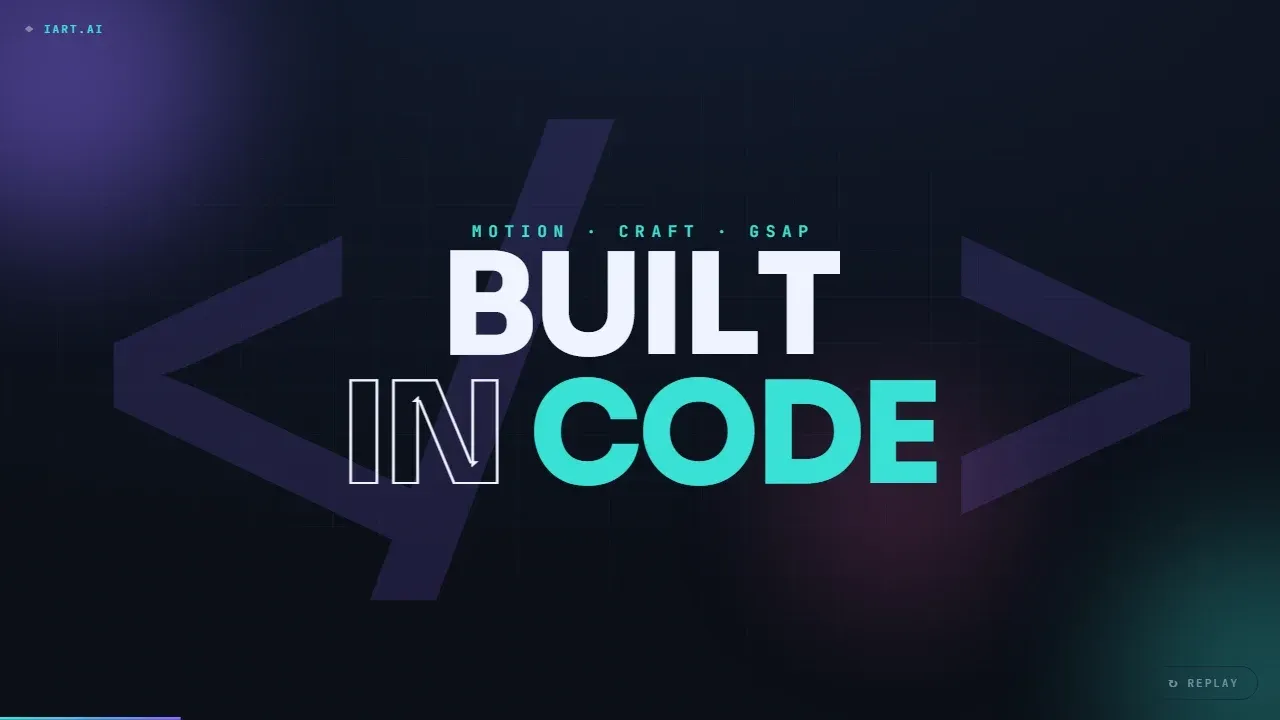
Opening scene of the pack's official GSAP showcase animation (showcase.html), with split-character text reveal.
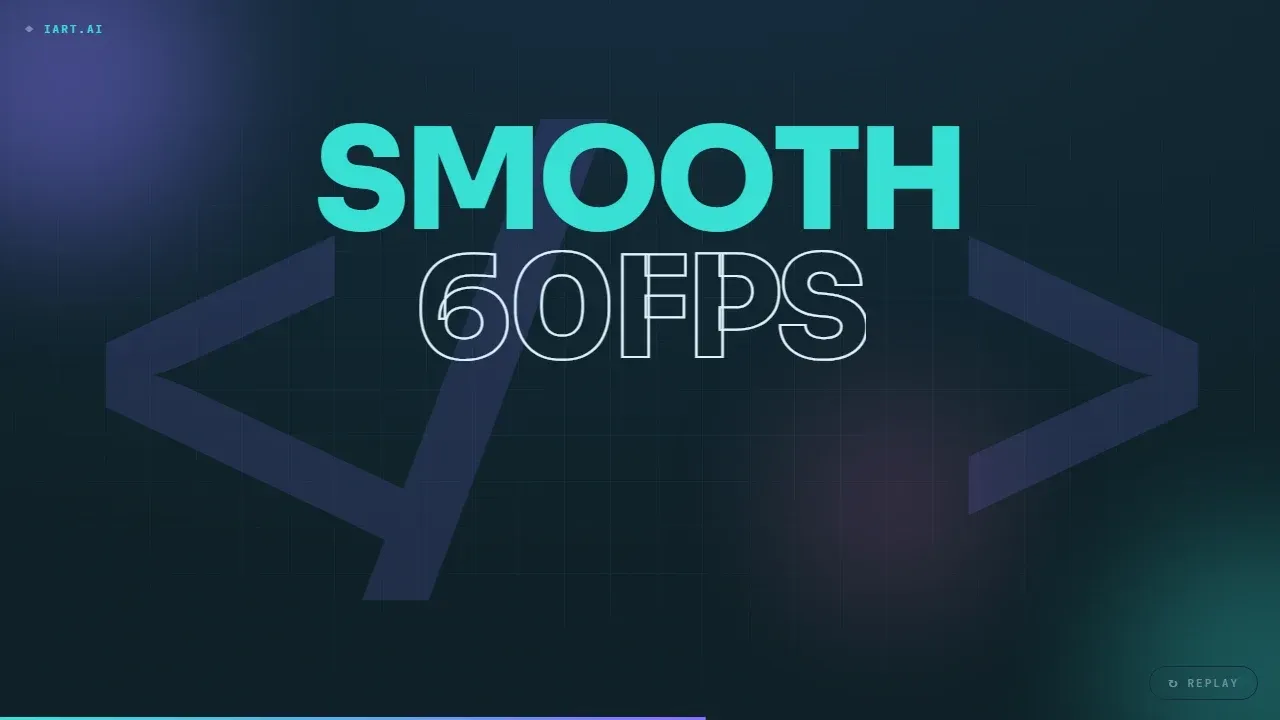
Second text scene of the official showcase animation, combining filled and outlined lettering.
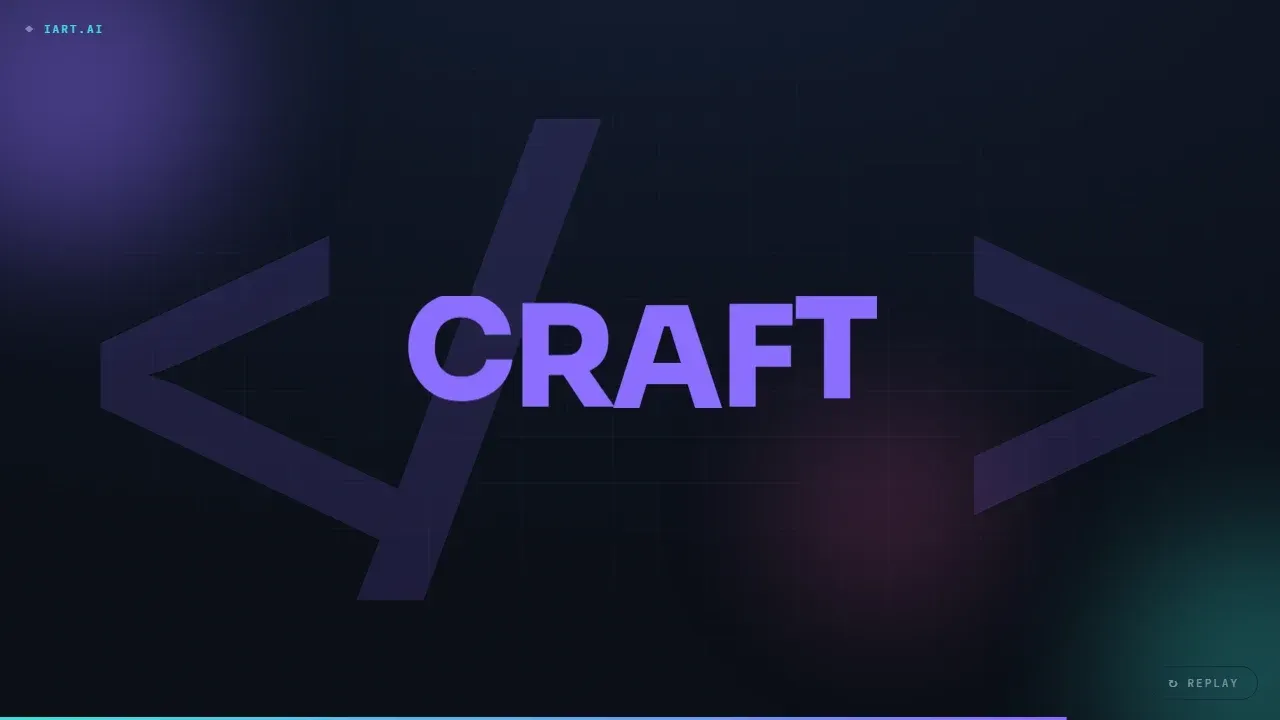
Staggered character animation in progress in the official showcase, captured between keyframes.
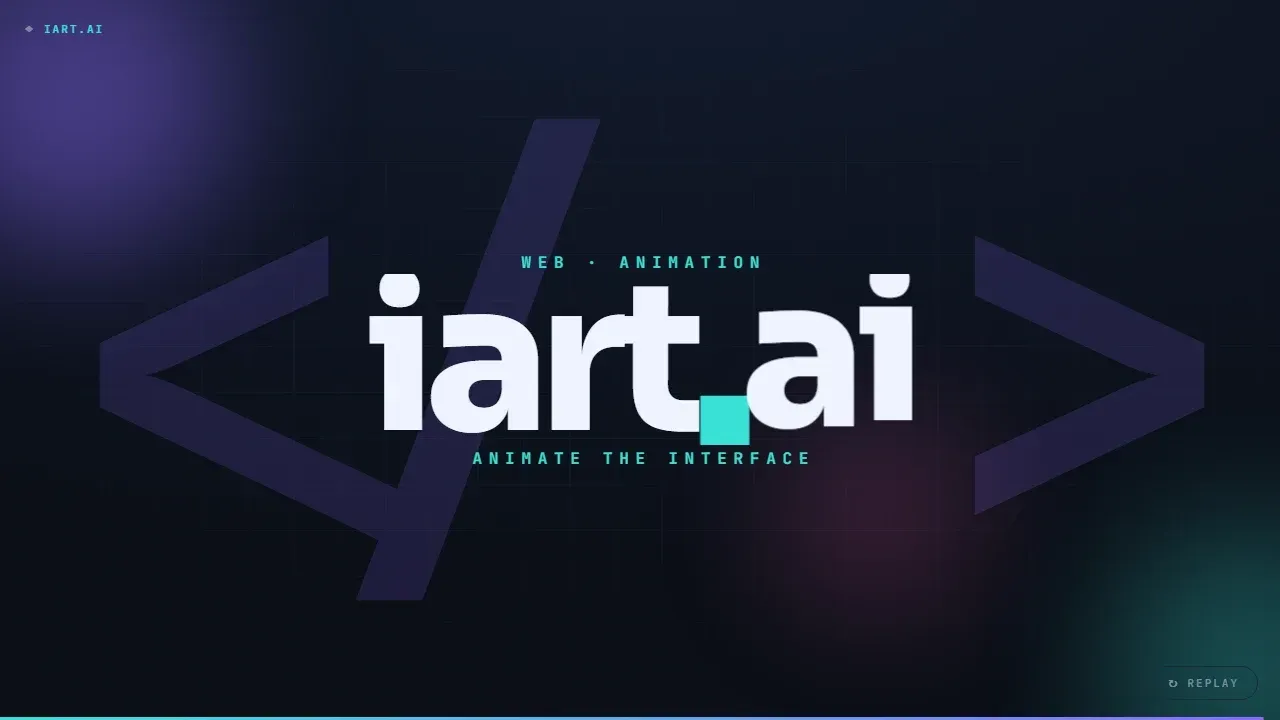
Final scene of the official showcase animation with the iart.ai wordmark and a replay button.
Key capabilities
- Install with the skills CLI The README gives npx skills add iart-ai/web-animation-skills as the install command. It adds all nine skills of the pack to the agent's skill folder. The sibling packs install the same way with their own repository names.
- Claude Code plugin marketplace Inside Claude Code, /plugin marketplace add iart-ai/web-animation-skills registers the repository as a marketplace, and /plugin install web-animation-skills installs the plugin. The marketplace.json and plugin.json manifests in .claude-plugin declare the plugin name, version 0.1.0, the MIT license and iart.ai as author.
- gsap-web: timelines and scroll scenes Covers GSAP timelines with the position parameter, gsap.set and quickTo, ScrollTrigger pinning and scrubbing, horizontal scroll sections, SplitText text reveals and Flip layout transitions. A dedicated reference explains syncing ScrollTrigger with Lenis or Locomotive smooth scrolling, a common cause of drifting markers and broken pins. The folder includes examples for a hero timeline and a standalone HTML template.
- 60fps-animation: performance fixes Explains why animating only transform and opacity keeps motion on the compositor, and how to convert width, height, top and left animations into transforms. It covers a cheaper box-shadow animation through a pseudo-element's opacity, the FLIP technique, batching layout reads before writes and sparing use of will-change. For height: auto it shows interpolate-size: allow-keywords and calc-size() on supporting browsers, with a CSS grid 1fr to 0fr fallback.
- page-transition-animation: route transitions Targets the Next.js App Router case where an AnimatePresence exit animation never fires on navigation. Solution A combines template.tsx, a pathname-keyed AnimatePresence and a FrozenRouter component that keeps the outgoing page rendering its old content. Solution B uses the native View Transitions API through document.startViewTransition or the next-view-transitions library, followed by an AnimatePresence debug checklist.
- accessible-animation: tiered reduced motion Sorts animations into three tiers instead of removing all motion: vestibular triggers such as parallax, large slides, zooms and scroll hijacking are removed, other movement is shortened to a fade of 200 ms or less, and opacity, color, focus-ring and loading-indicator transitions are kept. It provides CSS media-query gating, JavaScript matchMedia gating for GSAP, Framer Motion and Lenis, and a React useReducedMotion hook. The skill maps these patterns to WCAG 2.3.3, technique C39 and 2.2.2 for auto-playing motion longer than five seconds.
- micro-interaction: interface feedback Covers hover and press feedback, toggles, like buttons, toasts, drawers, modals, list reordering and shared-element layout transitions. The Framer Motion part uses motion/react gestures, springs, AnimatePresence and layout animation. A pure CSS path uses @starting-style and transition-behavior: allow-discrete so enter and exit animations work with display toggles, always with a reduced-motion guard.
- glassmorphism: frosted and liquid glass Builds frosted translucent panels with backdrop-filter blur, specular edge highlights and anti-banding grain, plus an Apple Liquid Glass style refraction made with SVG feTurbulence and feDisplacementMap filters. The skill warns that every glass element re-blurs the content behind it, so it limits the number of panels and avoids stacking them. Fallbacks cover prefers-reduced-transparency, prefers-reduced-motion and browsers without backdrop-filter, with contrast targets of 4.5:1 for body text and 3:1 for large text.
- svg-animation: draw-on, morph and path motion Covers stroke-dashoffset draw-on effects for lines and signatures, morphing one path into another, motion along a path, and animated icons, gradients and filters. For paths with mismatched point counts it points to GSAP MorphSVG or the standalone Flubber library. A selection table maps each need to CSS, SMIL or GSAP, and notes the support limits of SMIL in older browsers.
- lottie-animation: dotLottie and mobile runtimes Explains the difference between Bodymovin .json files and zipped .lottie containers, and prefers the @lottiefiles/dotlottie-web runtime over lottie-web for new work. It covers playback and segment control, scroll-driven Lottie without GSAP, runtime theming with dotLottie themes and an After Effects export checklist. The same files are mapped to lottie-ios, lottie-android and lottie-react-native for mobile parity.
- ascii-animation: text-character motion Builds generative ASCII fields with a brightness ramp and character-cell aspect correction, rendered in a pre element or on a canvas. It converts images and video to ASCII, renders Three.js scenes through AsciiEffect and loops terminal animations with ANSI escape codes at 12 to 24 frames per second. The bundled img-to-ascii.mjs script converts a PNG or JPG to ASCII text with --cols, --invert and --ramp options and depends on the sharp package.
- Standalone HTML deliverable and seek harness Each web skill describes a deliver-and-verify loop. A self-contained animation is delivered as one HTML file that loads its libraries from a CDN and keeps all motion on one master timeline. A ?t=N query parameter seeks that timeline to N seconds and pauses it, so start, middle and end frames can be captured and checked for clipped text, off-canvas elements, flashes of unstyled content and missing reduced-motion handling.
- Shared verify toolkit The scripts/ folder holds three POSIX bash helpers. seek-shot.sh drives the ?t=N harness and screenshots each moment with Playwright Chromium through npx, contact-sheet.sh tiles frames into one image with ffmpeg, and probe-mp4.sh checks resolution, codec, frame rate and duration of an MP4 with ffprobe. probe-mp4.sh belongs to the heavier Remotion and Manim tier used by the video packs.
- Activation phrases and example prompts Every SKILL.md description lists the requests it answers, for example "pin a section while scrolling", "stop layout thrashing", "AnimatePresence exit doesn't fire on navigation" or "convert an image or video to ASCII art". The README adds example prompts such as building a pinned hero section that scrubs a GSAP timeline to scroll, or making an SVG logo draw itself on.
- Reference documents per skill Longer material sits in references/ next to each SKILL.md: a ScrollTrigger cookbook and a Lenis guide for gsap-web, profiling patterns for 60fps-animation, full examples for page transitions, accessibility patterns, CSS and Framer Motion recipes, glass recipes, SVG techniques, Lottie integration and export, and ASCII rendering. Most skills end with a quick reference table and a list of gotchas.
- Showcase animation showcase.html is a short GSAP 3.12.5 animation with split-character text reveals, scene transitions, drifting background blobs and a replay button, ending on the iart.ai brand card. A GIF recording of it heads the README. It illustrates the style of output the skills describe rather than documenting each skill.
- License and cost The pack is MIT licensed, and the iart.ai catalog states that every pack is free for personal and commercial work. The repository contains no paid tier or license key. iArt.ai offers its hosted motion agent separately, with its own pricing page.
Where Web Animation Skills fits
Building a scroll-driven landing page section
A request such as a pinned hero that scrubs to scroll activates gsap-web. The skill directs the agent to build one GSAP timeline, register ScrollTrigger and any other plugins before use, and covers Lenis synchronization when smooth scrolling is used. For a standalone piece the output is a single HTML file with the ?t=N seek harness, which the agent can screenshot at the start, middle and end of the timeline. The ScrollTrigger cookbook covers pinning with scrub, horizontal scroll, snapping, batch reveals, parallax, refresh on dynamic content and React cleanup.
Fixing a janky CSS or scroll animation
When a hover, accordion or scroll effect stutters, 60fps-animation describes moving the motion to transform and opacity, replacing animated box-shadow with an opacity change on a pseudo-element and using FLIP for layout changes. Layout thrashing is handled by grouping DOM reads before writes. Animating to height: auto uses interpolate-size or calc-size where browsers support them and a grid-row fallback elsewhere.
Adding page transitions to a Next.js App Router site
page-transition-animation explains why exit animations are skipped during App Router navigation and gives two documented solutions. The Framer Motion route uses app/template.tsx with a pathname-keyed AnimatePresence and a FrozenRouter wrapper. The browser-native route uses the View Transitions API, either directly through document.startViewTransition or through next-view-transitions in the root layout. The skill file ends with a debug checklist for exit animations.
Making existing motion respect reduced-motion settings
accessible-animation classifies each animation into remove, soften or keep tiers and applies them in CSS through prefers-reduced-motion and in JavaScript through matchMedia, including gating for GSAP, Framer Motion and Lenis and a React useReducedMotion hook. glassmorphism adds prefers-reduced-transparency fallbacks for frosted panels. The skills cite WCAG 2.3.3, technique C39 and 2.2.2 for auto-playing content such as carousels and marquees, which also need a pause control.
Animating SVG logos, icons and Lottie files
svg-animation handles draw-on logos, icon morphs and motion along a path, choosing CSS, SMIL or GSAP depending on whether the animation is declarative, self-contained or tied to scroll. lottie-animation covers integrating designer-made After Effects exports as .lottie or .json, controlling segments, driving frames from scroll progress and switching embedded color themes. The same Lottie files are described for web, iOS, Android and React Native runtimes.
Creating ASCII intros and effects
ascii-animation covers retro text-character motion for web pages and command-line tools: generative fields, image and video conversion on a canvas, Three.js scenes rendered through AsciiEffect, and terminal loops that hide the cursor and redraw frames with ANSI escape codes. For static images, the bundled img-to-ascii.mjs script converts a picture to text with a configurable column count and character ramp.
Install
npx skills add iart-ai/web-animation-skillsReviews of Web Animation Skills
Be the first to share your experience with Web Animation Skills.
Write a review
Loading review form…
Alternatives to Web Animation Skills
 ImpeccableApache 2.0 design skill for coding agents: commands such as critique, audit, polish and bolder, project context in PRODUCT.md and DESIGN.md, a Live mode on the local dev server, and a deterministic detector for the CLI, CI, agent hooks and Chrome.