

What is Highlight.io?
Highlight.io is an open-source, full-stack monitoring platform originally developed by Highlight Inc. It combines session replay, error monitoring, logging and distributed tracing, and links each signal to the others, so a log line or error can lead to the browser session in which it occurred. The code base lives in the highlight/highlight repository on GitHub: a Go backend, a React and TypeScript frontend built with Vite, and SDKs for browsers and server languages. Session replay is built on the open-source rrweb library.
On April 23, 2025, Highlight announced that it was joining LaunchDarkly, the feature management company; LaunchDarkly published its own acquisition announcement. The Highlight announcement stated that co-founders Jay Khatri and Vadim Korolik would lead observability at LaunchDarkly, that Highlight would become a first-party observability solution feeding LaunchDarkly Guarded Releases, and that the repository would remain open source in its current state, with critical fixes released back to it during the integration.
On November 13, 2025, Highlight published Migrating from Highlight.io to LaunchDarkly Observability. It states that Highlight.io would deprecate services on February 28, 2026 and move all infrastructure and services to LaunchDarkly, and that customers had to switch their SDK snippet to LaunchDarkly Observability before March 1, 2026 to avoid disruption. Self-service customers were directed to the LaunchDarkly Developer plan (no charge, with 5,000 sessions, 5,000 errors, 10 million logs and 10 million traces per month) or the Foundation plan. Data migration was optional and arranged on request.
The hosted highlight.io service has therefore ended. The highlight.io domain redirects to launchdarkly.com; the redirect of the landing page was committed to the repository on August 20, 2026. The repository is not archived and still receives maintenance commits, such as dependency and security updates in October 2026. The latest GitHub release is docker-v0.5.6, published on August 8, 2025, with session processing and session replay fixes, pinned Docker image versions and an OTLP HTTP switch for the .NET Framework SDK.
Licensing is mixed, as described in the repository license file: code outside the highlight.io/ and enterprise/ directories is under the Apache License 2.0, the highlight.io/ website directory is also Apache 2.0, and the enterprise/ directory is under a separate Highlight Enterprise license. The documentation and blog sources remain in the repository under docs-content and blog-content. Other open-source monitoring projects listed on iThub include Sentry and SigNoz.
Key capabilities
- Project status The hosted highlight.io service was deprecated on February 28, 2026, according to the migration post, and its features are offered as LaunchDarkly Observability. The open-source repository remains available and is not archived, with occasional maintenance commits. There have been no GitHub releases since docker-v0.5.6 in August 2025.
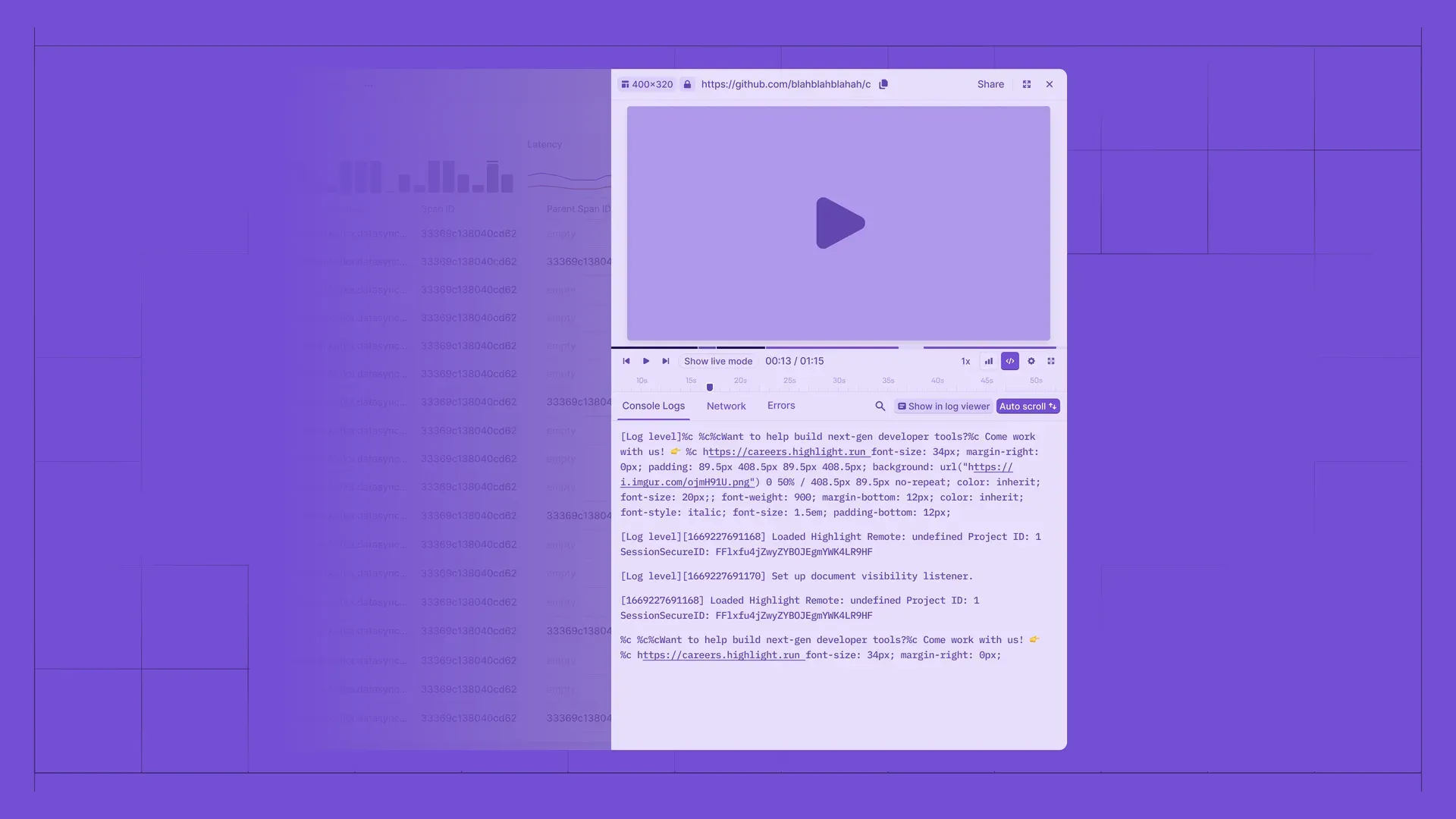
- Session replay The browser SDK records DOM changes and interactions with rrweb and replays them with a timeline, playback speed controls and a live mode. The replay view includes the console log, network requests with their contents and errors from the same session. Comments on sessions and errors are supported.
- Error monitoring Errors are grouped by customizable rules and shown with instance details, metadata, stack traces and the sessions in which they occurred. Alert rules control how often and where error alerts are sent.
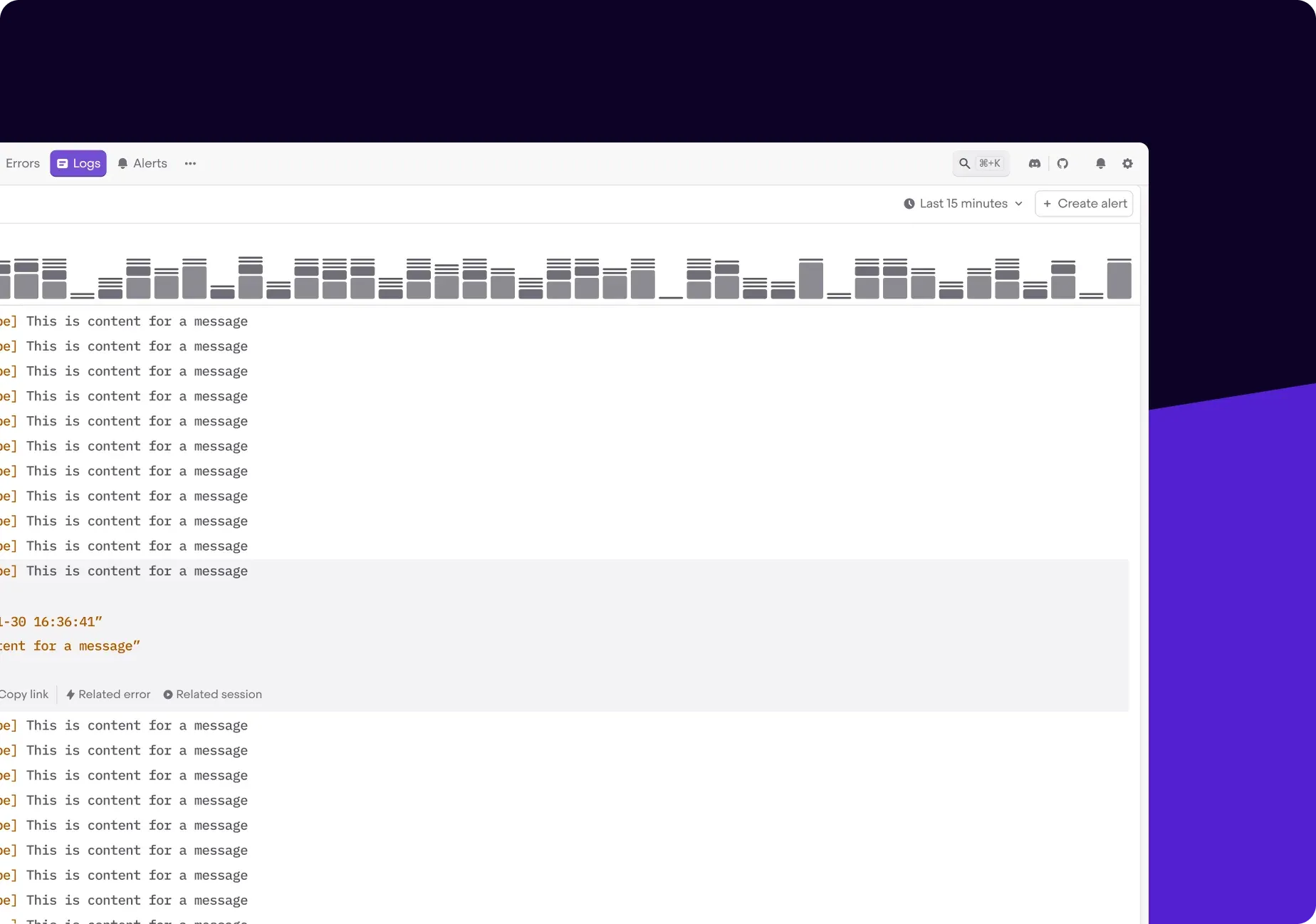
- Logging Logs are searchable with automatic property collection and shown on a histogram by level. Log alerts fire on thresholds, and each log can link to a related error or session. Logs can be ingested from SDKs, OpenTelemetry and integrations such as AWS Kinesis.
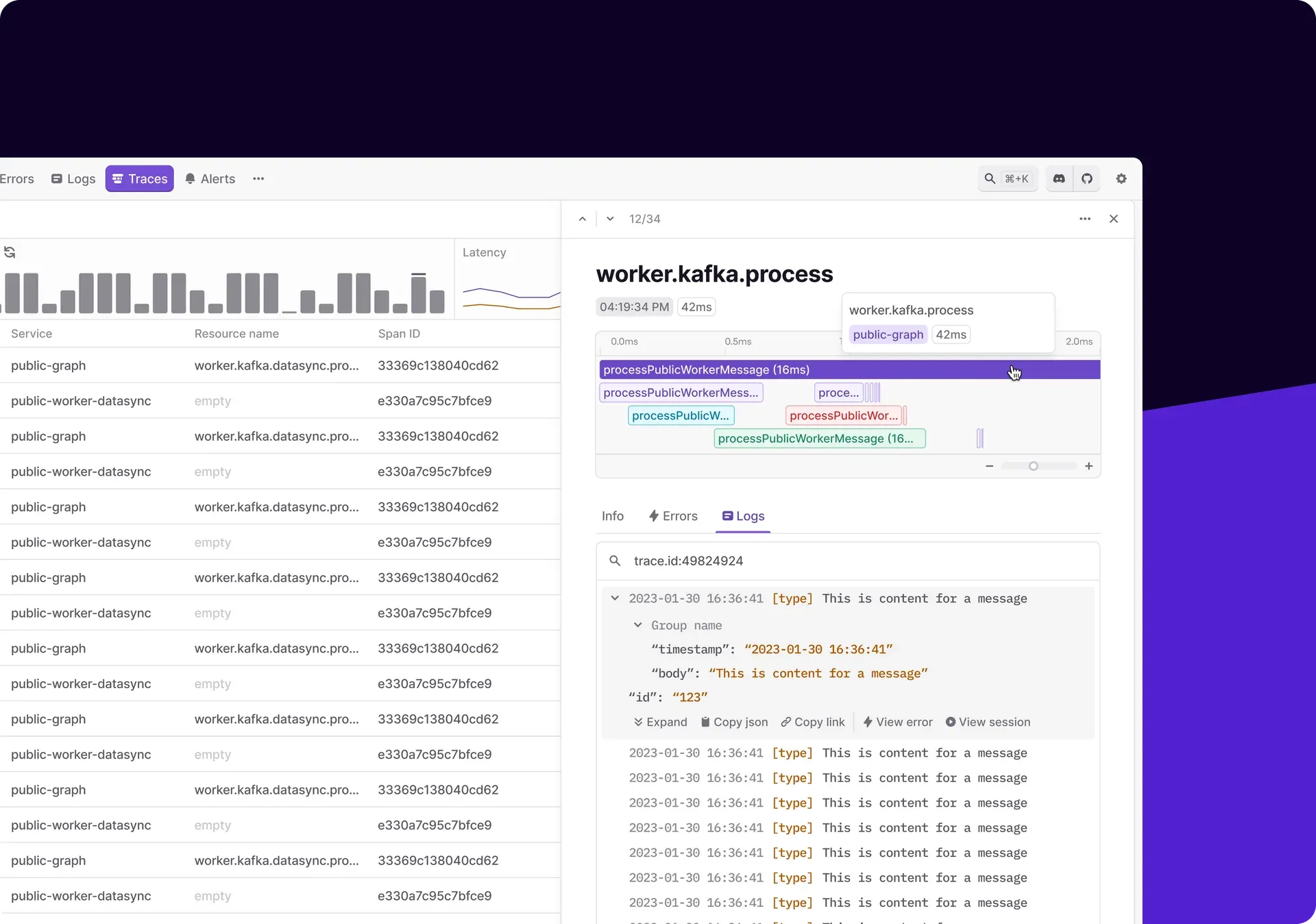
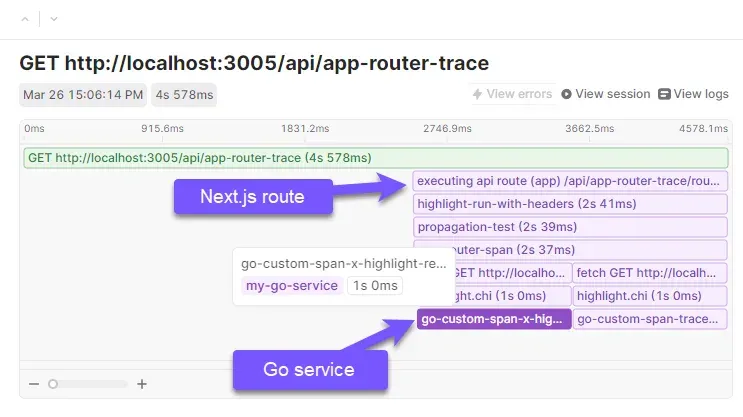
- Distributed tracing Traces show the spans of an operation on a flame-graph style timeline with latency, and each trace links to related errors, logs and sessions. Tracing is based on OpenTelemetry, and the documentation shows traces propagated from a Next.js route into a Go service.
- Browser SDKs The getting started documentation covers React, Angular, Gatsby, Next.js, Remix, Vue.js, SvelteKit, Electron and other HTML and JavaScript apps. Installing the browser SDK instruments frontend error collection and session replay.
- Server SDKs The sdk directory contains SDKs for Go, Node.js, Next.js, NestJS, Hono, Remix, Cloudflare Workers, Apollo, Python, Ruby, Java, PHP, Rust, Elixir, .NET and .NET Framework, plus packages for WordPress, Chrome, Pino and a Grafana data source.
- Native OpenTelemetry ingestion Besides its own SDKs, the documentation describes sending data from native OpenTelemetry instrumentation. The backend runs an OpenTelemetry Collector, which is built from a Dockerfile in the
dockerfolder. - Dashboards and alerts Dashboards with charts and tables can be built over sessions, errors, logs and traces, and alerts are managed in a dedicated alerts view. Launch week posts in the repository describe custom dashboards and related resources across signals.
- Hobby self-hosted deployment The README describes a one-line hobby deployment on Linux with Docker: clone the repository with submodules and run
docker/run-hobby.sh. It recommends at least 8 GB of RAM, 4 CPUs and 64 GB of disk. The hobby documentation advises against more than 10,000 monthly sessions or 50,000 monthly errors and states that the compose setup is not resilient to outages or upgrades. - Enterprise self-hosted option The enterprise self-hosting page lists features missing from the hobby setup: native platform and email integrations, RBAC and SSO, high-availability deployment with persistent storage, custom retention, automatic upgrades and availability guarantees, with Docker Compose and Helm options. This edition was sold by Highlight Inc. under the enterprise license.
- Storage architecture The Docker Compose files start Zookeeper, Kafka, Redis, PostgreSQL and ClickHouse alongside the backend and frontend. Telemetry is stored in ClickHouse, and the repository blog describes ClickHouse materialized views used for attribute keys.
- Docker releases Releases are tagged
docker-vX.Y.Zfor the self-hosted images. The releases page lists docker-v0.5.6 (August 8, 2025) as the latest, after docker-v0.5.5 in June 2025. - Migration to LaunchDarkly Observability The migration post shows how the
H.initbrowser configuration maps to LaunchDarkly's clientinitializecall withObservabilityandSessionReplayplugins, keeping settings such as privacy mode, network recording, canvas sampling, service name and environment. Questions go to the LaunchDarkly observability team by email. - Licensing Most of the code is Apache 2.0, while the
enterprise/directory uses the Highlight Enterprise license, per the LICENSE file. Third-party components keep their original licenses, and the copyright holder is Highlight Inc. - Documentation sources Documentation pages that were served at highlight.io/docs are kept as Markdown in the docs-content folder, including SDK guides, self-hosting guides, integrations and the product changelog. The website now redirects, so the repository copies are the remaining official source.
Where Highlight.io fits
Replaying user sessions to reproduce frontend bugs
With the browser SDK installed, each session can be replayed with its console output, network requests and errors on one timeline, and a session can be shared with teammates. Privacy settings such as strict mode control what is recorded, and canvas recording has its own sampling options.
Following an error from browser to backend
Frontend and backend SDKs propagate trace context, so an error group shows its instances, the affected sessions and the related logs and traces. The getting started guide includes a page on mapping frontend requests to backend data.
Searching and alerting on logs
Server logs sent through SDKs, OpenTelemetry or integrations appear in a searchable log view with level histograms. Thresholds on log queries create alerts, and each log entry can open its related error or session.
Running a small self-hosted instance
The hobby deployment runs the full stack with Docker Compose on one Linux machine, with ClickHouse, PostgreSQL, Redis and Kafka. The project limits its recommendation for this setup to small volumes and notes that it lacks resilience, integrations and SSO, which belonged to the enterprise edition.
Moving an existing Highlight setup to LaunchDarkly
Former highlight.io customers follow the migration guide: create a LaunchDarkly account, replace the Highlight SDK snippet with the LaunchDarkly SDK and its observability plugins, and contact LaunchDarkly if historical data or configuration should be moved. Invoiced and MSA customers were contacted individually.
Connecting monitoring data to team tools
The integrations documentation covers Slack and Discord for alerts, issue trackers such as GitHub, Jira, Linear, ClickUp and Height, product analytics and support tools such as Amplitude, Mixpanel, Segment, Pendo, Intercom and Front, and platform integrations for Vercel, Electron, Nuxt and WordPress. A Grafana integration and a LaunchDarkly integration are also documented.
Install
git clone --recurse-submodules https://github.com/highlight/highlight && cd highlight/docker && ./run-hobby.shReviews of Highlight.io
Be the first to share your experience with Highlight.io.
Write a review
Loading review form…
Found Highlight.io useful? Upvote it todayYour vote helps other IT teams find it in the daily ranking.


